 Land O'Lakes Siding
 Wiregrass Ranch Homes Take a Specific Kind of Beating
Wiregrass Ranch sits in one of the newer, fast-growing corners of the Land O' Lakes area, and the exteriors here face the same demands as everywhere else in Pasco County — just with a twist. Many homes in this part of the community were built within the last two decades, which means the original exterior materials are now old enough to start showing real wear, but not so old that homeowners are used to dealing with major exterior repairs yet. That combination catches people off guard.
The climate here doesn't ease up. Summer humidity and afternoon storms drive rain sideways into gable ends, dormers, and any horizontal trim. Intense, near-constant UV bakes painted and factory-finished surfaces from above while reflected heat off driveways and pool decks works on them from below. And when a tropical system or strong seasonal storm rolls through, wind-driven rain finds every unsealed seam, nail hole, and joint a builder-grade installation left behind. None of this is unique to Wiregrass Ranch, but it's the reality every exterior surface here is built into from day one.
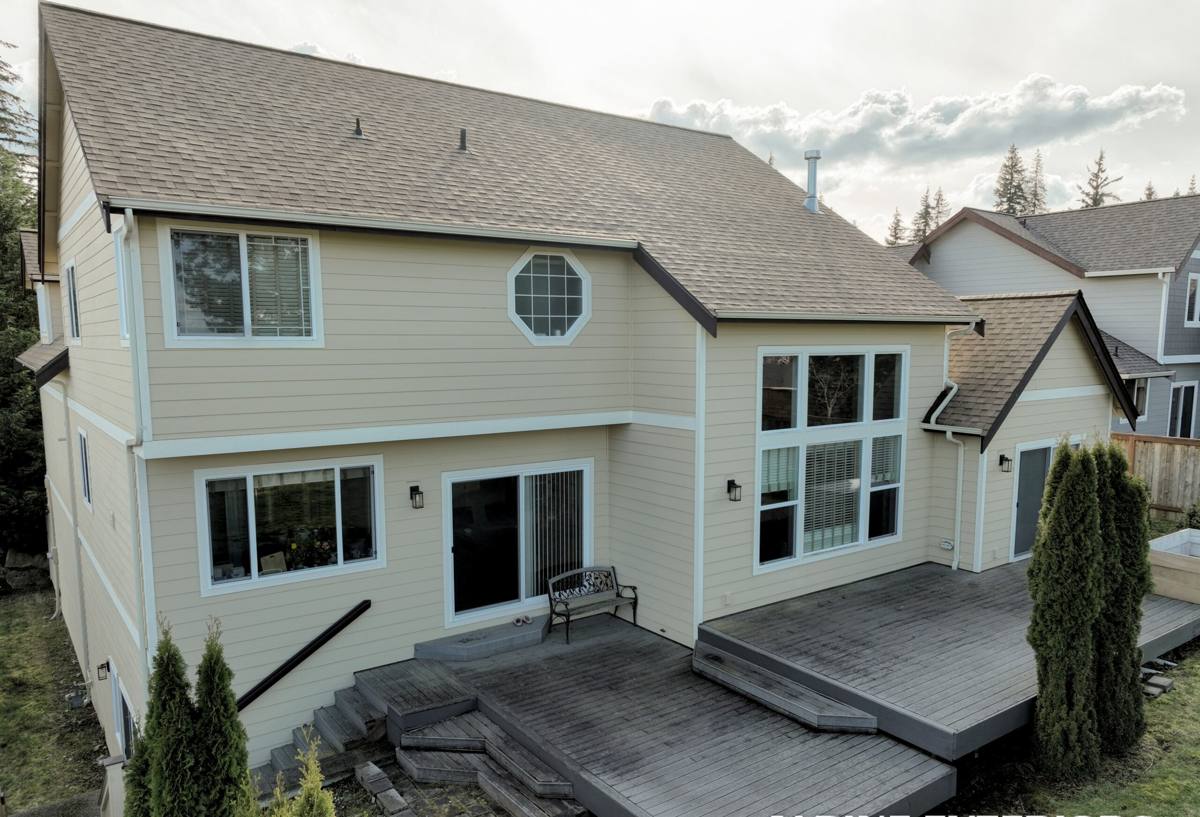
Why Fiber Cement Is the Right Call for This Climate
Fiber cement holds up to Florida's climate in ways that other common siding and trim materials simply don't. It doesn't rot, it doesn't attract termites, and it doesn't warp or cup the way wood-based products can when they take on repeated cycles of humidity and heat. It's also non-combustible, which matters in a region where lightning-sparked brush fires aren't unheard of. But the material alone isn't the whole story — how it's engineered and installed for a specific climate is what actually determines whether it performs for twenty-plus years or starts failing in five.
| Material | UV / Fade Resistance | Moisture Behavior in Humid Climates | Typical Maintenance |
|---|---|---|---|
| James Hardie fiber cement (ColorPlus, HZ5) | Factory-baked finish engineered for high-UV exposure | Formulated for warm, humid regions; resists moisture-driven swelling | Occasional wash; repaint only if bare-primed trim is used |
| Vinyl siding | Fades and can warp under sustained direct sun | Handles moisture but can distort in extreme heat | Low, but panels are hard to color-match once faded |
| Wood or primed spruce trim | Finish breaks down faster under UV; needs recoating | Prone to swelling, rot, and pest entry if moisture gets behind it | Frequent repainting and caulking |
| LP SmartSide (engineered wood) | Reasonable with maintained finish | Wood-based core is more moisture-sensitive than fiber cement | Regular finish upkeep to protect the substrate |
This is why our company installs James Hardie exclusively rather than mixing in other fiber cement brands, engineered wood, or vinyl. It's not that every alternative is a bad product — it's that we've standardized on the one system we can install to spec, warranty with confidence, and stand behind for the life of the job.
What Correct Fiber Cement Installation Actually Involves
Product Line Matters
James Hardie engineers its siding by climate zone. Homes in our part of Florida call for the HZ5 formulation, built specifically for high heat and humidity rather than the freeze-thaw HZ10 formulation used up north. Using the wrong climate-engineered product, or generic fiber cement not engineered for the zone at all, is one of the quieter ways a siding job underperforms without the homeowner ever knowing why.
Clearances and Flashing
Most fiber cement failures we get called out to inspect aren't the board's fault — they're installation shortcuts. Proper ground clearance, deck and roof-line clearance, and consistent gaps at trim and corners keep water from wicking into the cut edges of the board. Every penetration, window, and joint needs correctly lapped flashing and the right sealant at the right joints — not everywhere, and not nowhere, but exactly where Hardie's installation instructions call for it.
Fastening Pattern
Fiber cement has to be fastened with the correct nail type, spacing, and depth for the wind exposure category of the home. Over-driven or under-driven fasteners are a leading cause of board cracking and blow-off in storm winds, and it's one of the fastest things to get wrong if a crew is used to vinyl or wood rather than fiber cement.
Factory Finish, Not Field Paint
ColorPlus finish is baked on in a factory-controlled process and carries its own finish warranty — it's not something a field-applied topcoat can fully replicate. Where cut ends and touch-ups are unavoidable, using Hardie's matched touch-up products (rather than generic exterior paint) keeps the finish performing evenly instead of creating a visible, faster-fading patch a few years down the road.
Matching Community Standards Without Cutting Corners
Newer planned communities like Wiregrass Ranch often come with architectural guidelines that govern exterior colors, trim profiles, and material appearance — whether the home is primarily stucco with siding accents on gables and dormers, or has fuller siding elevations. That adds a layer most siding jobs elsewhere don't have to deal with: getting a color and profile approved before work starts, not after.
James Hardie's ColorPlus palette and trim profiles give us the range to match most community aesthetic standards without falling back on a lesser product just because it's easier to special-order. When a color needs board approval, we build that into the timeline up front instead of letting it become a surprise delay mid-project.
Our Process for a Wiregrass Ranch Fiber Cement Project
- On-site assessment — we look at existing siding or trim condition, substrate underneath, moisture history, and any areas where past caulking or paint has been masking a bigger problem.
- Scope and product selection — full elevation replacement or targeted accent work, matched to the HZ5 product line and the color or profile your community's standards call for.
- Tear-off and substrate check — old material comes off cleanly so we can actually see the wall assembly underneath, not guess at it.
- Moisture management install — house wrap or weather barrier condition is verified and corrected where needed before a single board goes up.
- Installation to Hardie spec — correct clearances, fastening, and flashing at every penetration and joint, not just the visible ones.
- Trim, caulking, and finish detail — the small joinery work that determines whether water sheds away from the house or finds a way in.
- Final walkthrough — we go over the finished job with you before we call it done.
What Drives Cost on a Wiregrass Ranch Fiber Cement Project
| Factor | Why It Matters |
|---|---|
| Scope: accent trim vs. full elevation | Gable and dormer accent work costs less than replacing entire wall sections |
| Substrate condition | Hidden rot or moisture damage found during tear-off adds repair work before new siding goes on |
| Color and profile selection | Standard ColorPlus colors move faster than special-order matches for community-specific requirements |
| Access and site layout | Pool cages, tight side yards, and multi-story sections affect labor time |
| Existing material removal | Stucco, wood, or old siding tear-off adds disposal and labor beyond a straightforward re-side |
Signs Your Siding or Trim Needs a Closer Look
- Visible cracking, chipping, or gaps in caulking around gables, dormers, or window trim
- Soft spots or discoloration where wood-based trim meets the roofline or ground
- Fading or chalking that's noticeably worse on the sun-facing side of the house
- Staining or streaking below joints after heavy rain, a sign water is finding its way behind the surface
- Peeling paint on any painted trim, which often points to moisture trapped underneath rather than just old paint
- Pest activity or soft, spongy texture in wood-based siding or fascia
Why a Crew That Already Works in Wiregrass Ranch Matters
Siding work here isn't just a technical job, it's a logistics job. A crew that already works in this community knows how Pasco County permitting runs, understands typical community architectural approval steps, and has already seen how the area's building patterns and lot layouts affect access and staging. That familiarity shows up in fewer surprises mid-project, not in anything flashy — it's the difference between a crew learning the neighborhood on your dime and one that already knows it.
It also matters after the job is done. A local company is the one that answers the phone next year if a question comes up, not a crew that worked the area once and moved on. For a material like James Hardie fiber cement, built to last decades, that kind of long-term accountability is part of what you're actually paying for.
If your Wiregrass Ranch home has siding or trim that's due for a closer look, we're glad to come take one. Reach out for a free, no-pressure estimate using the form below.