 Land O'Lakes Siding
 What Dade City Homes Are Up Against
Dade City sits inland in northern Pasco County, away from the immediate coastline, but "inland" in Florida still means brutal exterior conditions year-round. The sun here isn't seasonal — it's a constant, high-UV load that bakes exterior surfaces twelve months a year. Add the summer pattern of daily afternoon thunderstorms, the humidity that never really drops, and the real risk of hurricane-force wind gusts reaching this far into the county during tropical systems, and you have a climate that is genuinely hard on a home's exterior, even for houses that never see a drop of storm surge.
Salt air is a smaller factor here than it is for homes closer to Tampa Bay or the Gulf, since Dade City is further inland. But during major hurricanes, salt-laden wind can still travel well past the coast, and it's one more reason we don't treat "inland" as "low-risk" when we're specifying materials. The bigger everyday stressors for this area are UV exposure, wind-driven rain finding its way behind poorly sealed siding, and the freeze-thaw-adjacent expansion and contraction that comes from big daily temperature swings between hot afternoons and cooler, damp mornings.
Dade City also has a mix of older, established homes and newer construction, which means we regularly see everything from original wood siding and aging vinyl to homes already re-sided once with a product that didn't hold up the way homeowners expected. Whatever's on the house now, the climate math doesn't change: whatever goes up next has to handle sun, water, and wind, not just look good on installation day.
Why Siding Material Choice Matters So Much Here
In a milder climate, the difference between siding products shows up slowly, over a decade or more. In Central Florida, it shows up faster. Constant UV breaks down pigments and some polymers over time, which is why cheaper vinyl siding tends to fade, warp, or go brittle years before homeowners expect it to. Wood and wood-composite products absorb moisture at seams and cut edges, and once water gets in behind the surface, rot can spread out of sight until it's a bigger repair than a homeowner planned for. Wind matters too — Pasco County's building codes account for wind loads for a reason, and siding that isn't rated or installed to handle those loads is one of the more common sources of storm damage we get called out for after a bad system passes through.
This is the environment that shaped our decision to stop installing several widely-used siding products altogether, even when homeowners specifically ask for them.
Why We Only Install James Hardie Fiber Cement
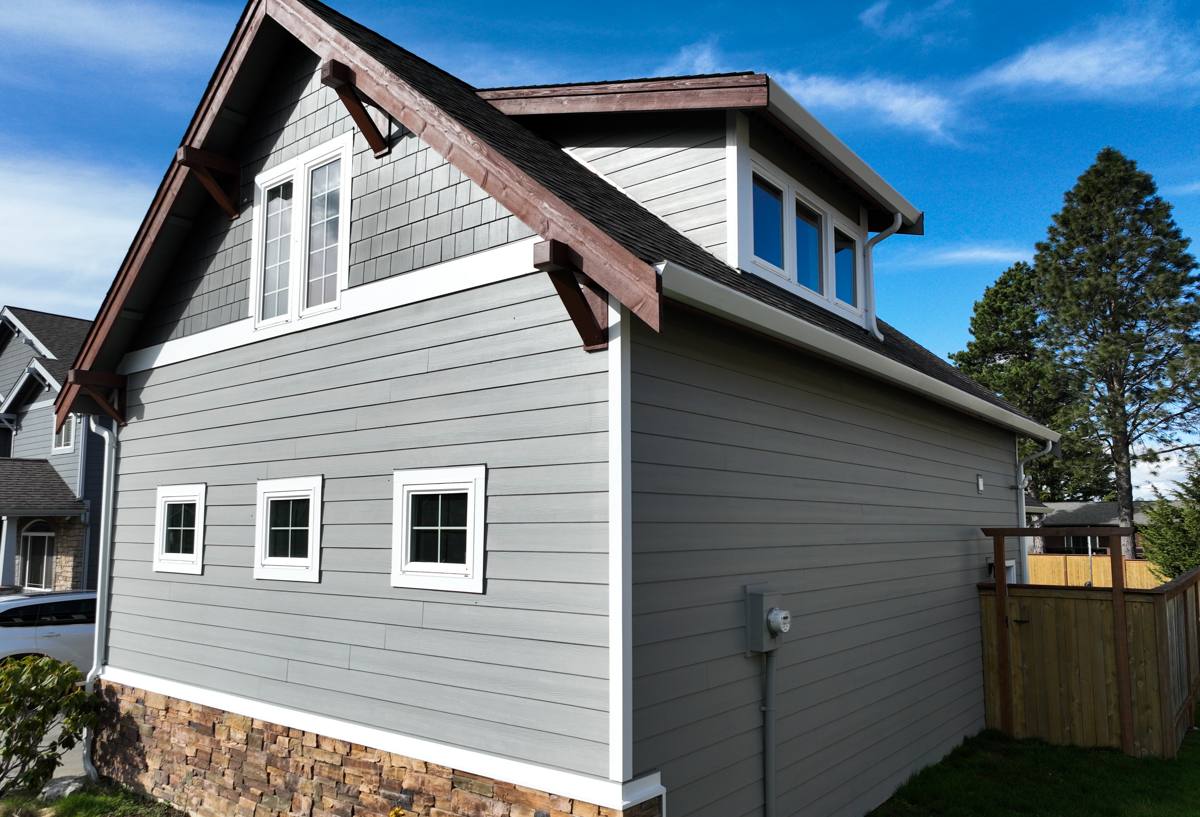
We install James Hardie fiber cement siding exclusively. We don't install vinyl, LP SmartSide, Cemplank, Allura, primed spruce, or cedar. That's not a marketing position — it's a standard we settled on after years of doing exterior work in this exact climate and seeing which products actually held up under Florida sun, humidity, and storm wind versus which ones required more maintenance, more repair calls, or full replacement sooner than homeowners expected.
James Hardie fiber cement is non-combustible, dimensionally stable in heat and humidity, and manufactured with pigments and coatings specifically engineered for the kind of UV load Pasco County gets. It doesn't warp the way vinyl can in direct summer heat, and it doesn't carry the moisture-absorption risk that comes with wood-based products at cut edges and seams.
What HZ5 Climate Engineering Means Locally
James Hardie engineers its siding in different formulations for different climate zones across the country. Florida falls into the HZ5 category, which is formulated specifically for high humidity, heavy rain, and the moisture cycling that comes with hot, wet summers. That's a meaningfully different product than what gets shipped to a dry, cold-winter climate — it's built to resist the specific combination of conditions Dade City deals with, rather than a one-size-fits-all formulation.
ColorPlus Factory Finish
Most Hardie siding we install comes with the ColorPlus finish — a coating baked on at the factory under controlled conditions, rather than sprayed or brushed on-site after installation. That matters in this climate specifically because a factory-cured finish adheres more evenly and resists UV fading better than field-applied paint, which is exposed to humidity and temperature swings while it's still curing. It also comes with a longer finish warranty than a standard field-painted product typically gets.
Whole-Home Exterior Protection: Beyond Siding
Siding is one piece of a home's defense against Florida weather, but it doesn't work in isolation. We also handle roofing, windows, and decks, because the same wind, water, and sun that stress siding stress every other exterior surface on the house, and a weak point in one system tends to show up as a problem in another. A roof that's shedding water improperly can drive moisture down behind siding at the eaves. Windows that aren't properly flashed can let wind-driven rain in around the very trim that's supposed to protect the wall assembly. Decks exposed to full Florida sun and rain need the same honest material conversation that siding does.
Handling all four under one roof means we're thinking about the home as one connected system, not four separate sales pitches, and it means fewer contractors pointing fingers at each other if a problem shows up at a seam between systems.
What Correct Installation Actually Involves
Fiber cement performs the way it's supposed to only when it's installed to manufacturer specification. This is where a lot of the real-world difference between siding jobs comes from, and it's worth homeowners understanding what to expect:
- Proper clearance between the bottom of the siding and the ground, roofline, or deck surface, so water doesn't wick up into the material
- Correct fastener type, spacing, and placement — under- or over-driven fasteners are one of the most common causes of early siding failure
- Flashing and proper sealing at every window, door, and penetration, not just caulk applied over gaps after the fact
- Correct panel and joint treatment so seams shed water instead of trapping it
- Painted or factory-finished cut edges, since an exposed raw edge is the most common place moisture gets in
Skipping any of these doesn't always show up on day one — it shows up two, five, or ten years later, usually after a few hurricane seasons have tested every weak point in the installation.
How Siding Options Actually Compare
| Factor | James Hardie Fiber Cement | Vinyl | Wood / Engineered Wood |
|---|---|---|---|
| Moisture resistance | Strong; won't rot or swell | Good if sealed well, can warp with heat | Vulnerable at seams and cut edges |
| Wind performance | Rated for high wind loads when installed to spec | Can crack or blow off in strong gusts | Depends heavily on fastening and condition |
| UV / fade resistance | Factory-cured finish resists fading | Can fade and become brittle over time | Needs repainting/restaining on a cycle |
| Fire resistance | Non-combustible | Combustible | Combustible |
| Typical maintenance | Low; periodic cleaning and caulk checks | Low, but repairs are visually obvious | Higher; regular sealing/painting needed |
| Warranty structure | Long-term, factory-backed, transferable | Varies widely by product line | Varies; often shorter on finish |
Cost Factors Worth Understanding Upfront
Siding pricing depends on more than just square footage, and homeowners in Dade City should expect an honest breakdown of what's driving the number on their estimate:
- Home size, wall height, and the amount of trim, corners, and architectural detail
- Whether existing siding needs to be removed or the substrate needs repair before new siding goes on
- Product line and profile selected (lap siding, shingle-style, panel systems)
- Accessibility of the home — multi-story sections, tight lot lines, or landscaping that limits equipment access
- Whether trim, fascia, or soffit work is bundled into the same project
Any legitimate contractor should be able to walk through these factors with you in plain language before you sign anything.
Why a Local Crew Matters in Dade City
Pasco County's wind-load and building code requirements aren't identical to every county in Florida, and permitting expectations can shift based on the specific jurisdiction a property falls under. A crew that works this area regularly knows what inspectors are looking for, understands how the local climate actually behaves through a full year rather than a single season, and is around after the job is done if a question comes up. That local familiarity is worth more than it sounds like on paper — it's the difference between a contractor guessing at code requirements and one who already knows them.
Maintenance: What Homeowners Should Actually Do
Even a low-maintenance product like fiber cement benefits from basic upkeep, especially in this climate:
- Rinse siding periodically to clear pollen, dust, and organic buildup that humidity encourages
- Inspect caulking around windows, doors, and trim once a year, ideally before hurricane season
- Look for any cracked or displaced panels after major storms and address them promptly
- Keep sprinklers and irrigation from constantly soaking the base of exterior walls
- Trim back vegetation that traps moisture against the siding surface
If you're weighing a siding project in Dade City — or wondering whether your roof, windows, or deck need attention alongside it — we're happy to walk the property with you and give you a straight answer, not a sales script. Reach out for a free, no-pressure estimate using the form below.