 Land O'Lakes Siding
 Building and Re-Siding Homes Near Wesley Chapel
Wesley Chapel has grown into one of the busiest residential corridors on the Pasco County side of the Tampa Bay area, and a lot of that growth has happened fast — entire neighborhoods built out over the last two decades, many still filling in today. That means we see a wide mix of siding conditions here: newer stucco-and-siding-accent homes still under their original builder-grade materials, slightly older homes hitting the point where their first exterior is wearing out, and everything in between. Whatever stage a home is at, the Florida climate is working on it every single day, and the choice of siding material determines how well that home holds up over the next twenty or thirty years.
As a Land O'Lakes-based contractor, we treat Wesley Chapel as core service territory, not an outer edge we visit occasionally. That matters more than it sounds like it should — a crew that works this area regularly knows how Pasco County's mix of new-construction subdivisions, mature tree canopy, and open retention-pond lots each create their own wear patterns on an exterior.
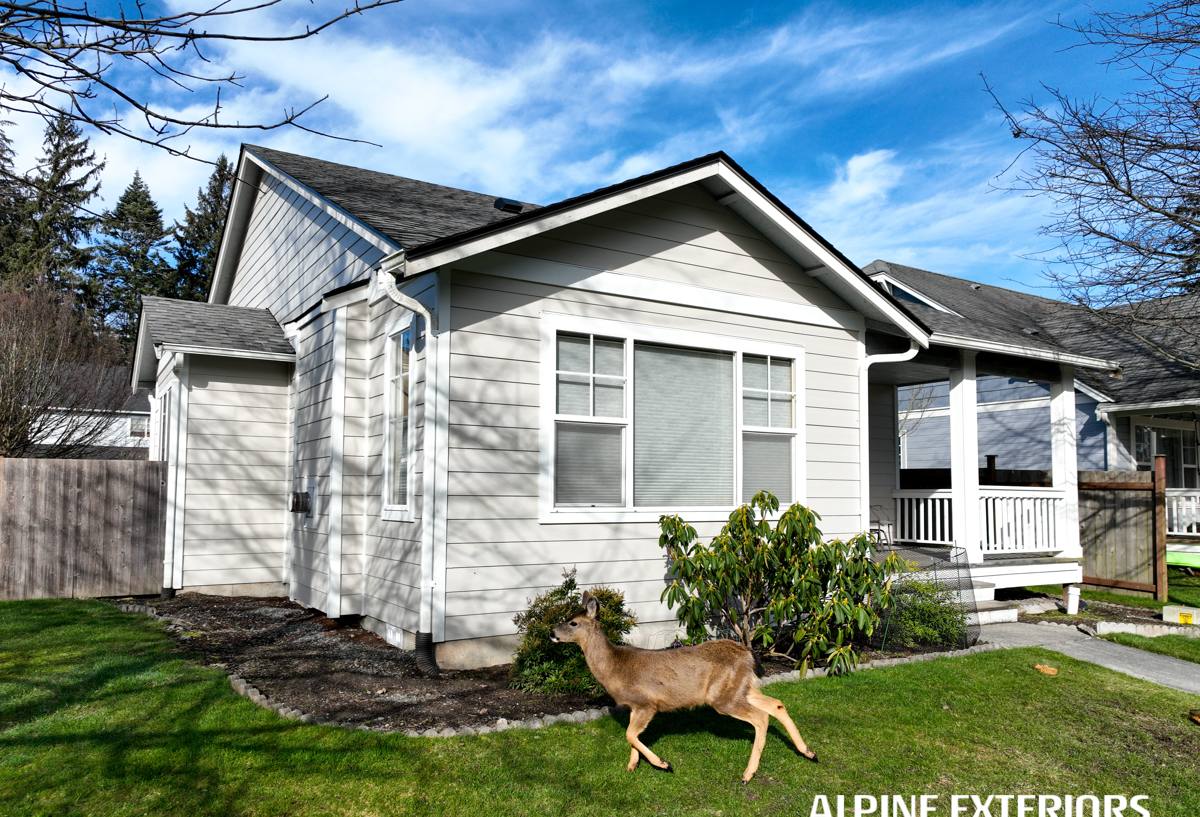
What This Climate Actually Does to Siding
Central Florida doesn't have a mild season for exteriors. Every material on a Wesley Chapel home is dealing with several stresses stacked on top of each other, year-round:
- Intense, near-constant UV exposure. Florida sun breaks down pigments and surface coatings faster than almost anywhere else in the country, which is why fading and chalking show up early on lower-grade siding.
- Wind-driven rain. Summer storms and the occasional hurricane-strength system don't just rain down — they drive water sideways into seams, laps, and trim joints, which is exactly where cheap siding fails first.
- Heat and humidity cycling. Siding expands in afternoon heat and contracts overnight, and it does this constantly for months at a stretch. Materials that aren't dimensionally stable loosen fasteners and open gaps over time.
- Humid, Gulf-influenced air. Even well inland from the coast, this region's air carries enough moisture and salinity to accelerate corrosion on fasteners and trim hardware that isn't rated for it.
- Wind load during storm season. Pasco County sits in a hurricane-exposed wind zone, and siding attachment has to be engineered for that, not just nailed up to look right on a calm day.
None of this is unique to Wesley Chapel specifically — it's the reality for the whole Tampa Bay region — but it's worth saying plainly because it explains why some materials that perform fine in drier, milder climates struggle here.
Why Installation Quality Matters as Much as the Material
We say this on every page because it's true on every job: the best siding on the market, installed with the wrong nailing pattern, wrong clearances, or sealed the wrong way, will fail early in this climate. Correct flashing at windows and doors, proper starter strip work, factory-specified fastener spacing, and clearance at grade and roof lines are what actually keep water out. A crew that skips these details to save an hour is setting a home up for problems in five years, not thirty.
Why We Only Install James Hardie Fiber Cement
We made a deliberate decision to stop installing several products that are common elsewhere in the industry — vinyl, LP SmartSide, Cemplank, Allura, and primed wood siding among them — and install James Hardie fiber cement exclusively. That's not a marketing position; it's a standard we hold ourselves to because of what we've seen this climate do to exteriors over time.
| Factor | Why It Matters in This Climate |
|---|---|
| Non-combustible material | Fiber cement doesn't feed a fire, which matters for insurance considerations and general home safety. |
| Moisture and rot resistance | Fiber cement doesn't absorb and swell the way wood-based or wood-composite products can when exposed to repeated wind-driven rain. |
| Factory-applied ColorPlus finish | Baked-on, UV-formulated color resists Florida's fade and chalk cycle far better than field-applied paint. |
| Climate-engineered HZ product line | Hardie's HZ5 formulation is specifically engineered for high-humidity, high-moisture regions like ours. |
| Dimensional stability | Less expansion and contraction than vinyl or engineered wood means fasteners and seams stay tighter, longer. |
| Transferable warranty | A strong manufacturer warranty that can transfer to a new owner supports resale value, not just peace of mind. |
To be fair to the alternatives: vinyl is inexpensive and easy to install, LP SmartSide has real structural strength and a lower material cost than fiber cement, and Cemplank and Allura are themselves fiber cement products with their own manufacturing standards. These aren't bad products in every application. But when we weigh long-term performance in a hurricane-exposed, high-UV, high-humidity market against upfront cost, fiber cement — and specifically Hardie's engineering, finish system, and warranty support — is what we're willing to put our name behind.
Roofing, Windows, and Decks: The Rest of the Envelope
Siding doesn't work in isolation. We handle roofing, windows, and decks alongside siding because a home's exterior only performs as well as its weakest connection point.
Roofing
A roof in poor condition sends water down behind siding at the roofline before you'd ever notice a problem with the siding itself. When we're on-site for a siding project, we look at roof-to-wall flashing as part of the job, not an afterthought.
Windows
Window flashing and the seal between window frame and siding are one of the most common points of water intrusion we find on Florida homes. Replacing siding without addressing failing window seals just re-covers the same problem.
Decks
Outdoor living is a big part of why people choose this area, and decks take direct sun and rain exposure with no siding coating protecting them. Material choice and fastener quality matter here too, for the same climate reasons.
Signs a Wesley Chapel-Area Home Needs Siding Attention
- Visible fading, chalking, or color inconsistency across a wall face
- Soft spots, bubbling, or warping, especially near ground level or under windows
- Cracked or separated caulking at seams, trim, and window edges
- Rust streaking from fasteners or trim hardware
- Visible gaps opening up at butt joints or corner boards
- Rising energy bills that suggest the exterior envelope is no longer sealing well
- Any sign of moisture staining on interior walls that back up to exterior siding
Any one of these is worth a look. Several at once usually means the siding is past the point of spot repair.
What a Project Looks Like, Realistically
Every home is different, but most Wesley Chapel-area siding projects follow a similar arc: an on-site inspection and honest assessment of what's actually needed, a written estimate that spells out material, labor, and scope, removal of the old siding and inspection of the sheathing underneath for hidden moisture damage, correct installation of new Hardie siding to manufacturer specification, and a final walk-through. Timelines shift with home size, weather, and permitting, but we'll give you a realistic window up front rather than a number designed to sound good on the phone.
Cost Factors Worth Understanding
| Factor | How It Affects the Project |
|---|---|
| Home size and complexity | More linear footage, more corners, and more trim detail all add labor time. |
| Existing siding removal | Full tear-off versus working with an already-prepped surface changes scope. |
| Sheathing condition | Hidden rot or moisture damage found during removal may need repair before new siding goes on. |
| Product line and profile | Hardie offers multiple plank widths, textures, and the shingle-style HardieShingle line, each priced differently. |
| Trim and accent work | Custom trim, batten details, or accent walls add labor beyond straight lap siding. |
Why a Local Crew Makes a Difference
Being based in Land O'Lakes means we're not driving in from another market to do a Wesley Chapel job and disappearing afterward. We know the county's permitting process, we're familiar with the wind and moisture conditions specific to this part of Pasco County, and if a warranty question or a follow-up concern comes up after the job is done, we're a short drive away, not a phone number in another state. For a decision as long-term as siding, that local accountability is worth factoring in alongside the material itself.
Let's Take a Look at Your Home
If you're weighing a full re-side, patching storm damage, or just want an honest read on how much life your current siding has left, we're happy to come take a look. The estimate is free, there's no pressure attached to it, and you'll get a straight answer about what your home actually needs — use the form below to get started.