 Land O'Lakes Siding
 Homeowners in Land O'Lakes shopping for new siding usually end up comparing two very different products that both get marketed as "wood-look, low-maintenance" solutions: James Hardie fiber cement and LP SmartSide engineered wood. They look similar on a sample board. They are not similar once they're nailed to a house in Pasco County and left to deal with a Florida summer, a Gulf storm season, and thirty years of UV exposure. We install James Hardie exclusively, and this page explains the actual differences that led us there — not marketing claims, just how these two material categories are built and how they hold up.
Two Different Starting Materials
The names sound like they're in the same family — "fiber cement" and "engineered wood" both imply something manufactured rather than solid lumber. But the base material is fundamentally different, and that difference drives almost everything else on this page.
What LP SmartSide Is
LP SmartSide is an engineered wood product: strand board made from wood fibers bonded with resin, treated with a zinc borate additive for insect and fungal resistance, then coated with a primer at the factory. It's still wood at its core. Wood-based products are dimensionally responsive to moisture — they can swell, and the cut edges and fastener penetrations are the places where that moisture gets in if the coating isn't maintained.
What James Hardie Fiber Cement Is
James Hardie siding is cement, sand, and cellulose fiber, cured into a rigid plank. There's no wood substrate to swell, rot, or feed insects. It doesn't require a factory coating to keep water out of its structure the way engineered wood does — the coating on Hardie siding (ColorPlus, discussed below) is about finish durability and color, not about preventing the board itself from absorbing water and breaking down.
Moisture Is the Real Divide
Every siding failure we get called out to inspect traces back to moisture management — at seams, at cut ends, at fastener heads, at the bottom starter course. The question isn't whether a product will ever see moisture in Pasco County; it's what happens to the material when it does, and how forgiving the product is of the small installation imperfections that happen on every real job site.
Engineered wood siding depends on its factory coating and field-applied sealants staying intact at every cut edge and joint, for the life of the product, in a climate that delivers wind-driven rain, high humidity, and near-constant UV breakdown of caulk and sealants. Miss a caulk joint, and that's an entry point directly into wood fiber. Fiber cement is far less sensitive to that same lapse — it doesn't wick and swell the way wood strand does, so a small installation or maintenance gap doesn't turn into the same kind of structural problem.
What Land O'Lakes Weather Actually Does to Siding
Pasco County siding doesn't get a mild, dry climate to work in. Over a normal ownership period, exterior cladding here deals with:
- Hurricane-force wind events that drive rain sideways into every horizontal seam and cut edge on the wall
- Intense, near year-round UV that breaks down caulk, paint, and factory coatings faster than in northern climates
- High ambient humidity that keeps materials at elevated moisture content for long stretches, especially on shaded or north-facing walls
- Salt-laden air carried inland from the Gulf, which accelerates corrosion of fasteners and degradation of exposed coatings
None of that is unique to us — every siding product sold in this market has to survive it. But it means the margin for error is smaller here than in a drier, milder climate, and it's exactly why we don't want a wood-based substrate on the exterior of a home we're standing behind.
Fire Resistance
This is a straightforward, non-negotiable difference. James Hardie fiber cement is non-combustible — it will not ignite or contribute fuel to a fire. Engineered wood siding, including LP SmartSide, is a wood product and is combustible, even with its treatments. For homeowners weighing wildfire-adjacent brush areas, close lot-line spacing, or simply wanting one more layer of risk reduction on their largest asset, this is a real and permanent distinction between the two materials, not a marketing point.
Factory Finish vs. Field-Applied Coatings
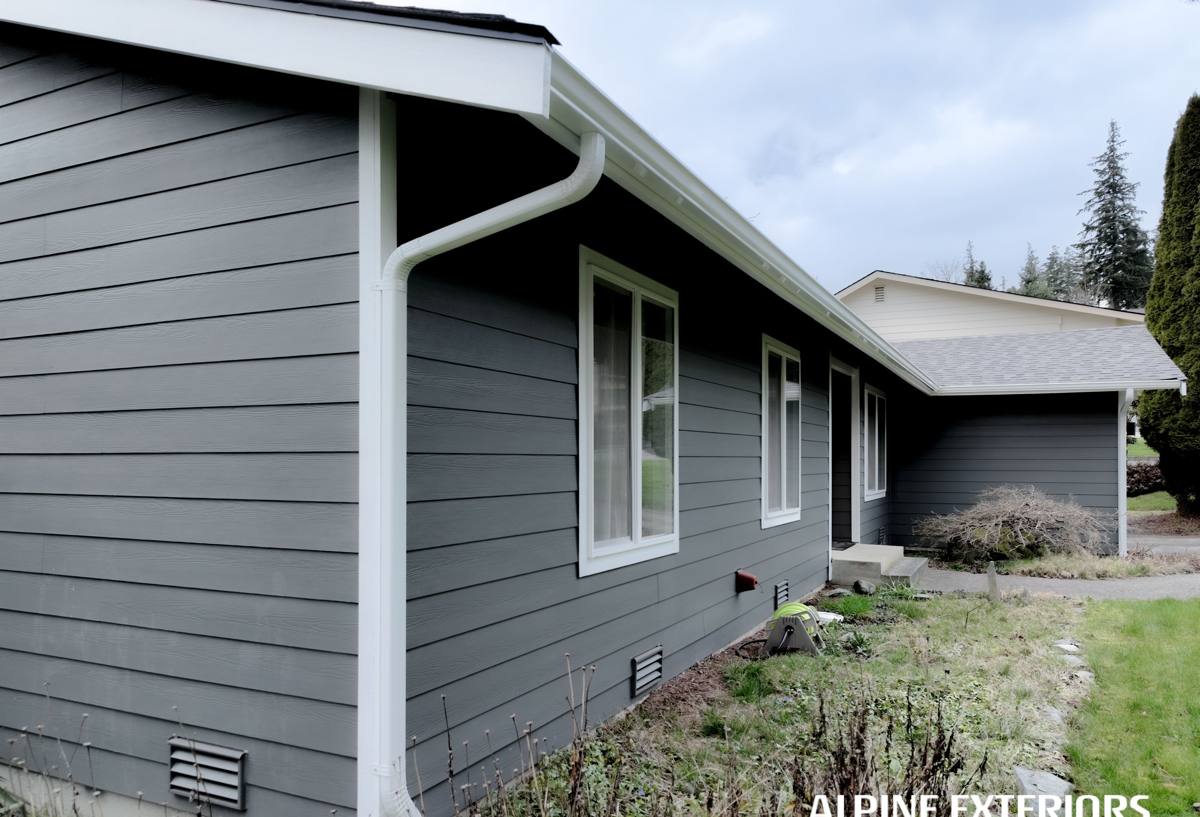
James Hardie's ColorPlus finish is baked on in a controlled factory environment, cured, and backed by its own finish warranty separate from the substrate warranty. That finish is engineered specifically to resist Florida-level UV fading and to shed the wind-driven rain common to Gulf Coast storms.
LP SmartSide ships primed, not finished, and the topcoat is a field-applied paint job — done by whichever crew installs it, under whatever weather conditions exist that week, with quality that depends entirely on that crew's paint prep and technique. The long-term color and moisture performance of the product then rides on that field paint job being redone on a maintenance schedule, in a climate that's hard on paint.
Warranty Structure
Warranty length is easy to compare on a brochure. What actually matters is what's covered and whether it's transferable if the home sells — a real consideration in a market like Land O'Lakes where turnover is common.
| Factor | James Hardie Fiber Cement | LP SmartSide Engineered Wood |
|---|---|---|
| Substrate material | Cement, sand, cellulose fiber | Resin-bonded wood strand |
| Factory finish | ColorPlus baked-on finish available | Primed only; topcoat applied in the field |
| Combustibility | Non-combustible | Combustible (treated wood product) |
| Moisture sensitivity of substrate | Low — does not swell or rot like wood | Higher — wood fiber core can absorb moisture at breaches |
| Repaint/recoat maintenance | Not required if ColorPlus finish is intact | Field topcoat needs periodic maintenance/repainting |
| Typical warranty transferability | Transferable to subsequent owners (terms apply) | Varies by product line and installer |
We're not going to put a number on either warranty here beyond what's generally true — read the actual manufacturer warranty document for any product before you sign a contract, because the specifics matter more than the headline years.
Installation Is Where Products Actually Succeed or Fail
Both of these products can be installed well or installed poorly, and installation quality is honestly a bigger swing factor in siding lifespan than most homeowners realize. But the two products are not equally forgiving of the same mistakes.
Where Engineered Wood Gets Punished
Every cut edge on an engineered wood panel needs to be field-sealed correctly, every time, or it becomes a moisture entry point into wood fiber. On a real job with hundreds of cuts, that's a lot of places for a lapse to matter, and those lapses often don't show up as a problem for years.
Where Fiber Cement Still Requires Skill
Fiber cement isn't zero-maintenance-installation either. It needs correct fastener spacing and depth, proper clearance off rooflines and grade, correctly lapped joints, and manufacturer-spec caulking at penetrations. Installed wrong, any siding product will underperform. The difference is that fiber cement's substrate gives you more room for a small imperfection to not become a structural problem, which matters in a climate that stresses every seam on the house.
What This Costs to Think About
We won't quote prices here — every home's square footage, trim detail, and tear-off scope changes the number. But the honest cost-factor comparison homeowners should actually weigh is this:
| Cost Factor | James Hardie | LP SmartSide |
|---|---|---|
| Upfront material + install | Generally higher | Generally lower |
| Repainting over ownership | Not needed if ColorPlus finish holds | Field topcoat needs eventual repainting |
| Insect/moisture repair risk | Lower — non-wood substrate | Present if coating/caulk fails at a seam |
| Resale/appraisal perception | Widely recognized premium material | Varies by buyer familiarity |
The lower upfront number on engineered wood is real. Whether it stays the lower number over fifteen or twenty years of Pasco County weather depends on how well the maintenance gets kept up — and that's a homeowner responsibility, not a one-time install decision.
What We Actually Chose, and Why
We standardized on James Hardie's climate-engineered HZ product lines because they're formulated for exactly this Gulf Coast combination of heat, humidity, and storm exposure. We're not installing every fiber cement product on the market either — Hardie is the one where we trust the finish system, the warranty structure, and the substrate behavior enough to put our own name behind the install. That's the whole basis for the position on this page: not that engineered wood is a bad product in the abstract, but that after years of installing and repairing siding in this specific climate, fiber cement is what we're willing to warranty our workmanship on.
A Practical Checklist Before You Decide
- Ask any contractor to show you the actual manufacturer warranty document, not just a summary — read what voids it
- Ask whether the finish is factory-applied or will be field-painted, and who's responsible for repainting later
- Ask how cut edges and butt joints will be sealed, and with what product
- Ask about fastener type and spacing — corrosion resistance matters more here with salt air in the mix
- Get the combustibility rating in writing if fire resistance matters for your insurance or your lot
- Confirm whether the warranty is transferable if you sell the home
If you're weighing siding materials for a home in Land O'Lakes or elsewhere in Pasco County, we're happy to walk your specific house, look at your current siding's condition, and give you a straight, no-pressure estimate on a James Hardie install — including why we'd spec the particular HZ product line and color system for your exposure.