 Land O'Lakes Siding
 Why Color Choice Is a Bigger Decision in Land O'Lakes Than It Looks
Picking a siding color feels like the fun part of a project — until you remember that whatever you choose has to survive a Pasco County summer, year after year, without turning chalky, streaky, or faded on the sun-facing side of the house. Land O'Lakes sits inland enough to dodge direct salt spray, but we're still close enough to Tampa Bay and the Gulf that humid, salt-tinged air moves through on the prevailing winds. Add in intense UV exposure nearly twelve months a year, wind-driven rain during summer storms, and the occasional hurricane-force gust, and a siding finish is under more stress here than it would be in most parts of the country.
That's why we treat color selection as a technical decision, not just an aesthetic one. The color you pick and the way it's applied to the board determines how it ages — and on a house you're going to look at every day for the next 20-plus years, that matters.
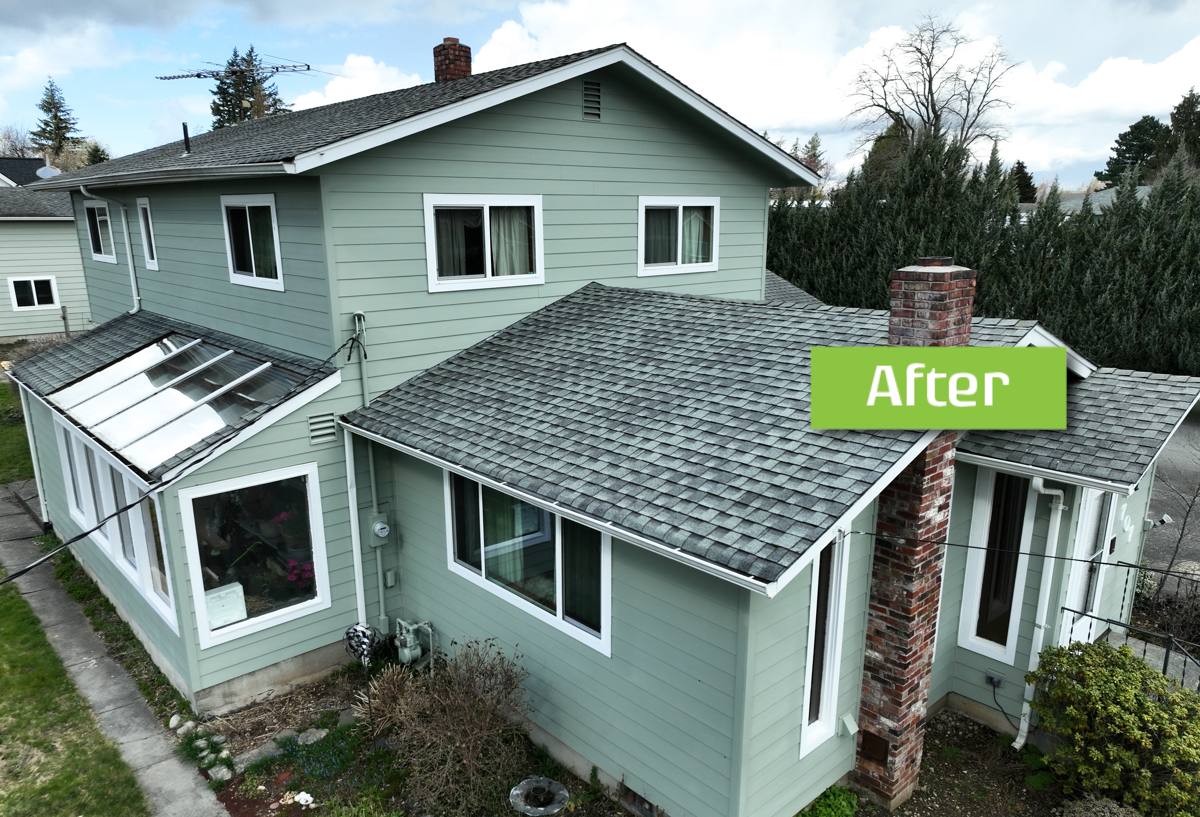
What "ColorPlus Technology" Actually Means
James Hardie's ColorPlus finish is not paint applied by a crew standing on a ladder. It's a multi-coat, baked-on finish applied to each plank in a controlled factory environment before the siding ever reaches the jobsite. The coating is cured under heat, which bonds it to the fiber cement substrate far more tightly than a field-applied coat of paint can bond to a painted surface.
Why that matters in this climate
Site-applied paint has to cure in whatever conditions exist that day — humidity, temperature swings, even pollen or dust in the air can affect adhesion. A factory finish skips all of that variability. In a market with heavy summer humidity and intense sun like ours, that consistency is the difference between a finish that holds its color for a couple decades and one that needs a repaint inside 7-10 years.
- Factory-applied, not brushed or rolled on site
- Cured under controlled heat, not ambient Florida weather
- Backed by a separate finish warranty, distinct from the base product warranty
- Designed to resist fading and chipping better than field-applied paint on comparable substrates
The James Hardie Color Palette
James Hardie's ColorPlus palette runs from crisp whites to deep, saturated tones, and it's built to work across a range of architectural styles — from the Craftsman and Florida vernacular homes common in Land O'Lakes to newer coastal-contemporary builds. Below is a sample of commonly available ColorPlus colors and how they tend to perform and read in strong Florida sun. Availability can vary by product line and region, so we confirm current options before finalizing anything with a homeowner.
| Color Family | Example Tones | How It Behaves in Florida Sun |
|---|---|---|
| Whites & Neutrals | Arctic White, Navajo Beige | Reflects heat well, shows dirt/mildew streaks least, easiest to keep looking fresh |
| Warm Earth Tones | Khaki Brown, Woodstock Brown, Timber Bark | Hides pollen and water staining better than pale colors; reads warm against brick or stone accents |
| Cool Grays | Iron Gray, Aged Pewter, Monterey Taupe | Popular for modern coastal looks; holds up well but shows dust and mineral deposits from sprinklers more visibly than earth tones |
| Deep/Saturated Colors | Rich Espresso, Deep Ocean, Evening Blue | Striking as an accent or on a single elevation; absorbs more heat and is the color family most exposed to UV fade over time, even with ColorPlus |
| Classic Reds & Greens | Countrylane Red, Mountain Sage | Traditional look, ages well as a factory finish but less forgiving if touch-up paint doesn't match precisely |
As a general rule, darker and more saturated colors will always experience more UV stress than lighter ones, no matter how good the finish technology is. That's true of any exterior product on the market — it's physics, not a flaw in the finish. We're upfront with homeowners about this trade-off rather than pretending a dark navy board will look exactly as deep five years from now as it does on install day.
Primed Boards vs. Factory-Finished Boards
James Hardie also sells primed siding meant to be field-painted after installation. We install ColorPlus factory-finished boards almost exclusively, and rarely recommend primed product for Pasco County homes. Here's the comparison that drives that recommendation:
| Factor | ColorPlus Factory Finish | Primed + Field-Painted |
|---|---|---|
| Where finish is applied | Factory, controlled environment | Jobsite, weather-dependent |
| Typical repaint interval | Often 15+ years before touch-up needed | Commonly 5-10 years in strong Gulf Coast sun |
| Finish warranty | Separate finish warranty from James Hardie | Warranty responsibility shifts to painter/paint manufacturer |
| Upfront cost | Slightly higher material cost | Lower material cost, added labor cost for painting |
| Color consistency | Uniform, factory-matched across all boards | Dependent on painter's technique and conditions that day |
Primed board isn't a bad product — it has its place. But for a homeowner trying to minimize maintenance over the life of the siding, the factory finish almost always wins on total cost and appearance retention.
HZ5 Formulation: Built for This Climate
James Hardie engineers its siding in regional formulations, and homes in our part of Florida should be installed with the HZ5 product line, engineered for high-humidity, high-moisture climates. HZ5 boards are formulated to resist moisture-related damage better than the standard formulation sold in drier regions. Combined with the ColorPlus finish, this is the combination we consider correct for Pasco County — not a substitution, not a downgrade to save on material cost.
Warranty Structure: Two Separate Clocks
It's worth understanding that James Hardie's warranty on ColorPlus siding is actually two warranties running at once:
- The substrate warranty covers the fiber cement board itself — its integrity, resistance to cracking, rotting, and similar structural issues — for decades.
- The ColorPlus finish warranty covers the factory finish separately — fading and chipping — for its own term.
- Both warranties are transferable to a new owner if the home sells within the warranty period, which is a real selling point if you plan to move before the warranty runs out.
- Warranty coverage assumes installation to manufacturer specification — which is one more reason correct installation isn't optional.
How to Actually Choose a Color
Color chips look different in a showroom than they do on a two-story elevation facing west in July. A few things we walk homeowners through before finalizing a choice:
- View large samples outdoors, in direct sun, at the actual house — not just under indoor lighting
- Check the color against your existing roof, brick, stone, or driveway pavers, not in isolation
- Consider which elevations get the most sun exposure — that's where fade risk concentrates
- Check your HOA's approved color list if you're in a deed-restricted community, which covers a large share of newer Land O'Lakes neighborhoods
- Think about resale — neutral and warm-neutral tones tend to have the broadest buyer appeal
- Decide on trim and accent contrast early, since trim boards and fascia are usually a separate ColorPlus selection
A Note on Trends
Deep charcoal and black-adjacent siding has been a popular look in recent years. It photographs well, but it's also the color family most likely to show heat stress and UV fatigue first in a climate with this much direct sun. We'll still install it if that's what a homeowner wants — we just make sure they're choosing it with eyes open, not because a photo online didn't mention the Florida sun angle.
Maintenance and Touch-Ups
ColorPlus siding is low-maintenance, not zero-maintenance. A yearly rinse with a garden hose (not a pressure washer aimed directly at seams) keeps pollen, mildew spores, and salt residue from building up. Caulking at trim joints and penetrations should be inspected periodically, since caulk fails well before the siding does. If a board is ever damaged, James Hardie sells touch-up kits matched to each ColorPlus color, so repairs blend in rather than leaving a visible patch.
Why We Only Install James Hardie
We standardized on James Hardie fiber cement — installed to spec, in the HZ5 formulation, with factory ColorPlus finishes — because it's the combination that holds up to what this part of Florida throws at a house: UV load, humidity, wind-driven rain, and the occasional hurricane. Non-combustible construction, a factory finish that doesn't depend on jobsite weather, and a warranty structure that follows the house if it's sold are the specific reasons this is what goes on the homes we work on, rather than vinyl, LP SmartSide, or a lower-cost fiber cement alternative.
If you're planning a siding project and want to see actual ColorPlus samples against your home's roof and brick, we're happy to walk through it in person. Reach out for a free, no-pressure estimate — there's a form right below this page.