 Land O'Lakes Siding
 Why Concord Station Siding Wears Out Faster Than You'd Expect
Concord Station homes sit squarely in Pasco County's toughest weather zone for exterior building materials. It's not one single event that wrecks siding here — it's the accumulation of everything Central Florida throws at a house year after year. Intense, near-constant UV exposure bakes and fades paint finishes. Wind-driven rain during summer storms and tropical systems forces water sideways into seams and laps that were never designed to handle it. Hurricane-force wind gusts flex panels, work fasteners loose, and peel back anything that wasn't installed tight to spec. And even well inland, salt-laden air moving across the Gulf Coast region contributes to the slow corrosion of fasteners and trim over time.
Individually, none of these are dramatic. Together, over a 10-15 year span, they're exactly why we see so much premature siding failure in Land O'Lakes neighborhoods — cupping, buckling, soft spots, and paint that looks chalky and tired years before it should. Siding replacement in Concord Station isn't just a cosmetic upgrade. It's an opportunity to correct whatever combination of material choice and installation shortcuts let the weather win the first time.
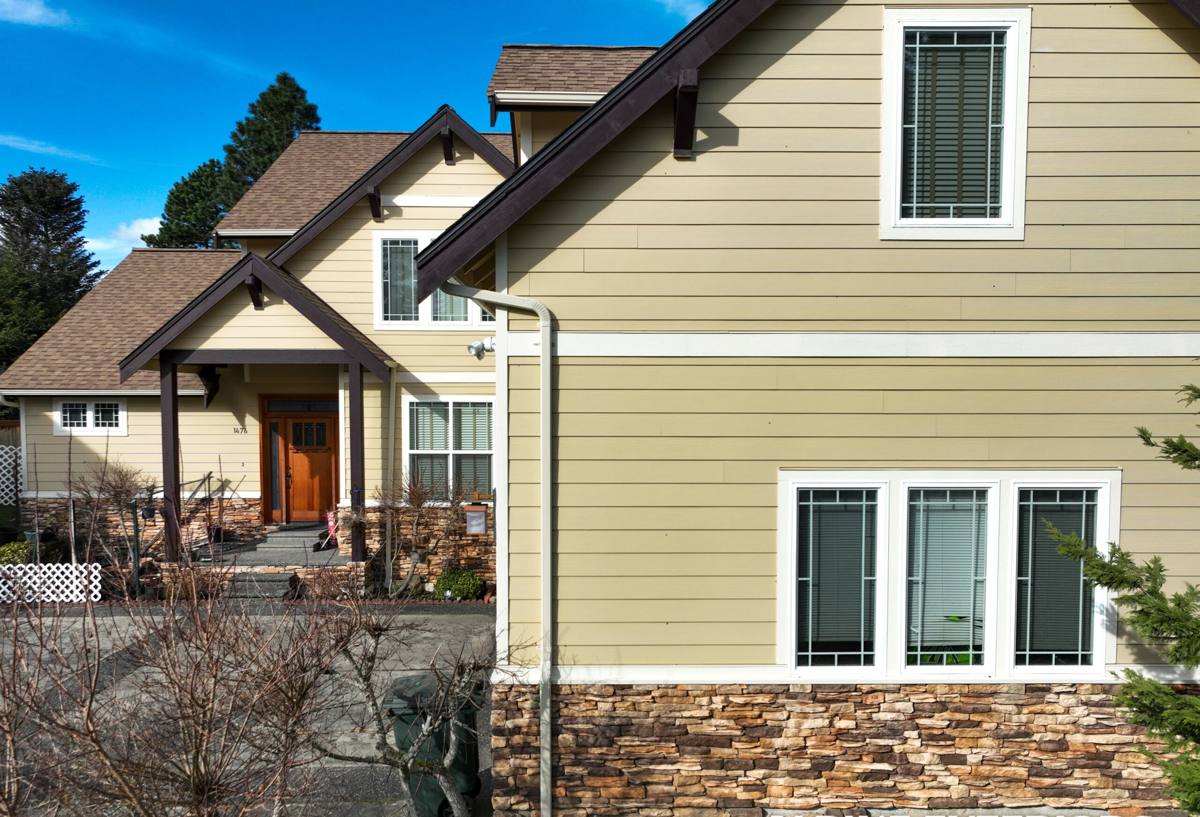
Signs a Concord Station Home Needs Siding Replacement, Not Another Patch
Homeowners often try to nurse failing siding along with caulk and touch-up paint. Sometimes that's reasonable. Other times it's throwing money at a problem that's already structural. Here's how to tell the difference.
- Soft, spongy, or crumbling spots when you press on the siding — usually a sign of moisture already inside the wall assembly
- Visible cupping, warping, or buckling panels, especially on south- and west-facing walls that take the most UV load
- Paint that's peeling, bubbling, or chalking heavily rather than just fading
- Gaps opening up at seams, corners, or around windows and doors after storm seasons
- Rising interior humidity, musty smells, or bubbling interior paint near exterior walls
- Visible fastener corrosion or streaking below nail heads
- A siding material (vinyl, older fiber cement, or untreated wood products) that's simply reached the end of its realistic service life
If you're seeing two or more of these, patch repairs are usually a delay tactic, not a fix. Once moisture gets behind siding in a humid climate like this one, it doesn't dry out on its own — it spreads.
What's Usually Hiding Behind Failed Siding
When we pull failed siding off a Concord Station home, the siding itself is rarely the whole story. We regularly find compromised house wrap, missing or improperly lapped flashing around windows, and sheathing that's absorbed moisture over years of slow intrusion. A siding replacement that only addresses the visible layer and ignores what's underneath is a replacement that will fail again — often faster than the first time, because the underlying damage keeps working while it's covered up.
What a Correct Siding Replacement Actually Involves
"Replace the siding" sounds like a simple swap, but the parts that determine whether it lasts 5 years or 30 years happen before a single new panel goes up.
- Full tear-off and inspection — removing old siding down to the sheathing so the wall can actually be evaluated, not guessed at
- Sheathing repair or replacement — any rotted, water-damaged, or delaminated sheathing gets replaced before anything else happens
- Water-resistive barrier installation — a correctly lapped weather barrier that sheds water downward and outward, not one that traps it
- Flashing at every penetration — windows, doors, hose bibs, light fixtures, and any other wall penetration get proper flashing, not just caulk
- Correct fastening pattern and clearances — following the manufacturer's specified nailing pattern, butt joint treatment, and ground clearance, all of which affect wind performance and warranty validity
- Factory-finished siding installation — panels installed with the gaps, caulking, and trim details the manufacturer requires for the climate zone
Skip or rush any one of these steps and the new siding is cosmetically fine on install day but structurally set up to fail on the same timeline as what it replaced. This is the difference between a siding replacement and a siding swap.
Why We Install Only James Hardie Fiber Cement
We made a deliberate decision to install one siding system, not a menu of options: James Hardie fiber cement. We don't install vinyl, LP SmartSide, Cemplank, Allura, or primed wood products like spruce or cedar, and we're upfront with Concord Station homeowners about why.
Vinyl softens and can distort in extreme heat, and Florida's UV load fades and chalks it faster than cooler climates. Engineered wood products and untreated wood siding depend entirely on paint film integrity and consistent maintenance to keep moisture out — miss a maintenance cycle in a humid climate and moisture gets in fast. Other fiber cement brands may look similar on a spec sheet, but we've standardized on Hardie specifically for its ColorPlus factory finish, its HZ5 product line engineered for humid climates like ours, and a warranty structure we're comfortable standing behind on every job we do.
Fiber cement itself isn't fireproof marketing fluff here — it's non-combustible, doesn't provide fuel to a fire the way wood-based products do, and holds up to sustained UV and moisture cycling far better than the alternatives we chose not to carry. We're not neutral about this, and we don't pretend to be. It's the product we believe belongs on Pasco County homes, and it's the only one we install.
ColorPlus Finish vs. Field-Applied Paint
One detail that matters more in this climate than most: Hardie's ColorPlus finish is baked on at the factory under controlled conditions, not brushed or sprayed on-site after installation. That finish is engineered to resist the fading and chalking that intense, near-year-round Florida UV causes to field-applied paint. It's a meaningful part of why the color on a Hardie home still looks like the color you picked years later.
Material Comparison for Concord Station's Climate
| Factor | Vinyl | Engineered Wood / Untreated Wood | James Hardie Fiber Cement |
|---|---|---|---|
| UV/fade resistance | Moderate — chalks and fades with age | Depends entirely on paint maintenance | Strong — factory ColorPlus finish |
| Wind performance | Can distort or blow off in high gusts | Adequate if installed and sealed correctly | Rated for high-wind installation specs |
| Moisture/rot risk | Low material risk, but traps moisture behind it if installed wrong | Higher — wood-based core is moisture-sensitive | Low — cement-based, doesn't rot |
| Fire behavior | Combustible | Combustible | Non-combustible |
| Maintenance cycle | Low, but limited repair options | Frequent repainting/resealing needed | Minimal — occasional wash, long repaint intervals |
This table reflects general product characteristics, not a specific manufacturer's marketing claims — the point is to show why the trade-offs matter more in a climate this demanding than they would somewhere milder.
Our Siding Replacement Process in Concord Station
We run the same disciplined process on every Land O'Lakes home, adjusted for the specific exposure of that lot — corner lots and homes backing to open space typically take more direct wind and rain than interior lots.
- On-site inspection and honest assessment of whether replacement is actually needed, or if targeted repair makes sense
- Written scope covering tear-off, sheathing repair allowances, water barrier, flashing details, and the specific Hardie product line and profile
- Scheduling that accounts for Central Florida's storm season, so open walls aren't left exposed longer than necessary
- Full tear-off, sheathing inspection, and repair before any new material goes up
- Installation to Hardie's published fastening and clearance specifications, not shortcuts that void the warranty
- Final walkthrough covering caulking, trim details, and paint lines before we consider the job complete
Timing Around Pasco County's Storm Season
We plan siding replacement jobs around the realities of a Florida wet season. An open wall during a sudden downpour is a problem regardless of how good the crew is, so scheduling and weather awareness are part of doing this job right here — not an afterthought.
Why Local Experience in Concord Station Matters
A siding installer who works Land O'Lakes and Pasco County regularly already knows how this specific climate behaves — where wind-driven rain tends to concentrate on a typical lot orientation, how much UV load a west-facing elevation actually takes, and which flashing and clearance details matter most for homes in this exposure. That's different from following a generic national installation manual. It shows up in the small decisions: how tight the fastening pattern is, how butt joints and caulking are handled, and how much attention goes into the water barrier before the first panel ever goes up.
It also matters for warranty follow-through. A crew that's still working in the same neighborhoods years later has every incentive to install correctly the first time, because they're the ones a homeowner calls if something goes wrong.
What This Typically Costs — and What Drives the Range
We don't publish fixed prices because every home's square footage, current siding condition, trim complexity, and story count change the number. What we can tell you is what actually moves the price up or down.
| Cost Factor | Why It Matters |
|---|---|
| Sheathing condition | Hidden rot or water damage found during tear-off adds repair scope |
| Home size and story count | More square footage and two-story access both add labor time |
| Trim and architectural detail | Gables, dormers, and multiple roof lines add cutting and flashing work |
| Siding profile chosen | Lap width, texture, and accessory trim all affect material cost |
| Color and finish | Factory ColorPlus finishes vs. field-primed options price differently |
The only way to get a real number for your Concord Station home is a walk-through — we're not going to guess at a price over the phone and hope the job matches it.
Caring for Your New Siding After Installation
Correctly installed Hardie siding is low-maintenance, not no-maintenance. A simple annual routine keeps it performing the way it's designed to in this climate.
- Rinse dirt, pollen, and salt residue off with a garden hose a few times a year
- Walk the exterior after major storms and check caulking at trim and penetrations
- Keep sprinklers from constantly soaking the base of the siding
- Trim back landscaping so foliage isn't holding moisture against panels
- Address any caulk cracking or trim gaps promptly rather than waiting
If your Concord Station home is showing signs of siding failure, or you just want an honest opinion on whether repair or replacement makes more sense, we're happy to take a look. Reach out for a free, no-pressure estimate using the form below.