 Land O'Lakes Siding
 Siding in the Lake Padgett Community
Lake Padgett is one of the older, more established residential areas in Land O'Lakes, built around its namesake chain of lakes and known for mature tree canopy, larger lots, and a mix of homes dating from the 1970s and 1980s through more recent construction. That combination of age, shade, and water proximity creates a specific set of exterior maintenance challenges that differ from newer, more open subdivisions nearby. If you own a home in Lake Padgett and you're starting to think about siding, it helps to understand what's actually working against your exterior before you decide what to replace it with.
As a Land O'Lakes-based contractor, we work in this neighborhood regularly and see the same patterns repeat: siding that fails first on the shaded, lake-facing side of the house, trim that rots where gutters overflow under tree cover, and paint that can't hold a finish because the wall behind it never fully dries out. None of that is unusual for Pasco County. It's just what happens to exterior materials here over enough years, and it's exactly what the right siding system is built to handle.
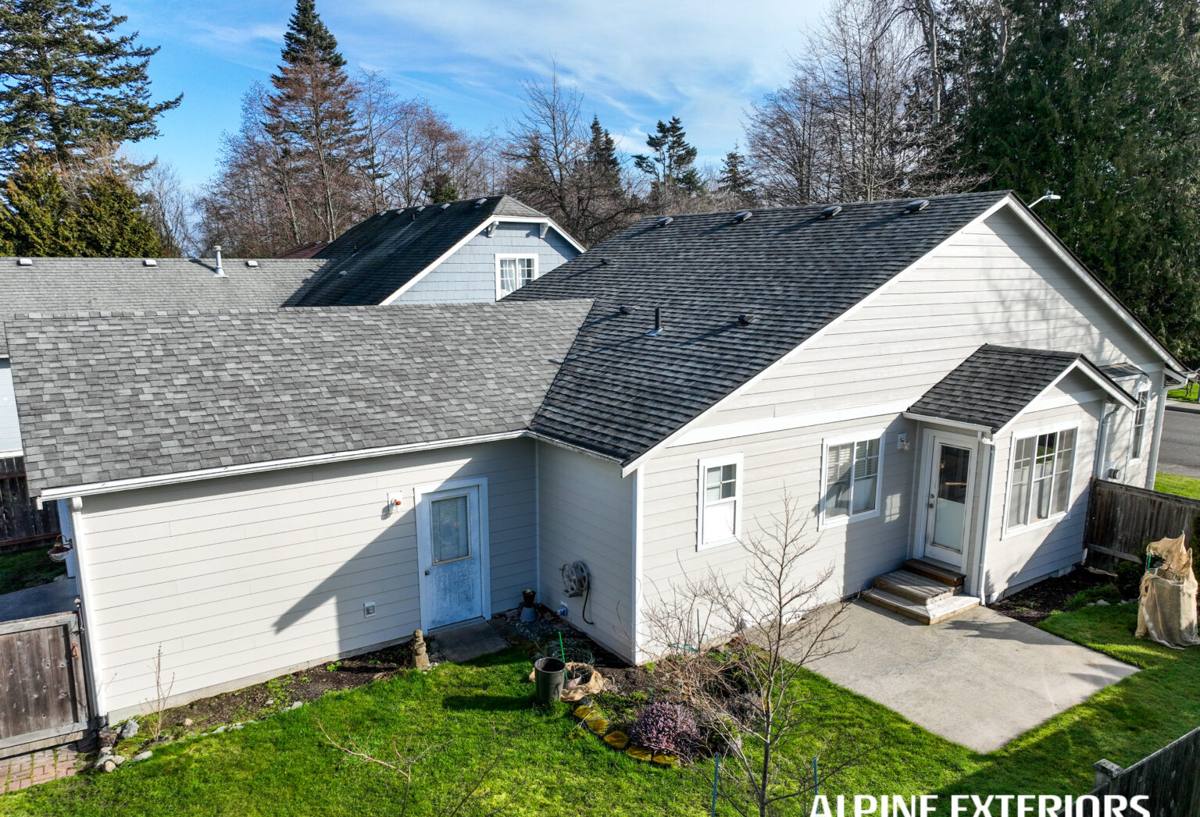
What the Local Climate Does to a House Here
Land O'Lakes sits inland from Tampa Bay but still gets the full range of Central Florida's weather extremes. Homes in Lake Padgett specifically deal with a few compounding factors:
- Hurricane-force wind exposure — Pasco County sits squarely in the path of tropical systems moving through the Gulf, and sustained wind loads test siding fasteners, panel edges, and trim joints every storm season.
- Wind-driven rain — it's rarely just rain here; it's rain forced sideways and upward under laps and behind trim, which is where most siding failures actually start.
- Intense, near-constant UV — Florida sun breaks down pigments and surface coatings faster than almost anywhere else in the country, which shows up as fading, chalking, and cracking on lower-grade materials.
- Humidity and shade — the tree cover that makes Lake Padgett attractive also keeps walls damp longer after rain, which is a problem for any siding material that isn't dimensionally stable when wet.
- Lake proximity — homes near the water pick up more ambient moisture and, depending on wind direction, some salt-laden air moving up from the Gulf, which accelerates corrosion on fasteners and hardware.
Individually, none of these are unusual for Florida. Together, over a 15-to-20-year ownership window, they're exactly the conditions that separate siding that holds up from siding that doesn't.
Why Shade and Water Change the Equation
A house on an open, sunny lot in a newer Land O'Lakes subdivision dries out fast after rain. A shaded home near Lake Padgett's water doesn't. Moisture sits against the wall longer, humidity stays higher at the surface, and any siding material sensitive to sustained dampness — whether that's wood-based composite, engineered wood, or a product with a weak moisture barrier — is going to show it first: soft spots at the bottom edge, swelling at seams, paint that won't hold. This is the single biggest reason siding choice matters more in a lake-adjacent, tree-covered neighborhood than it does on a bare, open lot.
Why We Install Only James Hardie Fiber Cement
We're not a general siding company that installs whatever a homeowner asks for. We install James Hardie fiber cement, exclusively — no vinyl, no LP SmartSide, no Cemplank or Allura, no primed wood. That's a deliberate standard, not a sales pitch, and it comes from watching how different materials actually perform on homes in this exact climate over time.
Fiber cement is cement, sand, and cellulose fibers, engineered to be dimensionally stable in heat and humidity. It doesn't expand and contract the way vinyl does in Florida's temperature swings, it doesn't absorb and hold moisture the way wood-based products can, and it's non-combustible, which matters to insurers as much as to homeowners. James Hardie also makes an HZ5 product line specifically engineered for high-humidity, high-moisture climates like ours — it's not a one-size-fits-all product adapted for Florida, it's built for it from the start.
The factory-applied ColorPlus finish is the other half of the equation. Because the color and UV-resistant topcoat are baked on in a controlled factory environment rather than field-painted, the finish holds up dramatically better under the kind of relentless sun Lake Padgett homes get, and it comes with its own finish warranty separate from the substrate warranty. On a shaded lake lot where the paint job is fighting humidity as much as UV, a factory finish is a real advantage over anything applied on-site.
What This Means in Practice
When we tell a Lake Padgett homeowner we don't install a particular product, it's not because that product is worthless — it's because we've standardized on one system we can install, warranty, and stand behind consistently, and that system is the one we believe holds up best against wind, rain, sun, and humidity together. We'd rather turn down work than install something to a spec we don't trust for this climate.
Siding Options Compared for This Kind of Property
| Material | Moisture behavior in shade/humidity | UV/fade resistance | Wind/storm performance | Our stance |
|---|---|---|---|---|
| Vinyl | Doesn't absorb moisture but can warp/buckle with heat cycling | Fades and becomes brittle over time in strong UV | Can crack or blow off in high wind if not rated/installed correctly | Not installed |
| LP SmartSide / engineered wood | Wood-based; sensitive to sustained moisture exposure | Needs field-applied finish maintenance | Generally solid when installed correctly | Not installed |
| Primed wood/cedar | Most moisture-sensitive option; needs regular repainting | Finish degrades fastest in direct sun | Performance depends heavily on upkeep | Not installed |
| James Hardie fiber cement | Dimensionally stable; HZ5 line engineered for humid climates | Factory ColorPlus finish holds color far longer | Rated for high-wind installation when installed to spec | What we install |
Roofing, Windows, and Decks Face the Same Environment
Siding doesn't fail in isolation, and neither do the other exterior systems on a Lake Padgett home. We also handle roofing, windows, and decks, and the same climate pressures apply across all of them.
- Roofing — the same wind-driven rain that pushes water behind siding laps pushes it under shingle edges and flashing; a roof that's compromised undermines everything below it, including new siding.
- Windows — humidity and UV degrade seals and frames over time, and poor window flashing is a common source of the moisture problems that get blamed on siding.
- Decks — outdoor structures near the water face constant moisture cycling and sun exposure, and the material and fastener choices matter as much there as they do on the walls of the house.
Because we handle all four, we look at a Lake Padgett property as one system rather than a siding job in isolation — flashing, drainage, and ventilation decisions on one component affect the others.
What a Local Crew Actually Adds
Fiber cement siding is only as good as its installation. Hardie's own warranty terms depend on correct fastening, clearances, joint treatment, and flashing detail — get those wrong and you can void coverage even with the best material on the market. A crew that works Pasco County regularly knows the specific failure points to watch for in a neighborhood like Lake Padgett: where tree cover keeps walls damp longer, where lake-facing exposures take more direct wind, and where existing trim and flashing tend to have already failed on homes of a certain age.
That local, repeated experience is different from a traveling crew installing to a generic spec. We size clearances and flashing details to what actually happens on shaded, lake-adjacent lots here, not to a national average.
What to Check Before Hiring Anyone for Exterior Work
- Are they licensed and insured to work in Pasco County, and will they show you proof without being asked twice?
- Do they install one product to a consistent spec, or whatever's cheapest that week?
- Do they explain flashing and moisture-management details, or just talk about the visible finish?
- Is the warranty they offer backed by the manufacturer, the installer, or both?
- Can they point to how their approach accounts for local wind and moisture conditions, not just national code minimums?
What Replacement Typically Involves
A siding replacement on a Lake Padgett home usually starts with removing the existing material and inspecting the sheathing and framing underneath for moisture damage — common on shaded, humid lots, especially around window trim and lower wall sections. Any compromised sheathing gets addressed before new siding goes on, because covering a moisture problem instead of fixing it just moves the failure a few years down the road. From there, correct water-resistive barrier installation, proper fastening per Hardie's wind-zone specifications, and careful flashing at every penetration are what actually determine how the job performs in the next storm season, not just how it looks on installation day.
Timelines vary with the size and complexity of the home, and a hands-on look at the property is the only reliable way to scope the work and cost accurately.
Get a Straightforward Look at Your Home
If you're in Lake Padgett and dealing with siding that's fading, softening, or just showing its age, we're happy to come take a direct look and tell you honestly what we see — no pressure, no generic sales pitch. Fill out the form below for a free estimate, and we'll walk the property with you and talk through what actually makes sense for your home.