 Land O'Lakes Siding
 Concord Station and the Climate Its Siding Has to Survive
Concord Station sits in the fast-growing western part of Land O'Lakes, Pasco County, where newer subdivisions of stucco and vinyl-clad homes back up against retention ponds, conservation land, and open sky with very little tree canopy to break the wind or sun. That open exposure is exactly the combination that wears siding down faster than homeowners expect: long stretches of direct, intense UV; wind-driven rain that pushes moisture sideways into seams and joints; and, during hurricane season, sustained winds strong enough to test every fastener and seam on the exterior of a house. Add in Tampa Bay's salt-laden air working its way inland on sea breezes, and you have a climate that is genuinely hard on exterior materials, even ones marketed as low-maintenance.
None of this means Concord Station is a bad place to own a home — it means the materials and installation details matter more here than they would in a milder climate. A siding product that performs fine in a dry, temperate region can fail early in Pasco County if it wasn't engineered for sustained heat, humidity cycling, and wind-driven water.
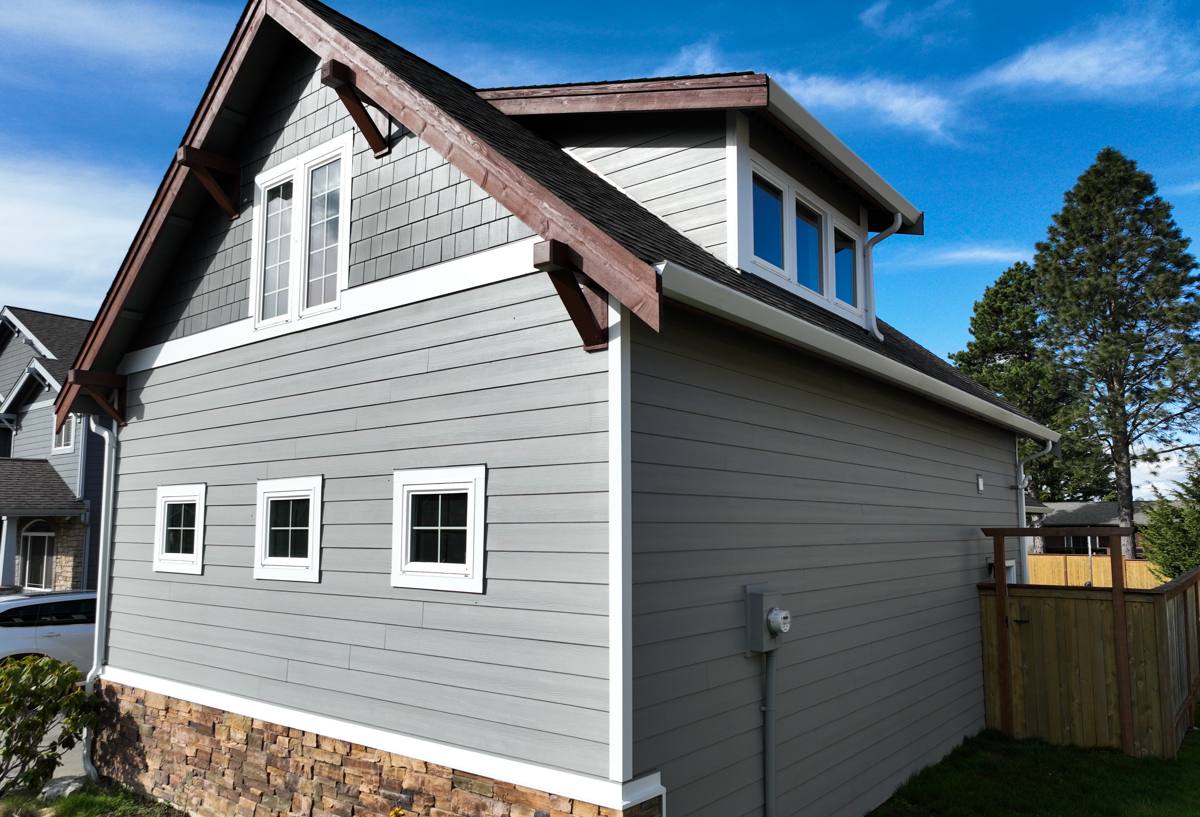
Why We Install Only James Hardie Fiber Cement Siding
We made a deliberate decision as a company to install James Hardie fiber cement exclusively — not vinyl, not LP SmartSide, not Cemplank, not Allura, not primed wood. That is not a marketing angle; it is a standard we hold to because of what we have seen these materials do, and not do, in Florida's climate over time.
What Fiber Cement Gets Right
James Hardie siding is cement, sand, and cellulose fiber, non-combustible, and dimensionally stable across Florida's wide swings between blistering afternoon heat and sudden downpours. It does not expand and contract the way vinyl does in direct sun, and it does not absorb and swell with moisture the way engineered wood products can if a seam or cut edge is left exposed. Hardie's HZ5 product line is specifically formulated for the humid, hot, storm-exposed conditions of the Gulf Coast, which is precisely what Concord Station sees for most of the year.
Why We Turned Down the Alternatives
Vinyl siding is inexpensive and easy to install, but it is a thin plastic product that can soften, warp, or blow off in sustained high winds, and it offers little protection against wind-driven debris. LP SmartSide, Cemplank, Allura, and primed spruce or cedar all depend heavily on flawless caulking, sealing, and edge treatment to keep water out — miss one seam during installation or maintenance, and moisture gets a foothold that leads to swelling, rot, or delamination over years of humidity exposure. These are honest trade-offs, not defects, but they are trade-offs we are not willing to install and then be responsible for defending when Florida's climate eventually finds the weak point. James Hardie's factory-applied ColorPlus finish, backed by a strong transferable warranty, gives us a product we can install once and stand behind for decades, provided the installation itself is done correctly.
Common Siding Problems We See on Concord Station Homes
Because so much of Concord Station was built within the past two decades, most homes here are still on their original exterior cladding. The issues we get called out for tend to fall into a handful of categories:
- Caulk and sealant failure around windows, doors, and siding seams after years of UV exposure, allowing wind-driven rain to get behind the cladding
- Vinyl siding that has warped, cracked, or blown loose after tropical storm or hurricane winds
- Faded or chalky paint finishes on painted wood or fiber cement that was never factory-finished, requiring repainting well before it should
- Soft spots or visible swelling at the bottom edges of engineered wood siding near grade, downspouts, or sprinkler overspray
- Fastener corrosion and staining, especially on homes closer to the Gulf where salt air accelerates rust on exposed metal trim and fasteners
Most of these problems trace back to the same root cause: a material or installation detail that wasn't matched to the demands of this climate. That is the gap we are trying to close by standardizing on one system and installing it to spec every time.
How We Approach a Siding Job in Concord Station
Inspection and Assessment
Every job starts with a walk-around of the home to assess the current siding condition, look for moisture intrusion around windows, doors, and penetrations, and check the state of the underlying sheathing and house wrap. In a community as young as Concord Station, we are often dealing with the original building envelope, so this step tells us whether we are doing a straightforward re-side or whether there is underlying water damage to address first.
Product Selection
We work with homeowners to choose the right Hardie product line and profile — lap siding, board and batten, or shingle-style panels — along with a ColorPlus factory finish color that fits the home and any HOA guidelines common in newer Land O'Lakes subdivisions. Because Concord Station is inland enough from the coast but still within reach of salt-influenced humidity, we typically recommend HZ5 for its combination of moisture and wind performance.
Installation to Manufacturer Spec
Fiber cement siding performs the way it's supposed to only when it's installed to Hardie's published specifications — correct fastener type and spacing, proper clearances at grade and roofline, and correctly flashed and sealed penetrations at every window, door, and utility fixture. This is the step where corners get cut on cheaper jobs, and it's the step that determines whether a homeowner gets the 30-plus years of service life the product is capable of, or a callback in five years.
Final Walkthrough
We close out every job with a walkthrough covering what was done, how to care for the new siding, and what to watch for going forward, so homeowners aren't left guessing.
Beyond Siding: The Full Exterior Envelope
Siding doesn't work in isolation — it's one part of a home's exterior envelope, and in Concord Station we routinely see siding issues connected to roofing, window, or deck problems. We handle all four:
- Roofing — the roofline and siding meet at flashing details that are common failure points if not coordinated; we address both together when needed
- Windows — window flanges and siding trim have to be flashed and sealed as a system, not treated as two separate jobs by two separate crews
- Decks — outdoor living space takes the same UV, humidity, and wind exposure as siding, and ledger board attachment to the house has direct implications for moisture management at the wall
Bundling exterior work with one crew that understands how these systems interact reduces the chance of a detail falling through the cracks between trades.
What Siding Work Typically Costs in Concord Station
Every home is different, but the table below outlines the main factors that drive cost on a fiber cement siding project so homeowners know what to expect before we walk the property.
| Cost Factor | Why It Matters |
|---|---|
| Home size and story count | More square footage and second-story access both add labor and material |
| Current siding removal | Tear-off of existing vinyl, wood, or damaged material adds time versus a bare wall |
| Substrate repair | Any water-damaged sheathing found during removal has to be repaired before new siding goes on |
| Siding profile and trim complexity | Board and batten, extensive trim, and architectural detail take longer than plain lap siding |
| ColorPlus finish selection | Standard factory colors versus custom or premium finishes affect material cost |
| Access and site conditions | Landscaping, fencing, pool enclosures, and tight lot lines common in newer subdivisions can add setup time |
We provide a written, itemized estimate after an in-person inspection rather than a phone quote, because these factors vary too much from home to home to price accurately sight unseen.
Choosing a Contractor for Siding Work in Pasco County
Siding work is a significant investment, and it's also the kind of job where poor installation doesn't show up as a problem until years later. A few things worth checking before hiring anyone for exterior work in this area:
- Verify active state contractor licensing and insurance directly, not just a claim on a business card or website
- Ask specifically what siding brand and product line they install, and why — a contractor who installs "whatever the customer wants" often isn't specialized in any one system's installation details
- Ask how they handle flashing and sealing at windows, doors, and penetrations, since that's where most long-term failures start
- Get a written estimate that itemizes tear-off, repair, materials, and installation separately
- Ask about the manufacturer's warranty terms and whether it's transferable if you sell the home
- Choose a crew that is familiar with local wind and building code requirements for Pasco County, not just general siding installation
Caring for James Hardie Siding After Installation
One advantage of factory-finished fiber cement is that it needs far less upkeep than painted wood, but "low-maintenance" is not "no-maintenance," especially in this climate. A periodic rinse to remove salt residue and pollen buildup, prompt attention to any caulk lines that start to crack or pull away, and keeping sprinklers and landscaping from spraying the base of the siding all go a long way toward hitting the full service life the product is built for.
Get a Free, No-Pressure Estimate
If your Concord Station home is due for new siding, storm repairs, or a full exterior refresh covering siding, roofing, windows, or a deck, we're happy to walk the property and put together a straightforward, itemized estimate — no pressure, no obligation. Use the form below to get started.