 Land O'Lakes Siding
 Trinity is one of the newer, faster-growing residential pockets in the Land O'Lakes area of Pasco County, and that growth means a wide mix of siding conditions on the ground — homes from different building booms, different original installers, and different levels of exposure depending on lot placement and tree cover. Siding repair here isn't a one-size job. A section of buckled panel on a west-facing wall that takes the afternoon sun all year behaves differently than a soffit corner that's been quietly taking on wind-driven rain during every summer storm. Getting a repair right means understanding what's actually happening behind the surface damage, not just patching what's visible.
Why Siding Repair in Trinity Isn't a Generic Job
Pasco County's climate doesn't take a break, and siding on a Trinity home is working against it every day of the year, not just during named storms. Hurricane-force wind events put direct pressure and uplift on panels and trim, especially at corners and edges where fasteners take the brunt of the load. Between storms, intense year-round UV breaks down caulking, fades finishes, and makes lower-grade materials brittle faster than homeowners expect. Wind-driven rain doesn't just fall — it gets pushed sideways into seams, laps, and penetrations that were never designed to shed water from that angle. And even though Trinity sits inland from the immediate Gulf coastline, Pasco County's broader Gulf-influenced climate still carries salt-laden humidity that slowly works on fasteners, trim, and finishes over years, not overnight.
None of that means siding repair is a losing battle here — it means the repair has to account for why the damage happened in the first place, not just what it looks like today.
Where Problems Actually Start
Almost every siding repair call we get in Trinity traces back to a handful of failure points: a seam or lap joint that opened up and let water behind the panel, a corner or trim piece that took direct wind load and cracked or pulled loose, a fastener that backed out or corroded and let a panel start to work itself free, or caulking that failed under UV and let moisture in around a window or door. Once water gets behind siding, the damage almost never stays where you can see it — it travels down the wall, and by the time a stain or soft spot shows up on the surface, there's usually more going on behind it.
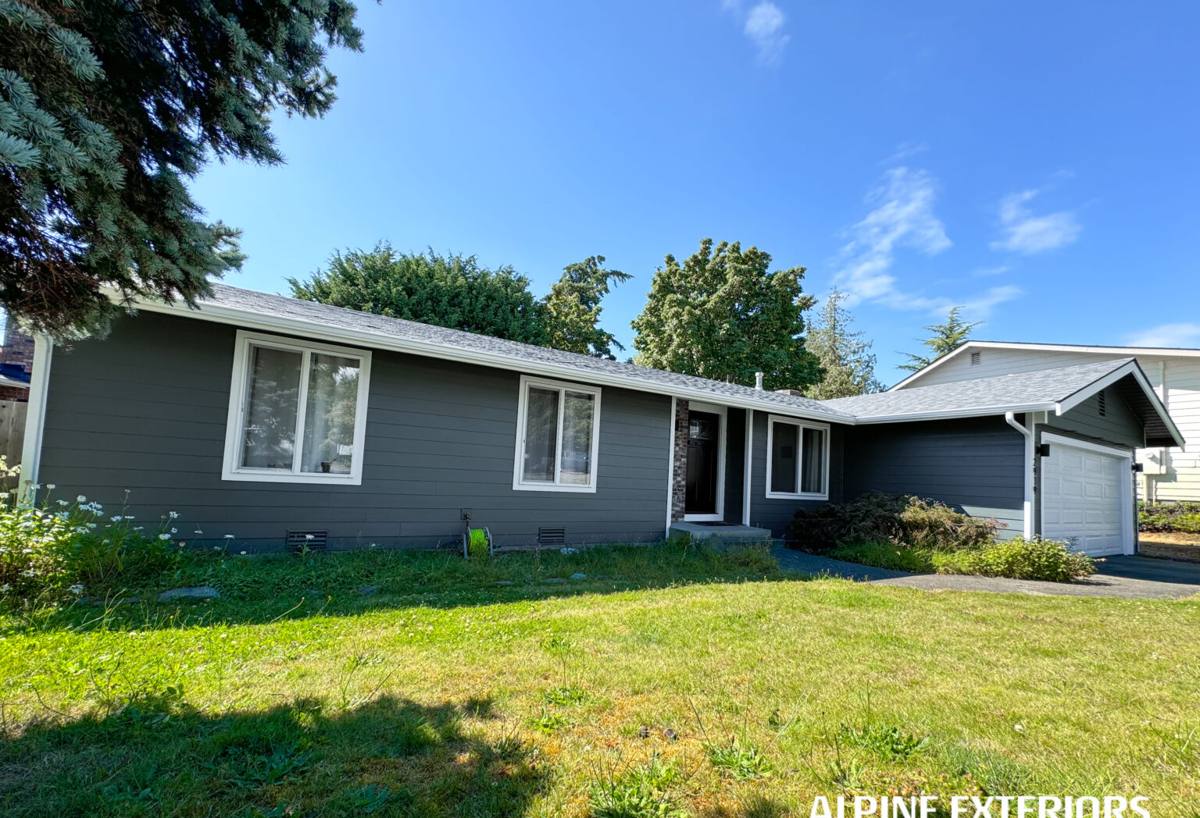
Common Siding Repair Issues We See in Trinity
- Cracked or split panels — usually from wind impact, temperature swings, or age-related brittleness in lower-grade materials
- Buckled or warped sections — often a sign of moisture trapped behind the siding rather than a surface-only problem
- Open or failed seams and laps — the most common entry point for wind-driven rain
- Corner and trim damage — these pieces take the most direct wind and impact stress on the whole wall system
- Fastener failure — backed-out, corroded, or improperly spaced fasteners that let panels shift or loosen
- Soft or discolored spots near penetrations — around windows, doors, hose bibs, and light fixtures where flashing and sealant were rushed or missed originally
- Faded or chalking finish — a sign of UV breakdown, more common on lower-quality paint jobs and some engineered wood products than on a factory-baked finish
What a Correct Siding Repair Job Involves
Real Assessment, Not a Surface Patch
We start by finding out why the damage happened, not just where it is. That means checking behind the visible problem area for moisture, soft sheathing, or corroded fasteners before deciding what the repair actually needs to include. A patch over a damp wall assembly doesn't fix anything — it just hides the problem until it resurfaces somewhere else.
Matching Material, Not Guessing at It
If the existing siding is still sound and just needs a section repaired, we match the profile, reveal, and finish as closely as the original material allows. When a section needs to be replaced outright — because the material has failed, not just the installation — we rebuild that section in James Hardie fiber cement, which is the only siding material we install. We'll walk you through what that means for color and profile matching honestly, rather than promising a seamless blend where one isn't realistic.
Fixing the Water Path, Not Just the Panel
Any repair that touches a seam, a corner, or an area around a window or door has to re-establish a correct water path — proper lapping, correct flashing, and sealant used where it belongs instead of as a substitute for good detailing. This is the step that actually determines whether a repair holds through the next few hurricane seasons or fails again in the same spot.
Fasteners and Finish
We re-fasten to spec rather than just driving nails or screws back into whatever's convenient, and we finish the repair so it holds up to the same UV and humidity the rest of the wall is dealing with — not a shortcut that looks fine for a season and then fails.
Quick Checklist Before You Hire for Siding Repair
- Ask whether they'll check behind the damaged area for moisture before quoting the repair
- Get a straight answer on whether it's a true repair or if the underlying material needs replacing
- Ask how they'll match the existing profile, reveal, and finish — and get an honest answer if it won't be a perfect match
- Confirm the flashing and sealant plan for any seam, corner, or penetration involved
- Ask what fastener spec they're using and why
- Get the scope in writing before work starts, including what happens if they find additional damage once the old material is off
Our Process, Start to Finish
- On-site inspection — we look at the visible damage and check behind it for moisture, soft sheathing, or fastener issues
- Honest scope — we tell you whether it's a clean repair, a section replacement, or something that points to a bigger issue, and why
- Material plan — matching existing siding where it's sound, or rebuilding with James Hardie fiber cement where replacement is the right call
- Removal and prep — damaged material comes off carefully, and any wet or compromised substrate is addressed before new material goes on
- Repair and re-fastening — the section is rebuilt to spec, with fasteners and flashing done correctly, not just reassembled
- Sealing and finish — seams and penetrations are sealed properly, and the finish is matched and cleaned up so the repair doesn't stand out
Repair vs. Replacement: How We Decide
Not every siding problem in Trinity needs a full re-side, and not every problem is a quick patch either. The honest answer usually comes down to how much of the wall is actually affected and what's driving the damage.
| Signal | Usually Points To |
|---|---|
| One or two isolated panels or a single corner damaged | Targeted repair, assuming no hidden moisture behind it |
| Repeated damage in the same spot after a prior repair | An underlying flashing or water-path issue that needs fixing, not another patch |
| Widespread buckling, soft spots, or chalking across multiple walls | Material or original installation reaching the end of its service life — replacement likely the better long-term value |
| Damage concentrated on one wind- or sun-exposed elevation | Repair that specific elevation now, with an honest look at whether the rest of the house is trending the same direction |
| Soft sheathing or rot found once siding is opened up | Repair scope expands to address the substrate — this gets flagged before we proceed, not after |
We'll always give you the repair option when it's a sound, honest fix — replacement isn't the default answer just because it's more work. But we won't recommend patching over a problem that's going to come back in six months either.
What We Do When the Existing Siding Isn't Hardie
A lot of the repair calls we get in Trinity are on homes with vinyl, engineered wood, or other siding types that were on the house when the current owner bought it. We can absolutely repair those materials when the repair itself is sound — matching an existing vinyl panel or patching a section of engineered wood siding is straightforward work. Where our position matters is when a section has failed outright and needs to be rebuilt: we rebuild with James Hardie fiber cement, not a like-for-like replacement of a material we don't install. That's a standard we hold across every job, not a sales pitch on a repair call — Hardie's non-combustible fiber cement, factory-applied ColorPlus finish, and climate-engineered HZ formulation hold up to Pasco County's wind, UV, and moisture cycle better than the materials it's usually replacing. We'll always be upfront about where that applies to your specific repair and where it doesn't.
Why Hiring a Crew That Already Works Trinity Matters
Siding repair looks simple from the outside — cut out the bad section, put in a new one — but the details that actually make it last are the ones you don't see once the job is finished: how the new flashing ties into the old, how much lap a seam needs in a wind zone that regularly sees hurricane-force gusts, which fastener spacing actually holds under real wind load versus the bare minimum. A crew that hasn't worked Trinity and the surrounding Pasco County market regularly is more likely to treat those details as optional.
We work this area on a regular basis, which means we're not guessing at how a particular exposure, wall orientation, or siding age tends to hold up here over time. That's the difference between a repair that's still solid two hurricane seasons from now and one that's back on our schedule as a second visit.
Ready for a Straight Answer on Your Siding
If you've got a section of damaged, buckled, or failing siding on your Trinity home, it's worth having someone look at what's actually happening behind it before you decide between a repair and a bigger job. We offer free, no-pressure estimates for siding repair in Trinity and the greater Land O'Lakes area — use the form below to get a time on the schedule.
```