 Land O'Lakes Siding
 Building a Deck That Actually Holds Up in Stagecoach Village
A deck in Stagecoach Village doesn't live an easy life. Between the intense Florida sun beating down almost every day of the year, the wind-driven rain that comes through during summer storms and hurricane season, and the humidity that never really goes away, an outdoor structure here is under constant stress. A deck built the way it might be built in a drier, milder climate will show problems fast in Land O'Lakes — cupped boards, rusted fasteners, loose railings, soft framing. A deck built for this specific climate, with the right materials and the right details, will still look and perform well a decade or more down the road.
This page is about deck building specifically for homes in the Stagecoach Village area of Land O'Lakes. It's not a generic "why decks are great" page — it's what we've learned building and repairing decks in Pasco County, and what actually matters when you're deciding on materials, structure, and who does the work.
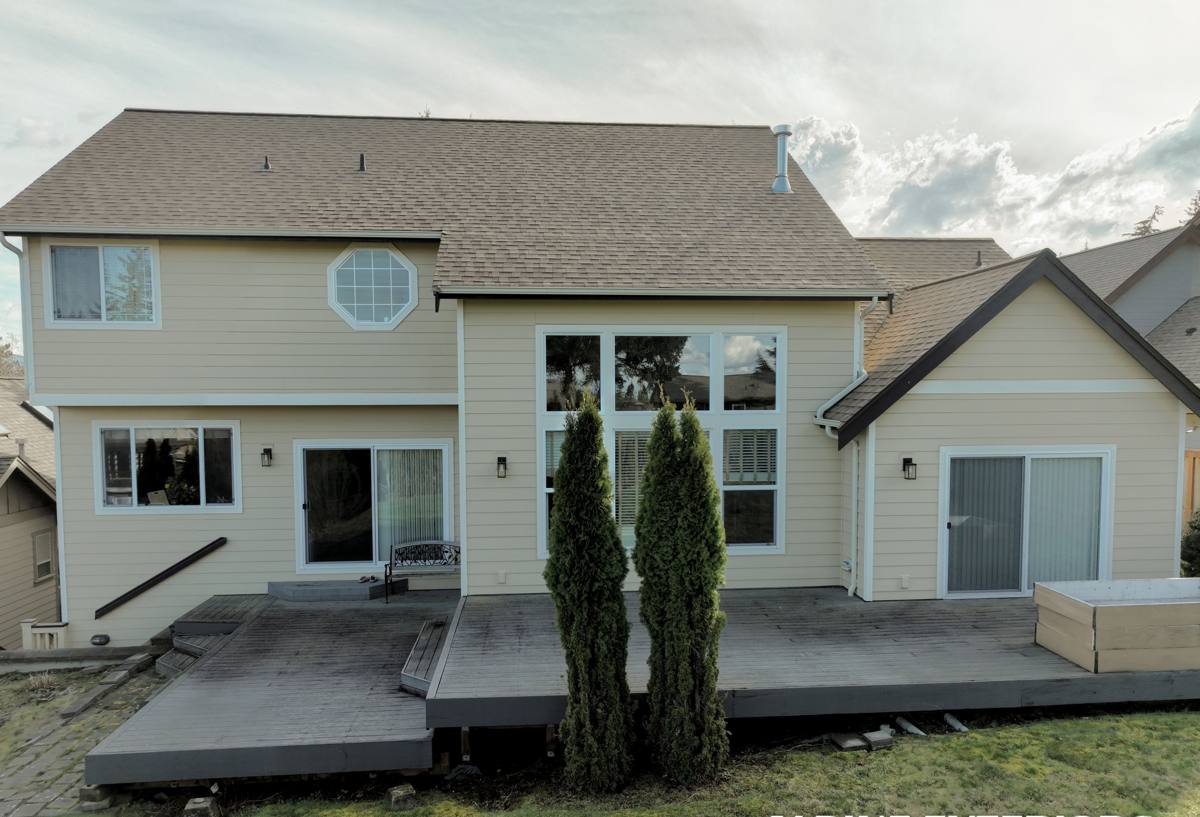
What Land O'Lakes Weather Does to an Outdoor Deck
Land O'Lakes sits in a part of Florida that gets the full range of what the state's climate can throw at an outdoor structure. Understanding the specific stresses helps explain why certain building choices matter more here than they would somewhere with milder weather.
UV Exposure
Florida sun is intense and close to year-round. Untreated or poorly finished wood grays and splinters within a couple of seasons. Composite decking without UV-stable capping can fade unevenly, especially on a deck that gets a mix of full sun and shade from surrounding trees, which is common on lots throughout Land O'Lakes.
Wind-Driven Rain and Storms
Summer thunderstorms in Pasco County routinely bring heavy, sideways rain, and the region sits within reach of hurricane-force winds during storm season. That combination puts real load on railings, stair stringers, and the connections between the deck and the house — the ledger board attachment in particular is one of the most common failure points we see on older or poorly built decks.
Humidity and Moisture Cycling
Florida's humidity means wood framing rarely gets to fully dry out between rain events. Wood that isn't properly rated for ground or moisture contact, or fasteners that aren't corrosion-resistant, deteriorate from the inside — often before any problem is visible from the top of the deck.
Coastal-Influenced Air
Land O'Lakes is inland, but the Tampa Bay region's air still carries some salt content, especially closer to the Gulf. Over years, that accelerates corrosion on lower-grade hardware and fasteners — a slow, quiet cause of loose railings and squeaky boards that homeowners often blame on "normal wear."
Choosing Decking Material for This Climate
There's no single "right" decking material for every homeowner — budget, maintenance tolerance, and how the deck will be used all factor in. What matters is choosing with the local climate in mind, not just the showroom sample.
| Material | How It Handles Local Climate | Maintenance | Typical Lifespan |
|---|---|---|---|
| Pressure-treated wood | Affordable and strong, but needs sealing to resist Florida's UV and moisture cycling | Re-stain/seal every 1-2 years | 10-15 years with upkeep |
| Composite (capped) | Handles UV and moisture well; resists graying and splintering better than wood | Occasional washing | 20-30 years |
| Composite (uncapped) | More budget-friendly than capped composite, but more prone to moisture absorption at the core over time | Periodic cleaning, watch cut edges | 15-20 years |
| PVC decking | Fully synthetic, does not absorb moisture, strong UV resistance | Very low | 25-30+ years |
We'll walk through these trade-offs honestly during an estimate — including where a lower-cost option makes sense and where it doesn't, based on how much sun and rain exposure your particular lot gets.
What's Underneath Matters More Than What's On Top
Homeowners naturally focus on the decking boards — the part they'll see and walk on every day. But the framing underneath is what determines whether a deck is actually safe and long-lasting, and it's also where corners get cut most often on lower-quality builds.
Footings and Posts
Footings need to be sized and set to local frost-free, load-bearing standards, not guessed at. In areas with sandy or variable soil, which shows up in parts of Pasco County, footing depth and diameter matter more than builders sometimes assume.
Joists and Beams
Joist spacing has to match the decking material's span rating — composite and PVC products often require tighter joist spacing than traditional wood, and using wood-spec spacing under composite decking is a common mistake that leads to bounce and premature sagging.
The Ledger Connection
Where the deck attaches to the house is the single most safety-critical connection on the entire structure. It needs proper flashing to keep water from getting behind the siding or into the rim joist, and it needs to be fastened with hardware rated for the load and for outdoor exposure — not just whatever lag bolts were on hand.
Fasteners and Hardware
Given the humidity and mild salt-air exposure in this part of Florida, we use corrosion-resistant fasteners and structural connectors rated for outdoor and treated-lumber contact. Standard interior-grade screws or unrated hardware will corrode faster here than in a drier inland climate, and corroded fasteners are one of the most common causes of a deck that feels "loose" within a few years.
Permits, Codes, and Wind Considerations in Pasco County
Most deck construction in Pasco County requires a building permit, and for good reason — a deck is a structure people stand on, and it needs to be engineered to handle Florida's wind loads, not just look sturdy. Permitted work typically involves an inspection of the footings before they're covered and a final inspection once the deck is complete.
Skipping permitting might save a little time up front, but it creates real problems later: unpermitted structures can complicate a home sale, cause issues with insurance claims after storm damage, and in some cases have to be torn out and rebuilt to code. We pull the proper permits and build to the wind and structural requirements that apply in this county, so you're not left exposed later.
How We Approach a Deck Project in Stagecoach Village
Our process is the same whether it's a small platform deck or a larger multi-level build — we just adjust the scope.
- On-site assessment. We look at the house's ledger area, the yard's grade and drainage, sun and shade exposure, and how you plan to use the space.
- Material and design walkthrough. We go over decking and railing options with honest trade-offs for cost, maintenance, and durability in this climate — no upselling toward whatever has the best margin.
- Permitting. We handle the permit application and coordinate the required inspections with Pasco County.
- Footings and framing. This is where correctness matters most, and it's the stage most invisible to a homeowner once the decking goes down — so we don't shortcut it.
- Decking, railing, and finish work. Boards, railings, stairs, and any lighting or fascia details are installed to the manufacturer's fastening specs.
- Final walkthrough and inspection. We review the finished deck with you and make sure the final county inspection is scheduled and passed.
Railings and Hardware: The Details People Overlook
Railings take a lot of abuse from wind, sun, and everyday use, and they're a common spot for corner-cutting. Composite and aluminum railing systems generally hold up better to Florida's UV and humidity than untreated wood balusters, which tend to check and split faster in direct sun. Whatever railing material is chosen, the posts need to be through-bolted into the framing — not just screwed to the rim joist — to meet code load requirements and to actually feel solid under real use, like someone leaning on it during a cookout.
We also pay attention to fastener finish on visible hardware. Exposed screw heads and brackets that aren't rated for outdoor, treated-lumber contact will streak and stain the decking around them within a season or two in this climate — a small detail that has an outsized effect on how a deck looks over time.
Maintaining a Deck in Land O'Lakes' Climate
Even a well-built deck needs some ongoing attention in this part of Florida. A little routine maintenance goes a long way toward avoiding bigger repairs later.
- Sweep off leaves and organic debris regularly — trapped moisture underneath is a common cause of rot and mildew staining
- Check railing posts and stair stringers once or twice a year for looseness, especially after a storm with heavy wind
- Re-seal or re-stain wood decking on the schedule the product calls for — don't wait until it's visibly gray and dry
- Rinse composite and PVC decking periodically to remove pollen, mildew film, and salt-influenced residue
- Inspect fasteners and metal hardware for rust streaking, which signals it's time to replace before it becomes a structural issue
- Confirm gutters and downspouts near the deck are directing water away, not dumping it onto or under the structure
Why Local Experience in Stagecoach Village Matters
A deck builder who already works regularly in Land O'Lakes knows the county's permitting process, understands how local soil and drainage conditions affect footing work, and has already seen how different decking materials perform after a few Florida summers and storm seasons — not just how they look on a sample board. That experience shows up in decisions that aren't obvious to a homeowner up front: joist spacing that matches the decking spec, fastener choices that account for humidity and mild salt exposure, and ledger details that keep water out of the house structure.
It also means fewer surprises during the build. We know what Pasco County inspectors look for, we know how local weather affects scheduling, and we're not learning the region's quirks on your project.
If you're considering a new deck, or replacing one that's showing its age, we're happy to come take a look and put together a straightforward, no-pressure estimate. There's a form below — reach out and we'll go from there.