 Land O'Lakes Siding
 Siding Installation for Concord Station Homes
Concord Station is one of the larger established residential communities in Land O'Lakes, and like most Pasco County neighborhoods built out over the past two decades, it's a mix of home ages and original exterior materials — vinyl, stucco, and some builder-grade fiber cement, all sitting on slab foundations under a Florida sun that doesn't take days off. When siding starts failing here, it's rarely one dramatic event. It's the slow accumulation of heat cycling, moisture intrusion, and wind load that eventually shows up as cracked panels, bowed vinyl, soft trim, or paint that won't hold a finish anymore.
This page is about one thing: what a correct siding installation looks like for a Concord Station home, and why the details matter more here than they would in a milder climate. We're not going to give you a generic national contractor's overview — we're going to walk through what this specific job requires in this specific part of Pasco County.
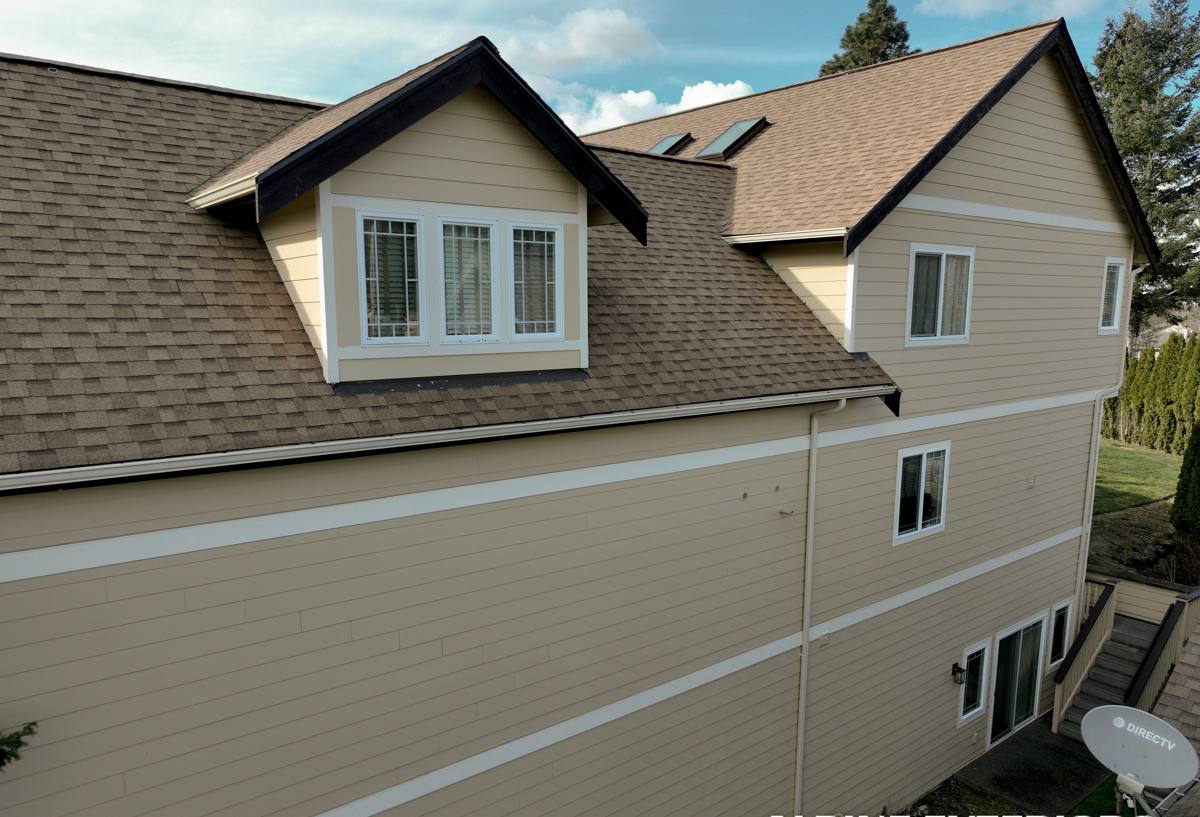
What Land O'Lakes Weather Actually Does to Siding
Land O'Lakes sits inland from Tampa Bay, but that doesn't spare it from the coastal weather pattern that defines exterior work across the whole region. Four factors do most of the damage over a siding system's lifespan:
- Hurricane-force wind gusts. Even when a storm doesn't make direct landfall nearby, Pasco County regularly sees tropical-storm and hurricane-force gusts that test every fastener, seam, and piece of trim on a home's exterior. Siding that isn't fastened to spec becomes the first thing to rattle loose, crack, or peel away.
- Intense, near-constant UV exposure. Florida's sun angle and year-round exposure hours bake painted and coated surfaces harder than almost anywhere else in the country. Factory finishes that aren't engineered for UV resistance chalk, fade, and become brittle years ahead of schedule.
- Wind-driven rain. It's not the rainfall total that causes problems — it's rain pushed sideways under wind pressure, forced up under laps and around trim where water was never supposed to reach. A siding system's job is to manage that water, not just shed it in calm conditions.
- Salt air. Gulf breezes carry salt well inland, and salt-laden humidity accelerates corrosion on fasteners, trim, and any material that isn't rated to handle it.
None of this is unique to Concord Station specifically — it's the reality for every home in this part of Pasco County. But it's exactly why a siding installation done to a lower standard, or with the wrong material, tends to fail here faster than it would somewhere with a gentler climate.
Why This Matters More on a Full Installation Than a Repair
A siding repair patches a problem. A full installation is a decision about what your home's exterior will have to survive for the next 20-30 years. Get the material and the install details right, and the house is set. Get them wrong, and you're looking at round two well before you should be.
What a Correct Siding Installation Involves
A siding job is only as good as what's underneath it. Homeowners rarely see this part, which is exactly why it's where corners get cut. On every installation we do, this is the sequence that matters:
- Substrate inspection. Before anything new goes up, the sheathing underneath gets checked for rot, delamination, or water damage from the old siding system. Covering up a compromised substrate guarantees a future problem.
- Water-resistive barrier. A code-compliant house wrap or weather barrier goes on correctly lapped, shingle-style, so water is directed down and out — not trapped behind the new siding.
- Flashing at every penetration. Windows, doors, hose bibs, light fixtures, and any other penetration point need proper flashing integrated with the water-resistive barrier. This is the single most common failure point we find on older Pasco County homes — flashing that was skipped, reused, or installed backward.
- Starter strips and correct reveal. The first course sets the line for the entire wall. Done wrong, every course above it compounds the error.
- Fastening to manufacturer and wind-zone spec. Fastener type, spacing, and embedment depth aren't guesswork — they're specified by the manufacturer for our wind zone, and they're what stands between your siding and the next round of tropical-storm gusts.
- Proper clearances. Siding held too tight to the roofline, driveway, or grade wicks up moisture. Manufacturer-specified clearances keep the bottom edge of the siding dry.
- Trim, caulking, and finish detailing. The visible finish work is what you'll judge the job by day one — but it only holds up long-term if everything underneath it was done right first.
Why We Install Only James Hardie Fiber Cement
We don't install vinyl, LP SmartSide, or other fiber cement brands, and we're upfront about why: in a climate like ours, the material itself has to do a lot of the work that installation quality can't fully compensate for.
Vinyl softens and can warp under sustained heat, and it has real limits in high-wind installations. Engineered wood products depend on their factory coating and edge-sealing to keep moisture out — and in a humid, wind-driven-rain climate, any breach in that seal starts a clock on rot. James Hardie fiber cement is non-combustible, doesn't rot, and holds paint and color far longer under UV exposure than wood-based alternatives. Hardie also engineers specific product lines (its HZ5 and HZ10 climate designations) for exactly the humidity, moisture, and pest conditions found in the Southeast and Gulf Coast — which includes Pasco County.
We put Hardie on Concord Station homes because it's the product that best matches what this specific climate demands, backed by a factory finish and warranty structure built for it. It isn't the cheapest option on the market, and we won't pretend it is — but it's the one we're willing to warranty our labor against.
Siding Material Comparison for Pasco County Homes
| Material | Wind Performance | Moisture / Rot Resistance | UV / Fade Resistance | Typical Lifespan |
|---|---|---|---|---|
| Vinyl | Moderate — can crack or blow off in high gusts | Doesn't rot, but seams can let water behind panels | Fades and chalks over time | 15-25 years |
| Engineered wood (e.g., LP SmartSide) | Good when installed to spec | Depends on edge sealing and coating integrity | Good with maintenance | 20-30 years with upkeep |
| Other fiber cement brands | Good | Good | Varies by factory finish | 25-35 years |
| James Hardie fiber cement (HZ5/HZ10) | Engineered for high-wind zones | Non-combustible, resists rot and moisture damage | ColorPlus factory finish resists fading | 30+ years to spec |
This isn't meant to trash the alternatives — vinyl and engineered wood both have honest use cases. It's meant to show why, for the wind and moisture conditions Concord Station homes actually face, we standardized on one product instead of offering all of them.
Our Process for a Concord Station Installation
Every job starts with an on-site inspection of your current siding and the substrate underneath it — not a drive-by estimate. From there:
- We document existing damage, moisture points, and any substrate repair that needs to happen before new siding goes on.
- We pull the required Pasco County permit before work begins — this isn't optional, and it protects you if there's ever a warranty or insurance question down the road.
- If your section of Concord Station has HOA architectural guidelines, we work within them on color and profile selection rather than treating that step as an afterthought.
- We install to Hardie's published fastening and clearance specifications for our wind zone — not a generic national standard.
- We walk the finished job with you before calling it done.
Working this neighborhood regularly means we already know the common exterior conditions found on its homes — the mix of original vinyl and stucco, typical substrate age, and the kind of flashing shortcuts that tend to show up on builder-grade installs from that era. That's not a substitute for inspecting your specific house, but it does mean fewer surprises once we're into the job.
What to Ask Before You Hire Anyone for This Job
- Will you pull a permit, and is that included in the quote?
- What water-resistive barrier and flashing details will you use around windows and doors?
- What fastener spacing and type will you use, and is it matched to our wind zone?
- Which siding brand and product line are you quoting, and why?
- What does the warranty cover — the material, the labor, or both — and who backs it?
- Can I see the clearance details you'll use at the roofline, grade, and driveway?
If a contractor can't answer these clearly before the job starts, that's worth knowing before they're on your roofline in a Florida summer.
Why a Crew That Already Works in Land O'Lakes Matters
Siding installation isn't just a materials question — it's a logistics and local-knowledge question. A crew that already works Pasco County permitting knows what the county inspector will look for. A crew that's already worked in Concord Station knows what HOA architectural review typically expects and how long that approval process tends to take, so it doesn't derail your project timeline. And a crew that's installed Hardie across enough Land O'Lakes homes has already seen how the local substrate, humidity, and wind conditions interact with the material — knowledge that only comes from doing the work here repeatedly, not from a manufacturer's install manual alone.
None of that replaces a proper on-site inspection of your home. But it does mean fewer avoidable delays and fewer surprises once the old siding comes off.
Ready for a Straight Answer on Your Siding?
If your Concord Station home's siding is cracking, fading unevenly, or letting moisture in around trim and windows, we're happy to take a look and give you an honest assessment — no pressure, no inflated estimate to scare you into a bigger job than you need. Request a free estimate below and we'll walk your home's exterior with you in person.