 Land O'Lakes Siding
 Oakstead is one of the larger established communities on the Land O'Lakes side of Pasco County, and the homes here are now old enough that a lot of original siding is reaching the point where a coat of paint or a caulk touch-up doesn't fix anything anymore. When we get called out to Oakstead, it's almost always for one of two reasons: the siding is visibly failing — cracking, buckling, soft spots, paint that won't hold anymore — or a homeowner is remodeling and wants to get off a product that's been nothing but maintenance. This page is specifically about full siding replacement for Oakstead homes: what the local climate does to siding here, what a correct replacement job actually involves, and why we install only James Hardie fiber cement when we do it.
What Oakstead's Climate Does to Siding
Land O'Lakes sits inland from the Gulf but still well within reach of everything Central Florida's climate throws at a house. None of this is unique to Oakstead specifically, but it's the reality every exterior surface in this neighborhood deals with year-round.
Hurricane-Force Wind
Pasco County sees direct hurricane impacts and tropical storm activity on a fairly regular cycle, and even when a storm's center passes well offshore or to the south, Oakstead can still see sustained wind and gusts strong enough to test every fastener and joint in a siding system. Siding that's already brittle or has failed fastening from age is what tends to come loose or crack first when a real wind event hits.
Intense Year-Round UV
Florida's sun angle and day length put more cumulative UV exposure on a home's exterior each year than most of the country ever sees. On sun-facing elevations — and in Oakstead's mix of open lots and newer plantings that haven't fully matured into shade yet, that's a lot of exposed wall — lower-grade paints and coatings chalk, fade, and break down years before they should. It's not a defect in any one product; it's just what constant, intense sun does to a coating that wasn't built for it.
Wind-Driven Rain
Afternoon thunderstorms are a daily summer occurrence in this part of Pasco County, and plenty of them come with real wind behind the rain. Sideways rain finds its way into gaps at butt joints, fastener holes, and trim intersections that a straight-down rain would never reach. Over enough storm seasons, siding with aging caulk lines or marginal flashing starts leaking at exactly those points, and the damage is usually happening behind the surface well before it's visible from the street.
Salt Air
Land O'Lakes is inland, but it's not far enough from Tampa Bay and the Gulf to be fully out of reach of salt-laden air, especially on breezier days. It's a slower, more cumulative effect here than it is right on the coast, but it still accelerates corrosion on exposed fasteners and metal trim over the years, which is part of why fastener choice and finish quality matter even on an inland Pasco County home.
Heat and Humidity Cycling
Hot, humid days followed by warm, wet nights mean siding is constantly expanding, contracting, and staying damp longer than it would in a drier climate. Materials that absorb moisture don't get a real chance to dry out between rain events, which is one of the main reasons wood-based and wood-fiber siding products struggle long-term in a neighborhood like Oakstead.
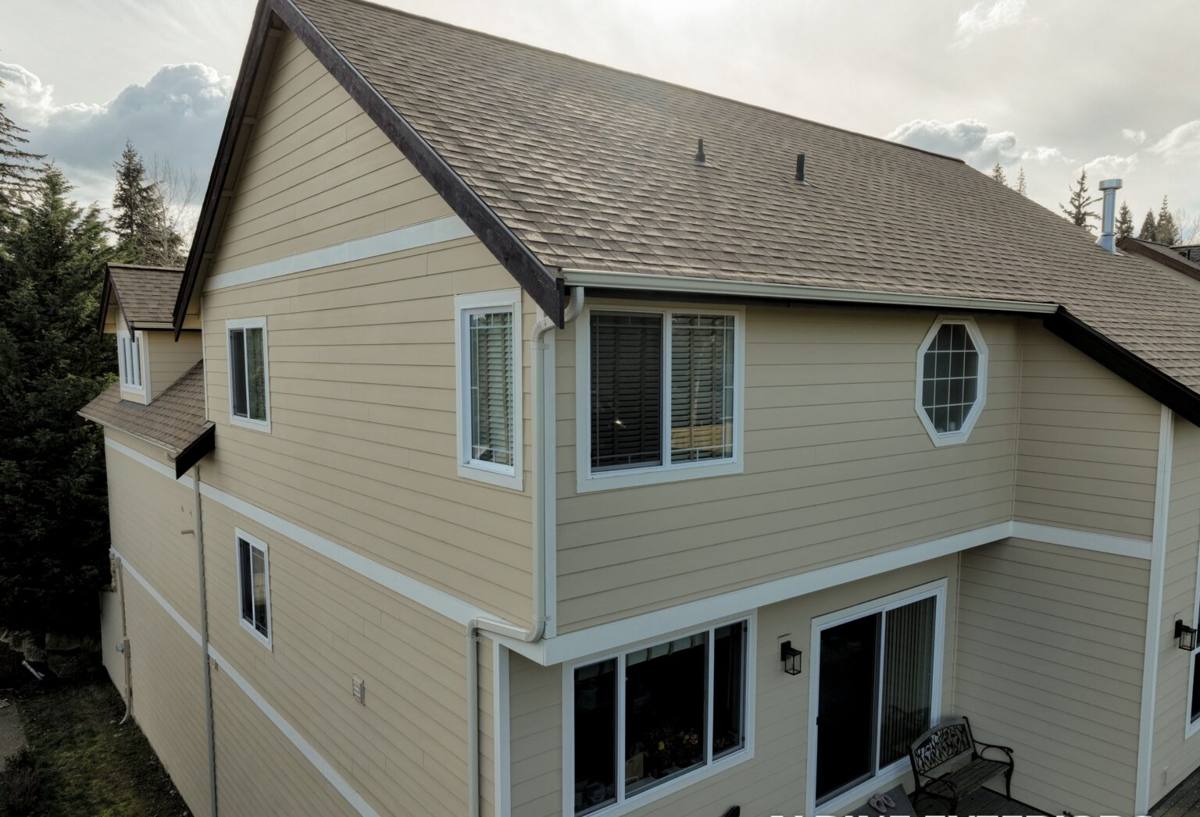
How to Tell Oakstead Siding Actually Needs Replacing
Not every issue means a full tear-off. But there's a point where patching stops making sense and full replacement is the honest recommendation. Signs we look for on Oakstead homes include:
- Visible cracking, warping, or buckling across multiple sections, not just one isolated board
- Paint that won't hold anymore even after proper prep — a sign the substrate underneath is compromised
- Soft or spongy spots when pressed, especially near the bottom courses and around window and door trim
- Persistent moisture staining or discoloration on interior walls that back up to exterior siding
- Visible fastener corrosion, popped nails, or panels that have started to pull away from the wall
- Siding that's original to a home now old enough that it's outlived any reasonable service life expectation
If a home shows two or three of these at once, that's usually the point where spot repair becomes a losing game — you're chasing new failures faster than you can fix the old ones.
What a Correct Siding Replacement Involves
Full Tear-Off and Substrate Inspection
We don't install new siding over old siding, and we don't skip the inspection step once the old material is off. Pulling the siding down is when hidden rot, water damage, or compromised sheathing actually gets found — and in a humid climate like this, it's common to find some degree of moisture damage behind siding that's been failing for a while. Any damaged substrate gets addressed before anything new goes up; installing new siding over a bad substrate just guarantees a repeat problem years down the road.
Weather Barrier and Flashing
The house wrap and flashing details behind the siding matter as much as the siding itself, arguably more, since that's the layer actually keeping wind-driven rain out of the wall assembly. We install or replace the weather-resistant barrier correctly and detail flashing at every window, door, and penetration so water has a planned path out rather than a chance to work its way in.
Fastening for Wind Exposure
Correct fastener type, spacing, and placement is what determines whether siding stays put in sustained wind events. We follow manufacturer fastening specifications for Florida wind exposure rather than treating this as a generic detail — this is exactly the kind of step that's invisible once the job looks finished but is the difference between siding that survives hurricane season and siding that doesn't.
Trim, Caulking, and Finish Details
Joints, corners, and trim transitions are where most long-term siding failures actually start. We detail and seal those points correctly the first time, using materials rated for sustained UV and moisture exposure, rather than relying on caulk to make up for a rushed installation.
Why We Install Only James Hardie Fiber Cement
We get asked fairly often why we don't offer vinyl, LP SmartSide, or other fiber cement brands like Cemplank or Allura. The honest answer is that after years of installing and repairing siding in this climate, we made a standardization decision, and we'd rather install one product exceptionally well than several products adequately.
Vinyl is inexpensive and easy to install, but it softens and can warp under sustained direct sun and high heat, and it doesn't hold up structurally in hurricane-force wind the way a heavier, properly fastened material does. Engineered wood products like LP SmartSide use resin-treated wood strands that perform reasonably well when installation is flawless, but any breach in the factory coating — a cut edge, a fastener hole, a caulk joint that fails — lets moisture into a wood-based core, and Florida's heat and humidity don't give that moisture much chance to dry out before it causes damage. Other fiber cement brands are a closer comparison to what we install, but James Hardie's HZ5 product line is specifically engineered for high-humidity, high-moisture climates like ours, and the ColorPlus factory finish is baked on and warrantied to resist fading and cracking far longer than field-applied paint.
Fiber cement itself doesn't burn, doesn't attract termites, and doesn't expand and contract with humidity the way wood-based products do — all of which matter in a Pasco County climate that stresses exterior materials from every direction at once.
James Hardie vs. Other Common Siding Options
| Factor | Vinyl | LP SmartSide | James Hardie Fiber Cement |
|---|---|---|---|
| Heat/UV tolerance | Can warp or soften in sustained heat and direct sun | Factory finish holds reasonably well if uncompromised | ColorPlus finish engineered and warrantied for Florida UV |
| Moisture behavior | Doesn't absorb moisture, but seams can let water behind panels | Wood-fiber core vulnerable if coating is breached | Non-organic core, engineered for high-humidity climates |
| Wind performance | Lighter panels more prone to damage in high wind | Performs adequately with correct fastening | Heavier, rigid panels rated for hurricane-force wind loads |
| Fire resistance | Combustible | Combustible (wood-based) | Non-combustible |
| Typical lifespan when installed to spec | 15-25 years | 20-30 years | 30-50+ years |
Our Process for an Oakstead Replacement
- On-site assessment — we inspect the existing siding, identify the extent of damage, and evaluate the home's specific wind and sun exposure
- Honest recommendation — full replacement, partial replacement, or repair, explained plainly with the reasoning behind it
- Product and color selection — walking through James Hardie's HZ product lines and ColorPlus finish options that fit the home
- Tear-off and substrate repair — old siding removed, sheathing and framing inspected, any rot or water damage addressed before new material goes up
- Weather barrier and flashing installation — correctly detailed at every window, door, and penetration
- Hardie installation and fastening — installed to manufacturer spec for Florida wind exposure, not a generic standard
- Trim, caulking, and final walkthrough — finish details sealed and inspected with the homeowner before we call the job done
Cost Factors for Oakstead Siding Replacement
| Factor | What Changes the Price |
|---|---|
| Home size and elevation count | More linear footage and more complex rooflines mean more material and labor |
| Substrate condition | Rot or water damage found during tear-off adds repair work before new siding goes up |
| Product line and profile | HardiePlank lap, HardiePanel, and HardieShingle carry different material and labor costs |
| Trim and detail work | Homes with more windows, corners, and architectural trim take more time to detail correctly |
| Color and finish | Factory ColorPlus finishes add cost over primed material but remove the need for field painting |
Quick Checklist Before You Hire Anyone for This Job
- Ask whether they do a full tear-off and substrate inspection, not an install-over-existing job
- Get the fastening and flashing plan explained, not just the visible finish
- Confirm which James Hardie product line and finish they're proposing, and why it fits your home
- Ask how they handle rot or water damage discovered once old siding comes off
- Check that the manufacturer's product warranty and the installer's labor warranty are both explained clearly
- Get a written estimate that separates material, labor, and any substrate repair contingency
Why Hiring a Crew That Already Works Oakstead Matters
Manufacturer installation instructions are written for average conditions, and no single instruction sheet accounts for every combination of home age, orientation, and exposure you'll find across a neighborhood the size of Oakstead. A crew that works this community regularly has already seen how the local housing stock tends to fail, which elevations take the worst sun and wind, and where flashing details get missed most often on homes built to the same general specs. That's the kind of knowledge that shows up in the small decisions on a job site — the ones a homeowner never sees directly but that determine whether the siding is still performing in fifteen years or starting to show problems in five.
We're not learning Pasco County's climate on your house. We already know what hurricane season, Florida sun, and Land O'Lakes humidity do to exterior siding, and we build the job around that from the first inspection.
If your Oakstead home's siding is showing cracking, soft spots, or paint that won't hold anymore, it's worth getting an honest assessment before problems get more expensive to fix. We offer free, no-pressure estimates for siding replacement in Oakstead and throughout the Land O'Lakes area — use the form below to get a time on the schedule.