 Land O'Lakes Siding
 Decks Around Lake Padgett Take a Different Kind of Beating
Lake Padgett sits in a part of Land O'Lakes where homes back up to open water, wooded lots, and a lot of unshaded sky. That combination is hard on an outdoor deck. Boards facing the lake get long stretches of direct sun with almost no relief, while the moisture coming off the water keeps humidity higher right at deck level than it is a few hundred feet away. Add in Central Florida's hurricane-season winds, wind-driven rain that gets pushed sideways under railings and into seams, and the salt-tinged Gulf air that drifts inland across Pasco County, and you've got a structure that's fighting the weather every single day of the year, not just during storms.
A deck built to a generic national spec, or one that was fine in a drier, shadier climate, tends to show its age fast out here. Boards cup and crown, fasteners corrode, and the structural framing underneath — the part nobody sees until it fails — can quietly rot while the surface still looks passable. Replacing a deck the right way in this neighborhood means building for these specific conditions, not just swapping old boards for new ones.
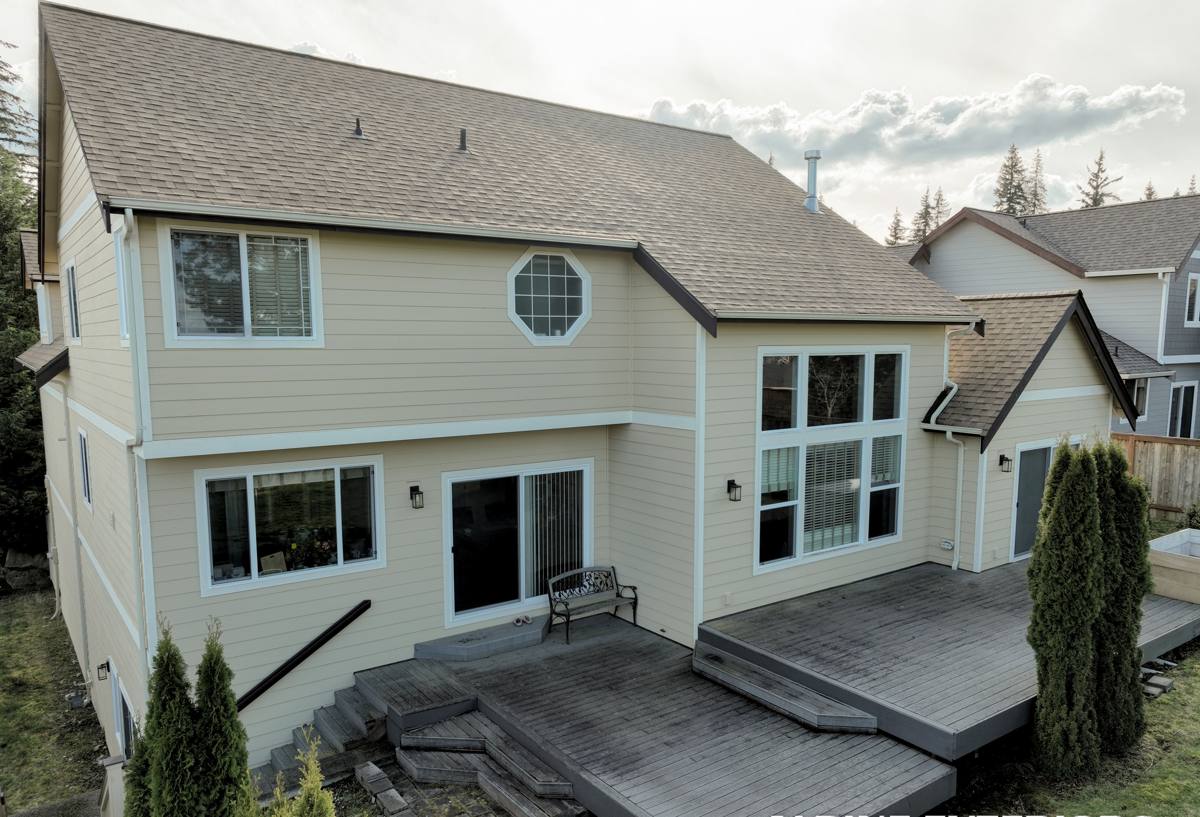
What the Lake Padgett Environment Does to a Deck Over Time
Sun and Heat
Year-round UV exposure breaks down the surface fibers of wood decking and the resin binders in some composite products. On lake-facing decks with no tree cover, this shows up as graying, splintering, and surface checking well before a similar deck in a shaded yard would need attention.
Moisture at Ground and Water Level
Homes near the lake often have decks close to grade or over damp ground, and that moisture works its way into ledger boards, joists, and post bases from underneath — the areas hardest to inspect without pulling boards. This is where rot usually starts, not on the visible walking surface.
Wind and Storm Loading
Pasco County sees real hurricane-force wind events, and a deck attached to the house is a structural connection, not just a surface. Undersized ledger fasteners, missing hurricane clips, or railings that were never engineered for wind load are common failure points during and after storms.
Corrosion
Standard fasteners and hardware corrode faster in this coastal-influenced, humid air than they would inland in a drier state. Once fasteners start rusting, they lose holding strength long before the wood around them looks obviously bad.
Signs a Deck Needs Replacement, Not Another Repair
Not every aging deck needs to be torn out. But there's a point where patching individual boards is throwing money at a structure that's already compromised underneath. Walk your deck and check for these:
- Soft, spongy, or bouncy spots when you walk across the surface
- Boards that stay damp or dark long after the rest of the deck has dried
- Visible rot, splitting, or insect damage at the ledger board where the deck meets the house
- Rust streaks around fasteners, or screws that spin freely without biting
- Railings or posts that wiggle more than a firm push should allow
- Gaps that have widened significantly between boards, or boards cupping at the edges
- A deck older than 15-20 years that has never had the substructure inspected
If you're seeing two or more of these, especially anything involving the ledger board or support posts, it's worth having someone look at the framing before deciding whether repair is even a real option.
Choosing Decking Material for a Lake Padgett Property
There's no single "best" decking material for every house — it depends on how much sun exposure the deck gets, how close it is to the water, and how much upkeep you actually want to do. Here's how the common options stack up for this specific setting:
| Material | Sun/UV Behavior | Moisture Behavior | Maintenance |
|---|---|---|---|
| Pressure-treated wood | Grays and splinters with sun exposure; needs periodic sealing to slow it down | Prone to cupping and rot at fastener points if not sealed regularly | Highest — annual inspection and periodic sealing/staining |
| Capped composite | Resists fading and UV degradation much better than wood or uncapped composite | Doesn't absorb water into the board core the way wood does | Low — occasional cleaning, no sealing or staining |
| Uncapped composite (older-style) | Can fade and chalk over time without a protective cap layer | More prone to moisture absorption at cut edges than capped versions | Moderate — edge sealing recommended |
| PVC decking | Very stable in full sun; won't rot or hold moisture | Fully moisture-resistant, good near water | Low, but higher upfront cost |
We don't push one product on every homeowner. If you like the look and feel of real wood and are willing to keep up with sealing, a properly built wood deck can last a long time here. If you want to spend your weekends doing something other than deck maintenance, capped composite or PVC is usually the better long-term value — the higher material cost is offset by not repainting or resealing every year or two.
What a Correct Deck Replacement Actually Involves
A deck replacement is not just pulling up old boards and screwing down new ones. Done correctly, it starts from the ground up:
Framing and Substructure
Posts, beams, and joists get inspected or replaced, sized appropriately for the span and expected load, and set on footings suited to Pasco County's sandy soil conditions. Any framing lumber that's been sitting in ground contact or damp shade gets extra scrutiny.
The Ledger Connection
This is the single most important structural connection on an attached deck, and it's also the one most often built wrong on older or budget decks. It needs proper flashing to keep water out from behind it and fasteners rated for the load and for wind uplift, not just whatever was on hand.
Hardware and Fasteners
Given the corrosion pressure from humid, salt-influenced air, we use fasteners and structural connectors rated for coastal or wet environments rather than standard interior-grade hardware. It costs a little more up front and saves you from hidden rust damage a few years down the road.
Decking Surface and Railings
Once the structure is sound, the surface material and railings go on per the manufacturer's installation specs — proper board spacing for drainage and expansion, correct fastener patterns, and railing posts anchored into the framing, not just the decking boards.
Permits and Local Code
Deck replacements in Pasco County typically require a permit and inspection, especially when structural framing is being rebuilt rather than just resurfaced. This isn't paperwork for its own sake — the inspection process is what confirms the footings, framing, and railing meet current wind and structural requirements for this area. A crew that handles permitting as a normal part of the job, rather than treating it as optional, is doing you a favor: it protects you if you ever sell the house and a buyer's inspector looks at the deck.
How Our Process Works
- On-site evaluation. We look at the existing deck's framing, ledger connection, and posts, not just the surface boards, to determine if replacement is actually necessary and what's driving the wear.
- Honest material conversation. We walk through wood, composite, and PVC options based on your budget, sun exposure, and how much maintenance you actually want to do.
- Written estimate. Clear scope, materials, and a straightforward timeline before any work starts.
- Permitting. We handle the permit and coordinate inspections as part of the job.
- Demolition and rebuild. Old structure comes out, framing gets rebuilt or reinforced to current standards, and the new surface and railings go in.
- Final walkthrough. We go over the finished deck with you, including basic care for whatever material you chose.
Why It Matters That We Already Work in Lake Padgett
A crew that already does deck work around Lake Padgett and the rest of Land O'Lakes knows what this particular ground and climate do to a structure over a few years — which lots hold moisture longer, how much sun exposure to expect on a lake-facing deck, and what hardware actually holds up here instead of just what's cheapest to stock. That local familiarity shows up in decisions you might not think to ask about: footing depth for sandy soil, fastener grade for humid air, flashing details at the ledger. It's the difference between a deck that looks right on day one and one that's still solid in year ten.
Get a Straightforward Estimate
If your deck is showing its age, or you just want a second opinion on whether it needs repair or full replacement, we're glad to come take a look. There's no pressure and no sales pitch — just an honest assessment of what your deck needs and what it would take to fix it right. Use the form below to request a free estimate for your Lake Padgett property.