 Land O'Lakes Siding
 Deck Repair Built for Lake Padgett's Conditions
Lake Padgett sits in one of the more distinctive pockets of Land O'Lakes — a chain of small lakes, mature tree canopy, and a lot of homes built to take advantage of the water view with decks, screened lanais, and outdoor living space. That's great for lifestyle, but it also means decks here take a beating from a specific mix of conditions: full sun exposure off the open water, humidity that never really lets up, wind-driven rain that gets up under boards and railings, and the occasional hurricane-strength wind event that tests every fastener and connection point. Add in Pasco County's year-round UV load and, closer to Tampa Bay, salt-laden air that can work its way inland during onshore weather patterns, and you have a climate that ages a deck faster than most homeowners expect.
A deck repair here isn't just cosmetic touch-up work. Done right, it's an inspection of the structure underneath the boards, an honest read on what's actually failing versus what just looks bad, and a repair that accounts for the fact that this deck is going to keep sitting in sun, moisture, and wind for years to come. This page covers what we look for, how we approach a repair, and what to expect if you're dealing with a tired or damaged deck on a Lake Padgett property.
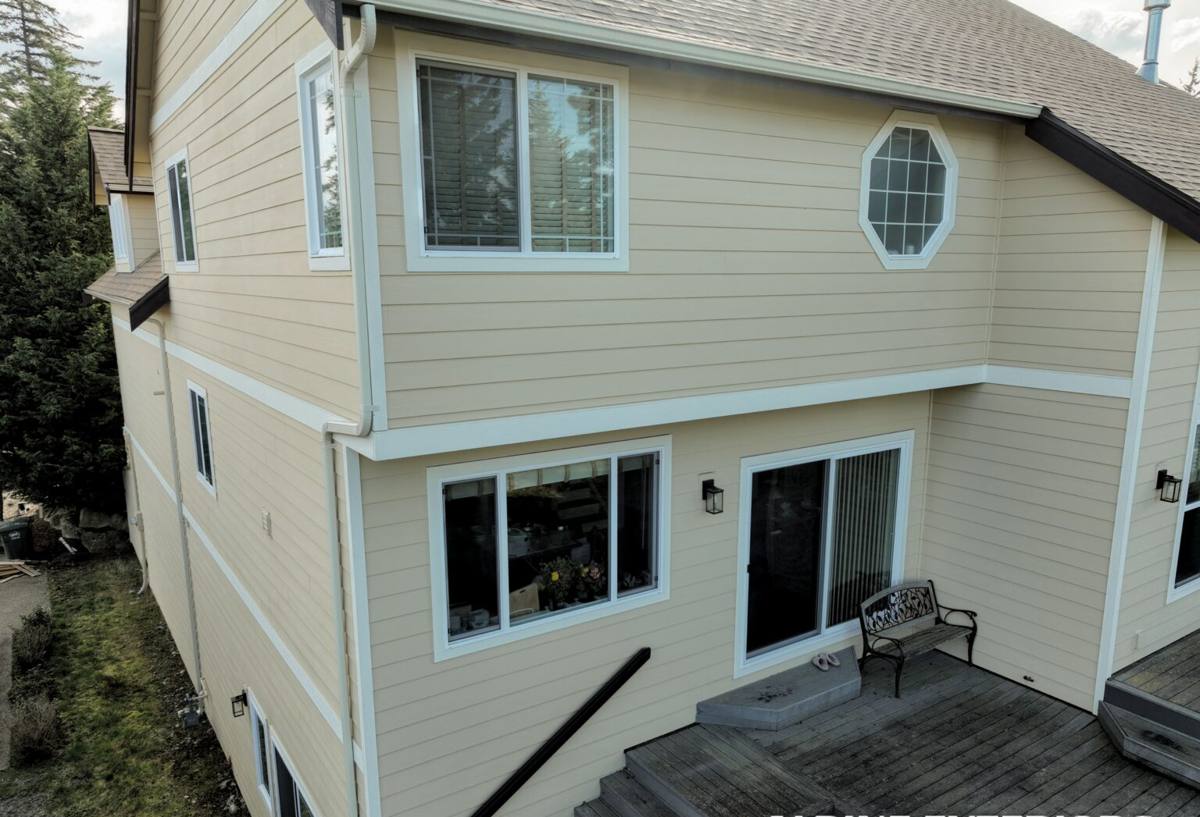
Why Decks in This Area Fail Faster
Sun and UV Exposure
Lakefront and lake-view lots often have less tree cover directly over the deck than the rest of the lot, since that's usually where the view is. Constant UV breaks down wood fibers, dries out and cracks sealants, and fades or chalks composite decking over time. Boards that get full afternoon sun typically show checking, splitting, and fastener pop years before shaded sections of the same deck.
Humidity and Wind-Driven Rain
Central Florida humidity keeps moisture in contact with wood and hardware longer than a drier climate would. Wind-driven rain during our summer storm pattern doesn't just fall straight down — it gets pushed sideways under railings, into board gaps, and against ledger boards where the deck attaches to the house. That's one of the most common places we find hidden rot, because it's the hardest spot for water to dry out.
Storm and Wind Load
Pasco County sits in a region that sees tropical storm and hurricane-force wind events. A deck's railings, guard posts, and ledger connection all take direct wind load, and any fastener that has already started to corrode or any post that has already started to loosen is the point most likely to fail when the wind actually shows up. Post-storm, we regularly find loosened railings and popped fasteners even on decks that look fine from a distance.
Salt-Influenced Air
Land O'Lakes isn't a coastal town, but Pasco County is close enough to Tampa Bay that salt-influenced air can reach inland properties during certain wind patterns. Over years, that accelerates corrosion on exposed fasteners, brackets, and any uncoated metal hardware — one more reason fastener condition matters as much as the boards themselves.
Signs Your Lake Padgett Deck Needs Repair
- Boards that feel spongy, soft, or give slightly underfoot
- Visible cracking, splitting, or splintering on the deck surface
- Railings or guard posts that wiggle or feel less solid than they used to
- Rust streaks running down from screws, nails, or brackets
- Gaps opening up where the deck meets the house (the ledger board)
- Stairs that feel bouncy or uneven, or treads pulling away from stringers
- Discoloration, dark staining, or a musty smell near the deck's base or under low areas
- Fasteners backing out or leaving raised heads above the board surface
Any one of these on its own might be a minor fix. Several at once, especially near the ledger or support posts, usually means it's time for a proper inspection before it becomes a safety issue.
What a Correct Deck Repair Actually Involves
A repair that just replaces the boards you can see and skips everything underneath is a repair that fails again. We treat every deck repair as a two-part job: what's visible, and what's structural.
Structural Assessment First
Before we touch a single board, we check the ledger board attachment, the condition of support posts and footings, joist spacing and condition, and the hardware holding it all together. Florida building code has specific requirements for ledger attachment and railing height/spacing, and older decks — especially ones that predate more recent code updates — sometimes need those connections brought up to a safer standard as part of the repair, not just a like-for-like patch.
Then the Visible Repair
Once we know the structure is sound (or has been corrected), we move to the parts you actually see and stand on: deck boards, railings, stair treads, and fascia. We match existing materials where that makes sense, and we're upfront with you when a full board or section replacement is a better long-term move than patching around a problem area.
Fasteners and Hardware
Given the corrosion factors mentioned above, we don't reuse compromised hardware just to save a step. Fasteners, brackets, and connectors that show rust or fatigue get replaced with corrosion-resistant hardware rated for exterior and coastal-influenced use.
Repair vs. Replacement: How We Help You Decide
| Factor | Leans Toward Repair | Leans Toward Replacement |
|---|---|---|
| Structural framing (posts, joists, ledger) | Solid, no rot found | Soft wood, rot, or pest damage found |
| Extent of surface damage | Isolated boards or sections | Widespread cracking, warping, or fastener failure |
| Age of the deck | Under 10-12 years, well maintained | Original construction is older and was never sealed/maintained |
| Code compliance | Railings/spacing already meet current code | Railing height, spacing, or attachment doesn't meet current standards |
| Your plans for the space | Happy with current layout and size | Want to reconfigure, expand, or change materials |
We'll always tell you honestly which side of this table your deck falls on. A deck with sound framing and a few damaged boards doesn't need to be torn out — but we won't patch over a structural problem just because it's the cheaper-sounding option in the moment.
Material Considerations for This Climate
When we're replacing boards or sections as part of a repair, material choice matters more here than in milder climates.
| Material | Strengths in This Climate | Trade-Offs |
|---|---|---|
| Pressure-treated wood | Cost-effective, easy to match to existing decks, repairable in sections | Needs regular sealing/staining to resist UV and moisture; shorter lifespan without upkeep |
| Composite decking | Resists rot, doesn't need staining, holds up well to humidity | Higher upfront cost; some products can fade or hold heat in full sun; repairs may require matching discontinued colors |
| Cedar or other naturally resistant wood | Naturally more rot- and insect-resistant than standard lumber | Higher cost, still benefits from sealing in full-sun/high-UV spots |
Our standard is to match what's structurally sound about the existing deck rather than push a specific product line. If composite makes sense for a section that gets brutal afternoon sun, we'll say so. If matching pressure-treated lumber is the more practical and cost-effective repair, we'll say that too.
Our Deck Repair Process
- On-site inspection — we walk the full deck, check the substructure from underneath where accessible, and test railings, stairs, and board integrity.
- Written assessment — we tell you plainly what's failing, what's still sound, and what your repair options are, including rough cost ranges.
- Agreed scope — no surprise add-ons once work starts; if we find something new once boards come up, we stop and talk to you before proceeding.
- Repair work — structural corrections first, then board/railing/stair work, then hardware and fastener replacement.
- Final walkthrough — we check railings for solidity, boards for level and secure attachment, and confirm the repair meets code where applicable.
What Deck Repair Typically Costs
Costs vary widely depending on scope, but as a general guide: small, isolated board or railing repairs are the least expensive category of work; ledger board or structural post repairs cost more because of the labor and material involved in accessing and correcting them; and full resurfacing (replacing all decking boards while keeping the existing frame) sits in the middle-to-higher range depending on material choice. We give a firm, written estimate after inspection — not a guess over the phone — because the difference between a $400 repair and a $4,000 repair usually comes down to what's happening underneath the boards, and we won't know that until we look.
Why a Crew That Already Works Lake Padgett Matters
Lake Padgett's mix of lakefront lots, mature tree cover, and older established construction means decks here often have quirks that a crew unfamiliar with the area might miss — support structures built around existing trees, decks tied into screened lanais, or older framing methods that were common in this part of Pasco County when the neighborhood was originally built out. A crew that's already worked on homes in this community knows what to check first and doesn't have to learn the area's common failure points on your dime. We also know the local permitting expectations for structural deck work in Pasco County, so repairs that need to meet current code get handled correctly the first time.
If your deck is showing any of the warning signs above, or it's just been a while since anyone took a close look at it, we're happy to come out, walk the structure with you, and give you an honest, no-pressure estimate. Use the form below to get started.