 Land O'Lakes Siding
 Why Wiregrass Ranch Siding Takes More Punishment Than People Expect
Wiregrass Ranch sits in Pasco County, where the weather doesn't do "mild." Homes here deal with hurricane-force wind gusts during the summer and fall storm season, intense year-round UV that starts baking exteriors by March, wind-driven rain that gets pushed sideways into every gap and seam, and salt-tinged Gulf air that rides inland on tropical systems and sea breezes. None of that is unusual for this part of Florida — but it's exactly the combination that separates siding that holds up for decades from siding that starts failing in five or six years.
Cheap or incorrectly installed siding shows the damage in predictable ways: sun-faded and chalky paint, cupped or delaminated panels, soft spots where wind-driven rain worked behind the cladding, and rust streaks from fasteners that were never rated for this climate. A siding system built for a milder climate — or installed by a crew that treats Florida like anywhere else — is fighting a losing battle here from day one.
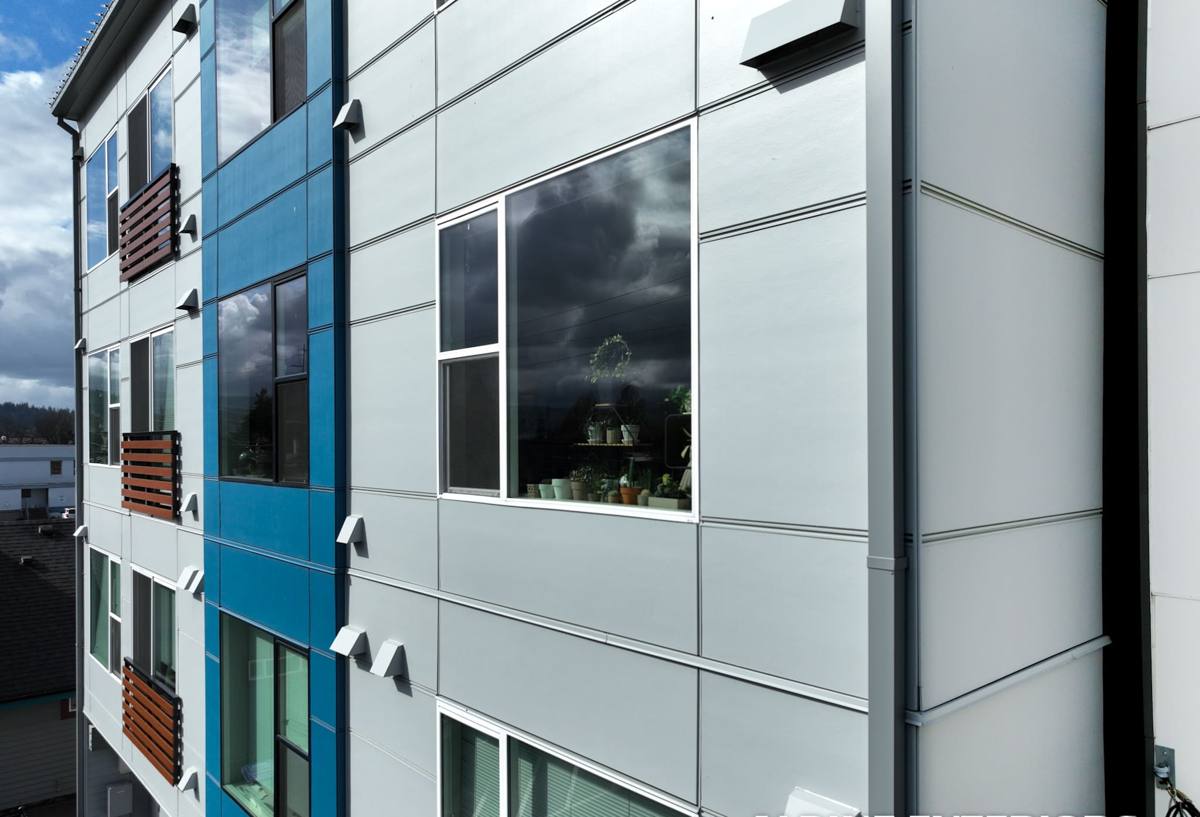
What Wiregrass Ranch's Housing Stock Means for a Siding Job
Most of Wiregrass Ranch was built as a master-planned community, which means a lot of homes share a similar era of construction, similar stucco-based exteriors, and similar HOA architectural standards. That matters for a siding project in a few practical ways:
Stucco-Dominant Neighborhoods, Siding as Accent or Full Replacement
Many Wiregrass Ranch homes were originally built with stucco, using siding only as a gable accent or architectural detail. As stucco ages in this climate, it's common to see cracking, staining, and repeated patch repairs. Homeowners increasingly choose to replace failing accent areas — or move to full siding on a wall section or entire home — with a material that doesn't have stucco's long-term cracking and moisture problems.
HOA Architectural Review
If your home falls under an HOA — common throughout planned communities in this part of Pasco County — color and material changes usually require a submission and approval before work starts. This is one of the biggest reasons factory-finished siding matters: a consistent, documented color that won't fade unevenly is much easier to get approved and keep looking uniform with neighboring homes than a field-painted product.
Why We Only Install James Hardie Fiber Cement
We don't install LP SmartSide, vinyl, Cemplank, Allura, primed spruce, or cedar. That's a deliberate standard, not a lack of options. James Hardie fiber cement is non-combustible, engineered specifically for hot, humid, storm-exposed climates through its HZ5 product line, and finished at the factory with ColorPlus Technology — a baked-on finish that resists fading and chipping far better than field-applied paint. Backed by a strong transferable limited warranty, it's the product we're willing to put our name behind for the conditions Wiregrass Ranch actually sees. When it's installed correctly, it's the closest thing to a "set it and forget it" exterior that exists in this climate.
What a Correct Installation Actually Involves
James Hardie siding is only as good as the installation behind it. A huge share of the siding failures we get called out to inspect trace back to shortcuts taken during install, not a problem with the material itself. On a Wiregrass Ranch home, a correct job means:
- A continuous weather-resistive barrier installed behind the siding, with no gaps, tears, or improperly lapped seams
- Proper flashing at every window, door, and penetration so wind-driven rain can't track behind the cladding
- Minimum clearance from grade (at least 6 inches) and from roof lines (at least 2 inches) so splashback and roof runoff don't sit against the bottom edge of the siding
- Correct fastener type, spacing, and placement — blind-nailed where specified, with corrosion-resistant fasteners rated for coastal-influenced climates
- Proper panel and plank overlap to meet wind-load requirements, not just a look-right install
- Caulking only at the joints Hardie's specifications call for — over-caulking traps moisture just as badly as under-caulking lets it in
Skip any one of these and you can end up with a home that looks right for a year or two before the underlying problems surface — usually as soft trim, staining, or a warranty claim that gets denied because the install didn't meet manufacturer specifications.
Choosing the Right Hardie Product Line for Your Home
James Hardie makes several distinct product lines, and the right one depends on your home's existing architecture, HOA guidelines, and how much of the exterior you're replacing.
| Product | Best Suited For | What to Know |
|---|---|---|
| HardiePlank Lap Siding | Full or partial siding replacement on traditional home styles | The most common full-wall option; wide range of widths and textures, smooth or woodgrain |
| HardieShingle | Accent gables, dormers, or homes wanting a coastal/craftsman look | Staggered or straight-edge panels; often paired with lap siding elsewhere on the same home |
| HardiePanel | Board-and-batten or modern accent walls | Vertical application, popular for gable accents in newer Pasco County construction |
| HardieTrim | Fascia, corner boards, window and door trim | Should always be paired with Hardie siding rather than mismatched trim materials |
A lot of Wiregrass Ranch projects end up mixing lines — HardiePlank across the main walls with HardieShingle or HardiePanel on a gable or entry feature — which is exactly the kind of detail worth discussing before you settle on a bid.
How Our Process Works
- Inspection and moisture check. We look at your current siding or stucco, check for hidden moisture damage behind it, and assess your sheathing before quoting anything.
- Product and color selection. We walk through Hardie product lines and ColorPlus color options, and if you're in an HOA community, we help prepare the sample packet for architectural review.
- Tear-off and substrate inspection. Old material comes off and we inspect the sheathing underneath — this is where hidden rot or moisture damage from a prior failing installation usually shows up.
- Installation to manufacturer and code specification. Weather barrier, flashing, fastening, and clearances are done to Hardie's published installation requirements, not shortcuts.
- Final walk-through. We review the finished work with you before calling the job done.
What Affects the Cost of a Wiregrass Ranch Siding Project
| Factor | Why It Matters |
|---|---|
| Full replacement vs. accent areas | Whole-home siding costs more upfront than replacing a gable or single wall section |
| Tear-off vs. new construction | Removing failing stucco or old siding adds labor and disposal that a bare-sheathing install doesn't |
| Roofline and trim complexity | Multiple gables, dormers, and cut-ins take more time and material than a simple rectangular wall |
| Substrate condition | Rotted or moisture-damaged sheathing found during tear-off needs to be repaired before siding goes on |
| Custom or HOA-specified color | Standard ColorPlus colors are typically more cost-effective than special-order finishes |
We'll walk your specific home and give you real numbers rather than a rough range that doesn't account for your roofline, substrate, or HOA requirements.
Why a Crew That Already Works in Wiregrass Ranch Matters
Siding work in a planned community isn't quite the same as siding work anywhere else. A crew that's already done projects in the area knows the HOA submission process and what documentation gets approved without back-and-forth delays. They're familiar with the roof pitches, gable styles, and home footprints common to this part of Pasco County, which means fewer surprises once tear-off starts. And because we're local, warranty callbacks and follow-up questions get a fast, in-person response instead of a scheduling wait for a crew that has to drive in from across the region.
Keeping Your Hardie Siding Looking Right for the Long Haul
James Hardie siding is low-maintenance compared to stucco or wood, but "low-maintenance" isn't "no-maintenance," especially with the weather this area sees.
- Rinse siding annually with a garden hose to clear salt residue, pollen, and dust buildup
- Inspect caulking and trim joints each year, especially after hurricane season, and have any cracked or missing caulk addressed promptly
- Keep shrubs and irrigation heads from spraying directly on the siding base — constant moisture at the bottom edge is one of the most common failure points
- Keep gutters clear so roof runoff doesn't pool or splash against the siding
- Watch for impact damage after storms and have it repaired quickly rather than letting a small gap become a moisture entry point
If you're weighing a siding replacement or repair in Wiregrass Ranch, we're happy to take a look and give you a straightforward, no-pressure estimate — no invented urgency, just an honest read on your home's condition and what it actually needs. Use the form below to get started.