 Land O'Lakes Siding
 Siding That Has to Work for Wesley Chapel, Not Just Look Good on Day One
Wesley Chapel has grown fast, and a lot of that growth means new exterior cladding going up in a short window of time, from production builders and from replacement jobs on older homes. Whichever category your house falls into, the siding on it is doing a specific job: keeping wind-driven rain out of the wall cavity, holding paint and color through relentless UV, and staying dimensionally stable through the daily humidity swings that define central Pasco County. Not every siding product handles all three. That is the whole reason we standardized on James Hardie fiber cement and do not install anything else.
This page covers what a James Hardie install specifically needs to get right on a Wesley Chapel home, what our process looks like from first call to final walkthrough, and why local experience with this exact climate and this exact product matters more than most homeowners realize until something goes wrong.
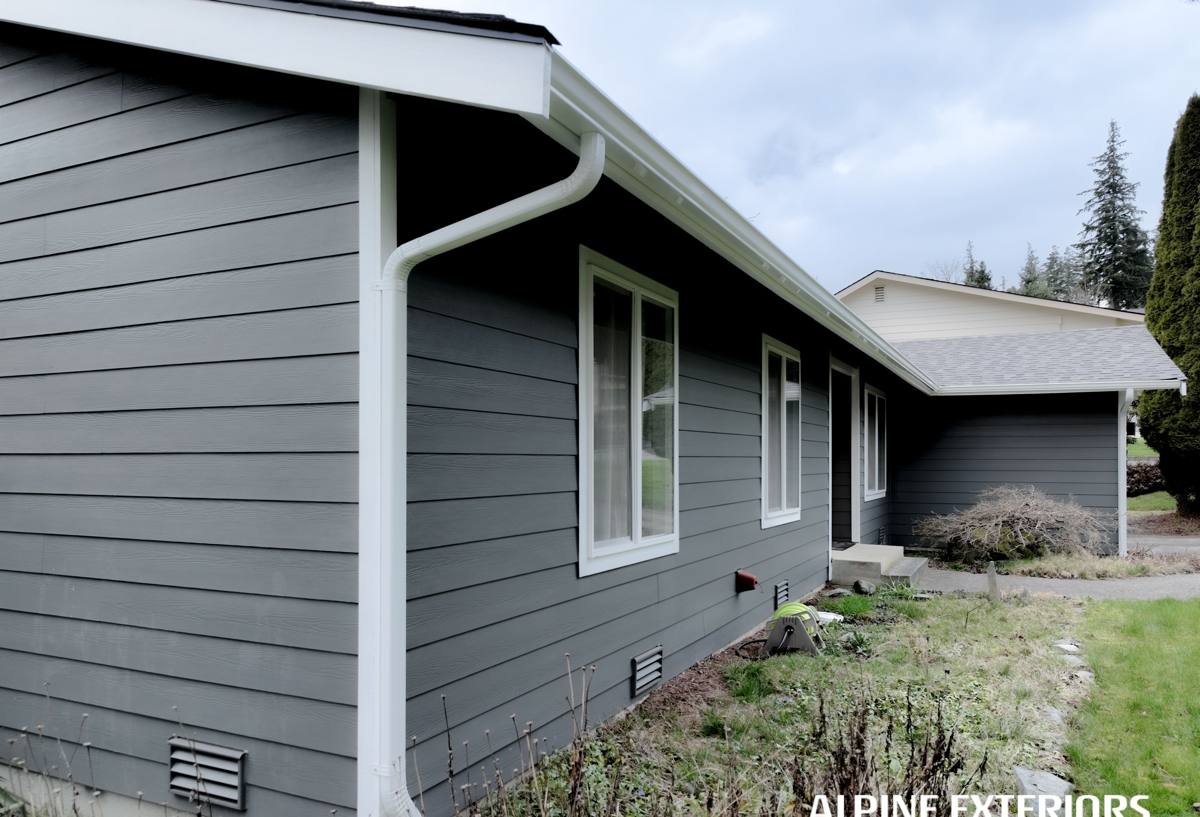
What Wesley Chapel's Climate Actually Does to Exterior Walls
Land O'Lakes and Wesley Chapel sit inland from the Gulf but still get plenty of the same punishment coastal Pasco County homes deal with: hurricane-force wind events, intense year-round UV that does not let up in winter the way it does farther north, wind-driven rain that gets pushed sideways into every seam and joint, and salt-bearing air that travels further inland than most people assume. Add in Florida's daily humidity cycle and you get siding that expands, contracts, and gets tested by moisture almost every single day of the year, not just during named storms.
The three failure points we see most
- UV breakdown of paint and substrate — cheap or unprotected finishes chalk, fade, and crack under sustained Florida sun.
- Moisture intrusion at joints and penetrations — wind-driven rain finds any gap in flashing, caulking, or overlap and works it wider over time.
- Movement and fastening failure — materials that swell and shrink with humidity put ongoing stress on fasteners and seams, especially at corners and around windows.
A siding system that is engineered around these three issues will outperform one that merely resists them for a season or two. That distinction is the core of why product choice matters as much as installation quality.
Why We Install Only James Hardie
We get asked regularly why we do not offer vinyl, LP SmartSide, or other fiber cement alternatives. The honest answer is that we evaluated the trade-offs and decided we would rather stand behind one product system we trust completely than offer several and let cost shopping drive the decision.
What sets James Hardie apart for this climate
- Non-combustible fiber cement — does not soften, warp, or melt under direct sun exposure the way vinyl can on west and south-facing walls.
- HZ5 product engineering — Hardie's HZ5 line is formulated specifically for high-humidity, hot-and-humid climate zones like ours, addressing moisture resistance at the material level, not just at the paint layer.
- ColorPlus factory-applied finish — baked-on, UV-cured finish that resists fading and chalking far better than field-applied paint, with touch-up product available for the rare repair.
- Dimensional stability — fiber cement moves far less with humidity swings than wood-based or vinyl products, which means tighter joints stay tighter longer.
- Strong transferable warranty — backed by a manufacturer with decades of track record in exactly this climate, and transferable to the next owner if you sell.
None of this means other products are junk. It means that for a climate that stacks UV, humidity, wind, and salt air on top of each other almost year-round, we are not willing to install something we think will underperform on a homeowner's biggest exterior investment.
What a Correct James Hardie Installation Actually Involves
The product is only half the equation. A huge share of siding failures we get called to inspect trace back to installation shortcuts, not the material itself. On a Wesley Chapel home, correct installation means:
Water management before a single board goes up
Proper weather-resistant barrier installation, correctly lapped and taped seams, and flashing at every window, door, and penetration. This is the layer that actually stops wind-driven rain from reaching your sheathing, and it is invisible once siding is on — which is exactly why it gets skipped by crews trying to move fast.
Manufacturer-spec fastening and clearances
James Hardie publishes specific fastener patterns, nailing zones, and clearance requirements (ground clearance, roofline clearance, deck and patio clearance) that exist to keep moisture from wicking into the bottom edge of the boards. Skipping these clearances is one of the most common causes of premature siding failure we see on homes in this area.
Joint and seam treatment
Butt joints, corners, and trim intersections need to be treated with the correct sealants and techniques, not just caulked and painted over. Done wrong, these are the first places wind-driven rain finds a way in.
Painted-edge protocol
Any field-cut edge of a Hardie board needs to be primed and sealed before installation. This detail alone determines whether cut edges resist moisture the way factory edges do.
Our Process, Start to Finish
| Step | What Happens |
|---|---|
| 1. On-site assessment | We walk the exterior, check current siding or sheathing condition, and note trouble spots like existing moisture damage or poor prior flashing work. |
| 2. Product and color selection | We go through Hardie's plank profiles, textures, and ColorPlus palette so the final look fits your home and Wesley Chapel's mix of architectural styles. |
| 3. Written estimate | Clear scope, materials, and timeline — no vague allowances or surprise change orders. |
| 4. Prep and water management | Removal of old siding where applicable, sheathing inspection and repair, weather barrier and flashing installed to spec. |
| 5. Hardie installation | Fastening, clearances, joint treatment, and edge sealing done to manufacturer specification, not shortcuts. |
| 6. Final walkthrough | We inspect the finished work with you before calling the job done. |
Why Hiring a Crew That Already Works Wesley Chapel Matters
Installation quality is not just about knowing the manufacturer's spec sheet — it is about knowing how those specs need to be applied to the specific housing stock and conditions in this area. A crew that regularly works Land O'Lakes and Wesley Chapel has already seen how local production-built homes are framed and sheathed, where builders in this area tend to cut corners on original construction, and which wall orientations take the worst of the afternoon sun and wind-driven rain. That familiarity shows up in fewer surprises mid-job and fewer callbacks after.
It also means a shorter response time if you ever need a warranty check, a repair estimate, or a question answered — you are not waiting on a crew that has to drive in from another county.
Cost Factors for a Wesley Chapel James Hardie Project
Every home is different, but the main variables that move price are consistent across the area:
| Factor | Why It Matters |
|---|---|
| Home size and complexity | More linear footage, more corners, gables, and dormers all add labor and material. |
| Existing siding removal | Tear-off and disposal of old material adds time compared to new construction. |
| Sheathing condition | Rot or moisture damage found underneath existing siding needs repair before new siding goes on. |
| Board profile and texture | Lap plank, shingle-style, and vertical board-and-batten carry different material and labor costs. |
| ColorPlus vs. field-painted | Factory-finished ColorPlus costs more upfront but removes a repaint cycle for years. |
| Trim and accent work | Window trim, fascia, and accent bands add finish work beyond the field siding. |
We do not quote a number without seeing the home — anyone who does is guessing, and guesses on a project this size tend to turn into change orders later.
Signs Your Wesley Chapel Home May Need Siding Attention Soon
- Visible warping, buckling, or soft spots when pressed
- Cracking or peeling paint that keeps returning after touch-ups
- Staining or discoloration concentrated near seams and corners
- Rising energy bills with no other explanation, suggesting compromised insulation behind the siding
- Visible gaps opening up at trim, corners, or window edges
- Musty odor or soft drywall on interior walls that back onto exterior siding
Any of these on their own is worth a look. Two or more together usually means water has already found a way behind the cladding.
Ready to Talk About Your Home
If you are weighing a full siding replacement or want a second opinion on an existing installation in Wesley Chapel or elsewhere in Land O'Lakes, we are happy to take a look and walk you through exactly what we would do differently and why. Request a free, no-pressure estimate using the form below.