 Land O'Lakes Siding
 Trinity's Climate Is Harder on Siding Than Most Homeowners Realize
Trinity sits inland from the Gulf but still lives inside the same weather system that batters the rest of the Tampa Bay region: long, humid summers, intense year-round UV exposure, sudden downpours that come in sideways on gusty winds, and the real possibility of a hurricane or tropical storm putting sustained high winds against every wall of the house. Add in the salt-laden air that drifts well inland from the coast on sea breezes, and you have a combination that ages cheap or poorly-installed siding fast — chalking, fading, swelling, and seam failure show up years before they should.
None of this is unique to Trinity, but it's not generic either. A siding job done to a national-average standard, using materials or details suited to a drier or milder climate, is a job that's already behind before the crew leaves the driveway. This page is about what fiber cement siding needs to do here specifically, what a correct installation looks like, and why the crew doing the work matters as much as the material itself.
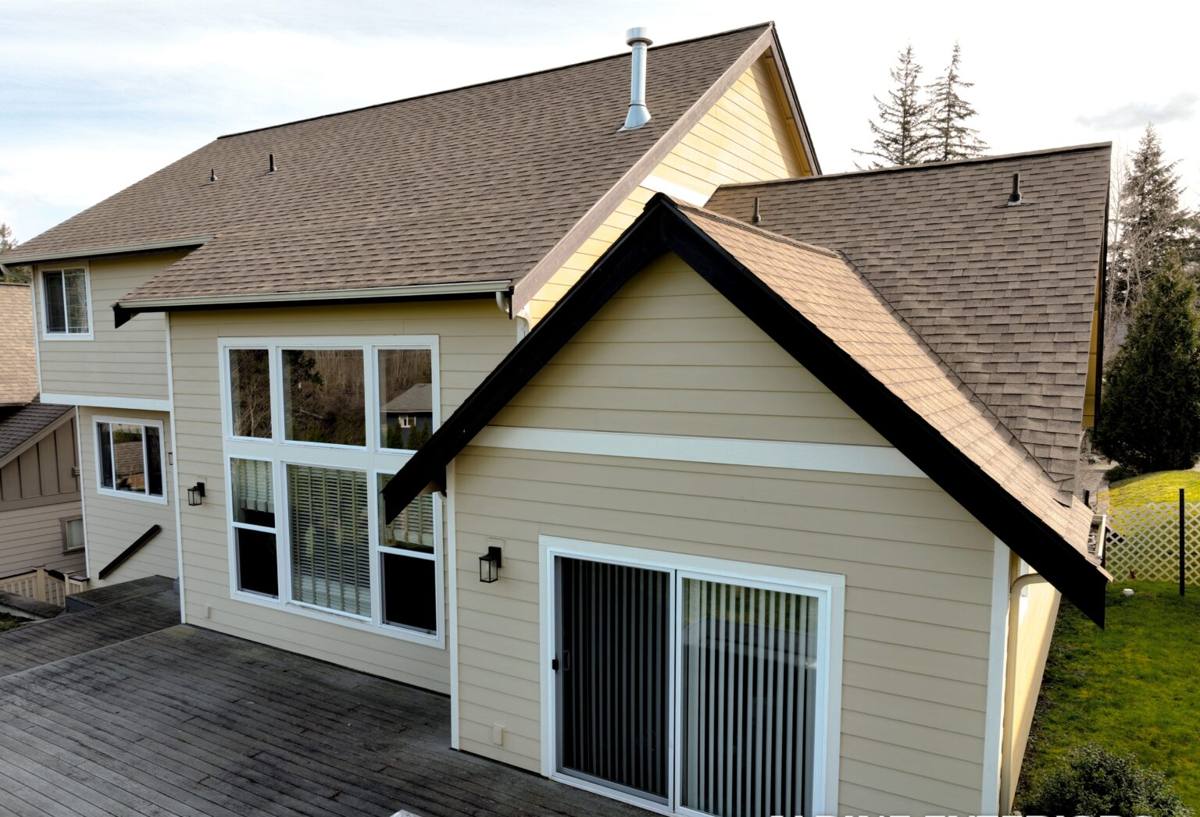
Why Fiber Cement Is the Right Material for This Area
Fiber cement is a mix of cement, sand, and cellulose fiber, pressed and cured into planks and panels. Compared to the alternatives homeowners in Pasco County typically consider, it holds up to this climate in ways that matter:
- It doesn't warp, buckle, or expand and contract the way vinyl does when summer surface temperatures climb well past 150°F on a south- or west-facing wall.
- It's non-combustible, which matters for wildfire-adjacent areas and simply for peace of mind.
- It resists the wind-driven rain and humidity cycling that causes wood-based products to swell, rot at the edges, or invite pest damage.
- It holds paint and factory finish far longer than wood under intense UV, so homeowners aren't repainting every few years.
That said, fiber cement is only as good as the specific product line and the installation behind it. Not all fiber cement is engineered the same way, and not all installers treat the details — flashing, fastening, clearances — as seriously as they should.
Why We Install Only James Hardie
Land O'Lakes Siding Company installs James Hardie fiber cement exclusively. We don't install vinyl, LP SmartSide, Cemplank, Allura, or primed wood siding, and we're upfront about why: those products each carry trade-offs — thinner moisture margins, more installer-dependent performance, shorter or less transferable warranties, or finish systems that don't hold up as well under sustained Florida sun — that we're not willing to put our name behind.
What Sets Hardie Apart for This Region
James Hardie engineers separate product formulations for different climate zones, and their HZ10 line is built specifically for hot, humid, storm-exposed regions like Florida and the Gulf Coast — as opposed to the standard formulation sold in drier or colder parts of the country. For a Trinity home, that means:
- ColorPlus Technology — a factory-applied, baked-on finish that resists fading and chalking far longer than field-applied paint, backed by its own finish warranty.
- Engineered moisture resistance — the board is manufactured to shrug off the humidity swings and wind-driven rain that are routine here, not occasional.
- A strong, transferable limited warranty — meaningful if you sell the home down the road, which matters in a market where Trinity properties turn over regularly.
This isn't a case of one brand being "better" in the abstract — it's that Hardie's engineering choices line up with what Pasco County weather actually does to a house, and we'd rather install one product correctly and stand behind it than offer a menu of options with uneven long-term performance.
What a Correct Installation Actually Involves
Fiber cement siding's real-world performance is decided far more by installation quality than by the bag it came in. Most siding failures we're called to inspect trace back to a handful of shortcuts, not the material itself.
Moisture Management Behind the Boards
Before a single plank goes up, the wall needs a proper weather-resistive barrier and correctly lapped, sealed flashing at every window, door, and penetration. In a climate where wind-driven rain regularly tests every seam in a building envelope, water management behind the siding matters more than the siding itself. Skipping or rushing this step is the single most common cause of hidden rot and mold we find behind older siding jobs.
Fastening and Clearance to Manufacturer Spec
Hardie siding has to be fastened with the correct nail type, spacing, and depth — over-driven or under-driven fasteners both cause problems, from cracked boards to loosened planks in high wind. Boards also need proper clearance from the ground, roofline, and any hard surfaces like patios or driveways; tight clearances trap moisture against the bottom edge and shorten the life of the material regardless of how good the product is.
Joints, Caulking, and Trim
Butt joints, corners, and trim transitions are where most visible failures start. Correctly staggered joints, factory-primed cut edges (recut edges need to be sealed on site), and the right sealant at every gap keep water from finding its way in — and keep the finished look clean instead of showing seams from the street.
How Fiber Cement Compares for Trinity Homes
| Factor | James Hardie Fiber Cement | Vinyl Siding | Wood / LP SmartSide |
|---|---|---|---|
| Hurricane-force wind resistance | High when installed to spec | Moderate; can crack or blow off in gusts | Moderate; fastener pull-out is a risk |
| UV / fade resistance | Strong with factory ColorPlus finish | Fades and chalks over time | Depends heavily on paint upkeep |
| Moisture / humidity tolerance | Engineered for humid climates (HZ10) | Doesn't rot, but traps moisture behind it if installed poorly | Vulnerable to swelling and rot at edges |
| Salt air exposure | Good; non-organic material | Fair; can become brittle over time | Weaker; organic material invites decay |
| Maintenance over time | Low — occasional wash, no repainting | Low, but limited repair options if damaged | Higher — repainting and edge sealing needed |
| Warranty | Strong, transferable limited warranty | Varies widely by manufacturer | Varies; often shorter or more conditional |
This isn't to say every alternative is a bad product — it's that, factor by factor, fiber cement engineered for this climate is the one we're comfortable standing behind for the long haul in a place like Trinity.
How Our Process Works on a Trinity Job
Because we work in this specific area regularly, we already know the general conditions Trinity homes face — mixed home ages, common wall constructions in the area's subdivisions, and the exposure levels typical for the neighborhood's lot layouts. That familiarity shortens the front end of the job:
- On-site inspection — we check the existing siding, sheathing, and any signs of prior moisture intrusion before quoting anything.
- Written scope and product selection — which Hardie line, profile, and color, with clear notes on trim and detail work.
- Tear-off and substrate check — old siding comes off and the sheathing underneath gets inspected and repaired before anything new goes up.
- Weather barrier and flashing — installed and inspected before the first plank is hung.
- Siding installation to manufacturer spec — correct fastening, clearances, and joint staggering throughout.
- Trim, caulking, and final walkthrough — including a punch list review with the homeowner before we call the job done.
What to Ask Before You Hire
- Are you a licensed and insured contractor in Florida, and can you show proof?
- Do you install to the manufacturer's written installation instructions, not just "how we've always done it"?
- Who inspects the flashing and weather barrier before siding goes on — and can I see that before it's covered up?
- What warranty applies to the material, and what warranty applies to your labor?
- Have you worked in this neighborhood or similar homes in Pasco County before?
Maintenance After Installation
One of the practical advantages of correctly installed Hardie siding in this climate is how little upkeep it asks for. A periodic rinse to clear off pollen, salt residue, and general grime is usually enough — there's no repainting cycle to plan around. What does matter is keeping an eye on caulking at joints and trim over the years, since sealant is the one component that wears out before the siding itself does, and keeping sprinklers, mulch beds, and landscaping from holding moisture against the bottom edge of the wall.
Why the Crew Matters as Much as the Material
A siding job is only as good as the details nobody sees once it's finished — the flashing behind the first course, the fastener depth, the clearance at the bottom edge. A crew that already works in Trinity and the surrounding Land O'Lakes area has seen how local homes are built, how the sun hits different elevations through the day, and where wind-driven rain tends to find its way in during a summer storm. That's the difference between siding that looks right at handoff and siding that's still performing correctly ten summers later.
If you're weighing a siding project for your Trinity home, we're glad to take a look and walk you through what we'd recommend — no pressure, no obligation. Use the form below to request a free estimate.