 Land O'Lakes Siding
 Lutz Homes Face a Specific Set of Siding Problems
Lutz sits in that stretch of Pasco County where suburban growth has pushed right up against older rural neighborhoods, wetlands, and lake frontage. Whatever the setting, the siding on a Lutz home is dealing with the same core stressors every day: intense year-round UV that breaks down pigments and coatings, wind-driven rain that gets pushed sideways into laps and seams during summer storms, humidity that never really goes away, and — for homes closer to the Gulf side of the county — a measurable amount of salt air working on fasteners and finishes. None of these forces are dramatic on any single day. The damage shows up over years, as fading, soft spots, cracked caulk lines, and swollen trim that homeowners often don't notice until a repaint stops covering the problem.
Siding for this area has to be chosen and installed with that slow-motion damage in mind, not just for how it looks on installation day. That's the lens we bring to every fiber cement job we do in and around Lutz.
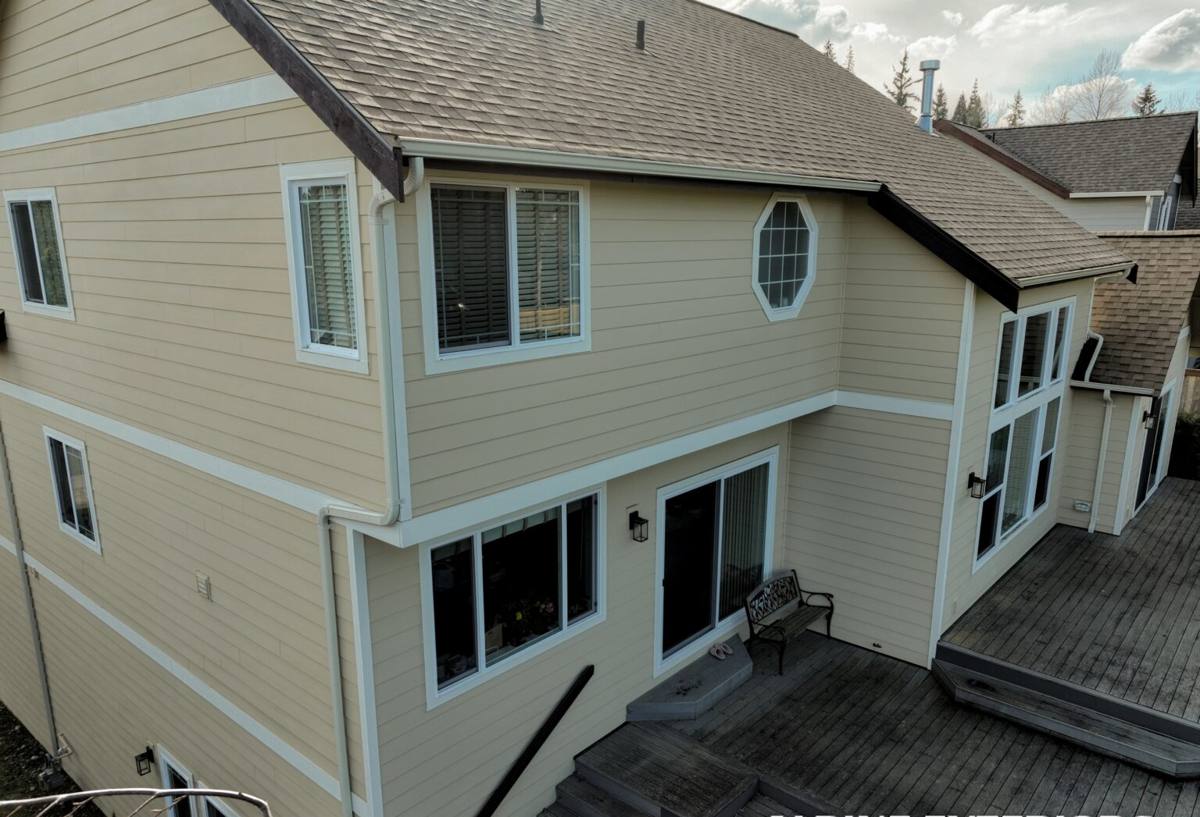
Why We Only Install James Hardie Fiber Cement
Our company installs James Hardie fiber cement siding exclusively. We don't install vinyl, LP SmartSide, Cemplank, Allura, primed spruce, or cedar. That's not a marketing position — it's a professional standard we've settled on after weighing how each material actually performs in a hot, humid, storm-exposed climate over a full ownership cycle, not just the first few years.
Fiber cement is a mix of Portland cement, sand, and cellulose fiber, engineered to be non-combustible and dimensionally stable. It doesn't expand and contract the way vinyl and wood-based products do in Florida's daily heat swings, and it doesn't feed a fire the way wood-based or wood-fiber siding can. James Hardie specifically engineers its HZ product lines for different climate zones, which matters in a county where a house can see 95-degree afternoons and torrential rain in the same week.
What HZ5 Means for a Lutz Address
James Hardie's HZ5 formulation is engineered for hot, humid climates like ours, with moisture and mold resistance built into the substrate rather than relied on solely from paint. For a Lutz home, that means the siding itself is working against the same humidity and rain exposure that wears down lesser materials, instead of just having a coating that eventually fails and exposes the material underneath.
What "Correct" Fiber Cement Installation Actually Involves
Fiber cement siding is only as good as its installation. Most of the failures we see on older or poorly installed siding jobs in this area aren't material failures — they're installation failures: caulk where there should be a gap, fasteners driven wrong, panels butted tight with no room to move, or house wrap details that funnel water instead of shedding it. A correct installation includes:
- A continuous, correctly lapped weather-resistive barrier behind the siding, with all penetrations properly flashed
- Rainscreen or drainage gap detailing where conditions call for it, so bulk water has somewhere to go besides trapped against the sheathing
- Fasteners placed and driven to James Hardie's published spec — not overdriven, not underdriven, in the right location on the plank
- Proper clearance from grade, roof lines, decks, and other transitions so siding isn't sitting in standing water or wicking moisture from the ground
- Correctly gapped and caulked joints at trim, windows, and doors using a sealant compatible with the ColorPlus finish
- Field-cut edges primed or sealed before installation, not left raw
Skip any one of these and you can end up with a house that still looks fine from the street but is trapping moisture behind the cladding — the kind of problem that doesn't show up until a wall cavity or window frame has already been compromised.
Our Process for a Lutz Fiber Cement Project
1. On-Site Assessment
We start by walking the exterior with you, looking at existing siding condition, trim, soffits, flashing at windows and rooflines, and any signs of past water intrusion. In this part of Pasco County that often means checking areas shaded by mature trees, low-lying sections of the lot, and any additions or extensions where the original siding meets newer construction — those transitions are common weak points.
2. Substrate and Moisture Check
Before any new siding goes up, we check what's underneath. If the sheathing has taken on moisture damage from a prior installation gap or roof leak, that gets addressed first. Installing new fiber cement over a compromised substrate just hides the problem for a while.
3. Weather Barrier and Flashing Detail
We install or verify the weather-resistive barrier, correct any flashing details at windows, doors, and roof-to-wall intersections, and set up drainage detailing appropriate to the wall assembly. This step is where most of the long-term water-management performance of the wall gets decided — it happens before a single piece of siding is visible.
4. Installation to Manufacturer Spec
Panels, planks, or shingle-style siding go up according to James Hardie's fastening and clearance specifications, with proper joint gaps and butt-joint flashing. We don't shortcut fastener spacing or clearance to save time, because those details are exactly what determines how the siding holds up through a decade of Florida storm seasons.
5. Trim, Caulking, and Finish Detail
Trim work, caulking at transitions, and any touch-up on cut edges get finished with products compatible with the ColorPlus factory finish, so the repair points don't fade or weather differently than the rest of the panel.
6. Final Walkthrough
We walk the finished job with you, point out where flashing and drainage details are (since they're invisible once the siding is up), and go over care and maintenance specific to the product and color chosen.
ColorPlus Finish: Why It Matters More Here Than in Most Climates
James Hardie's ColorPlus technology is a factory-applied, baked-on finish, rather than field-applied paint. In a climate with this much UV exposure, that distinction matters. Factory finishes are applied and cured under controlled conditions, giving more consistent color adhesion and fade resistance than most field-applied paint jobs can match, especially on a south- or west-facing elevation that takes direct Florida sun for most of the day. It also means touch-up work uses matched, purpose-made products rather than mixed field paint, which keeps color consistent at repair points for years afterward.
Fiber Cement Compared to Other Siding Options
Homeowners in Lutz researching siding replacement usually run across the same handful of materials. Here's a straightforward comparison of how they generally perform under our climate conditions:
| Material | Heat/UV Behavior | Moisture Behavior | Fire Resistance | Typical Maintenance |
|---|---|---|---|---|
| James Hardie Fiber Cement | Stable, ColorPlus resists fading | Engineered HZ5 for humid climates | Non-combustible | Occasional wash, caulk checks |
| Vinyl Siding | Can soften, warp, or fade under sustained heat | Sheds water on surface but seams can allow intrusion | Combustible, can melt near heat sources | Low, but panels can crack/warp over time |
| Wood-Based/Wood-Fiber Siding (e.g. LP SmartSide) | Sensitive to sun and moisture cycling | Requires diligent sealing at cuts and edges | Combustible | Regular inspection of seams and edges |
| Primed Wood/Cedar | Natural material, sensitive to UV and drying | Absorbs moisture without diligent coating maintenance | Combustible | Frequent repainting/resealing |
This is a general comparison of material characteristics, not a claim that every product in these categories fails — installation quality and maintenance history matter enormously for any material. It's simply why, weighing these factors for our climate, we standardized on Hardie fiber cement.
What Drives Cost on a Lutz Fiber Cement Project
| Factor | Why It Affects Cost |
|---|---|
| Home size and elevation complexity | More corners, gables, and transitions mean more cutting, flashing, and labor time |
| Existing siding removal | Tear-off and disposal of old material adds labor beyond a straightforward re-side |
| Substrate repair needs | Any moisture-damaged sheathing found during removal needs repair before new siding goes up |
| Product line and profile | Lap width, shingle-style panels, and trim details vary in material and labor cost |
| Color and finish choice | Standard ColorPlus colors versus special-order finishes can affect lead time and price |
| Trim and accessory work | Fascia, soffit, and window trim replacement done alongside siding adds scope |
We don't quote from a distance — every estimate comes from an actual walk of the property, because the condition of what's already there changes the scope more than almost anything else.
Why Hiring a Crew That Already Works Lutz Matters
Fiber cement installation quality depends heavily on crew experience with the specific product and the specific climate conditions it's going into. A crew that regularly works Pasco County homes already knows the common trouble spots: where wind-driven rain tends to find gaps during summer storms, how humidity affects caulk cure times, and which trim and flashing details hold up versus which ones fail first under this level of UV and moisture exposure. That local pattern recognition is hard to substitute for, no matter how skilled a crew is in general.
It also means faster, more accurate estimating. A contractor who has done this work throughout the area can look at a home's orientation, roofline, and existing siding condition and know almost immediately where the real cost drivers are going to be — rather than discovering them mid-project.
A Simple Checklist Before You Hire Anyone for Fiber Cement Work
- Confirm they are installing manufacturer-specified fasteners, clearances, and joint details — not shortcuts
- Ask how they handle flashing and drainage behind the siding, not just what the finished product looks like
- Verify they carry proper licensing and insurance for exterior work in Florida
- Ask whether they inspect and repair substrate/sheathing issues before re-siding, or just cover them
- Get a written scope that specifies product line, color, and trim details — not a vague total
- Ask about their experience with the specific product line being installed, not just "siding" generally
Maintenance and Warranty Considerations
Correctly installed James Hardie fiber cement is a low-maintenance product, but "low-maintenance" doesn't mean "no maintenance." Periodic washing to remove dirt, mildew, and salt residue helps preserve the ColorPlus finish, and caulked joints should be checked periodically, especially after major storms. James Hardie backs its products with a strong transferable warranty, which matters both for peace of mind during ownership and for resale — a documented, warrantied installation is a selling point for a future buyer in a market like this one, where exterior condition gets scrutinized given the climate.
Ready to Talk About Your Home's Siding?
If your Lutz-area home needs new siding, or you're dealing with a previous installation that's showing its age, we're happy to walk the property with you and give you a straightforward, no-pressure estimate. There's a form below — reach out and we'll get a time on the calendar.