 Land O'Lakes Siding
 Building Decks in Oakstead: What Land O'Lakes Weather Actually Demands
Oakstead sits inland from the Gulf, but that doesn't mean the weather goes easy on outdoor structures. A deck here spends its life absorbing intense, near-constant UV exposure, sudden downpours that can dump an inch of rain in twenty minutes, and the periodic gut-check of a tropical storm or hurricane pushing through Pasco County. Add in the humidity that never really leaves, and you've got a climate that tests every joint, fastener, and board on a deck far harder than it would in a drier or milder region.
None of that means a deck can't last. It means the build has to account for those conditions from the ground up, not just at the surface finish. A deck that looks fine going in but wasn't engineered for wind uplift, moisture cycling, and UV degradation will show problems within a few seasons — cupped boards, corroded fasteners, loose railings, or worse, structural movement you can't see until it fails.
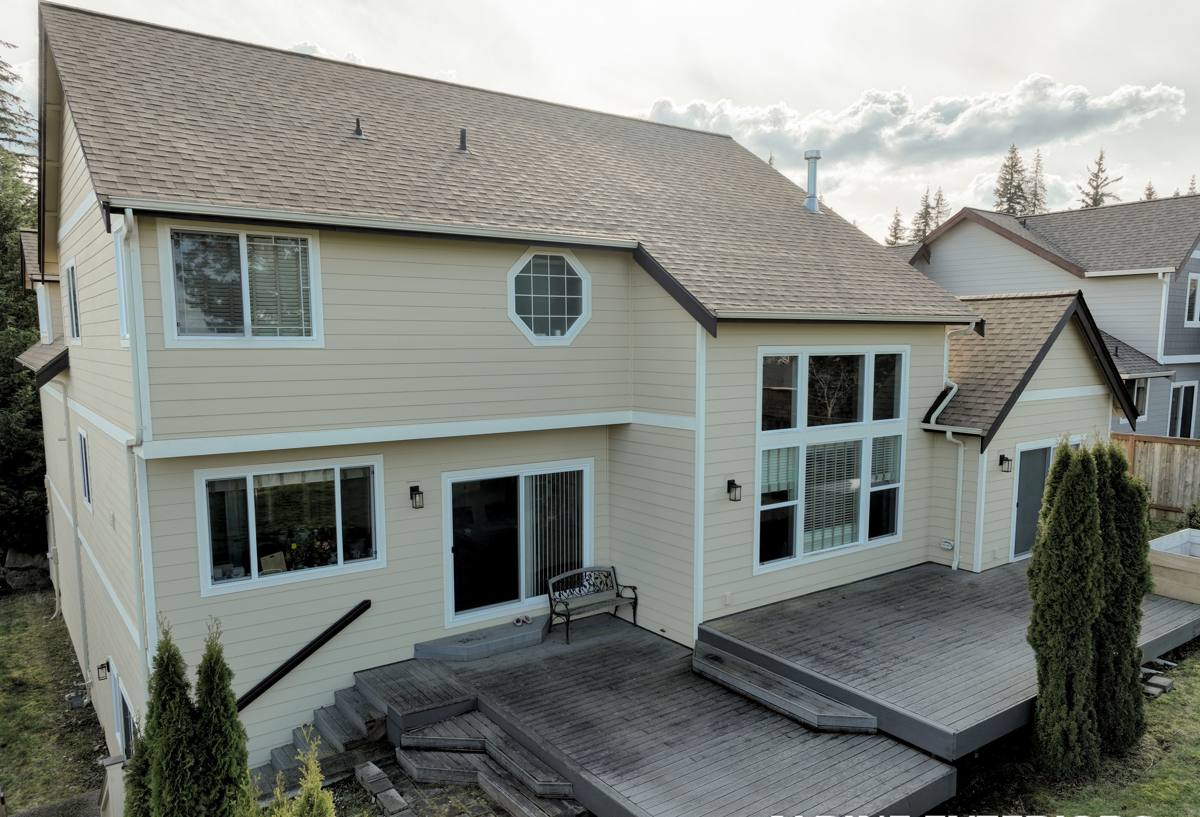
What a Correctly Built Deck Includes Structurally
The visible decking material gets most of the attention, but the framing underneath is what actually determines whether a deck survives Florida weather. A deck built to hold up in Land O'Lakes needs:
- Pressure-treated framing rated for ground contact where posts meet soil, with proper spacing to prevent sagging under load and moisture
- Corrosion-resistant fasteners and hardware — standard galvanized hardware degrades faster in Florida's humidity than coated or stainless options
- Post footings sized and set to local frost-free, high-moisture soil conditions, not a generic national spec
- Joist hangers and structural connectors rated for wind uplift, since a deck attached to the house can become a lever arm in high wind if it's under-fastened
- Proper ledger board attachment and flashing where the deck meets the house, to keep wind-driven rain from working its way behind the siding
- Adequate ventilation and drainage under the deck surface so trapped moisture doesn't sit against framing
Skipping any one of these doesn't usually cause an immediate problem — it causes a slow one. That's part of why so many deck complaints we hear about aren't complaints about the decking boards at all; they're complaints about movement, squeaking, or soft spots that trace back to framing decisions made on day one.
Choosing Materials: Wood vs. Composite for an Oakstead Backyard
Both wood and composite decking can perform well in Pasco County if they're installed correctly and the homeowner understands the tradeoffs. Neither is a wrong choice — they just come with different maintenance expectations and different failure points if neglected.
| Factor | Pressure-Treated Wood | Composite Decking |
|---|---|---|
| Upfront cost | Lower material cost | Higher material cost |
| UV resistance | Fades and grays without regular sealing | Color-stable, though can fade slightly over many years |
| Moisture behavior | Can cup, crack, or splinter if not sealed and maintained | Resists moisture absorption; some early-generation composites had issues with moisture-related swelling that modern products have largely engineered out |
| Maintenance | Needs periodic cleaning, sealing, and inspection for rot | Occasional washing; no sealing or staining required |
| Heat underfoot | Stays relatively cool | Darker colors can get noticeably hot in direct summer sun |
| Long-term structural risk | Rot and insect damage if maintenance lapses | Low risk of rot; fastener and hidden-clip quality matters more |
Our standard on any deck we build is to spec fasteners, connectors, and framing lumber to a level that outperforms whatever decking surface goes on top — because the surface is easy to replace later, and the frame underneath is not. If a homeowner wants wood for the cost or the traditional look, we'll build it right and be honest about the sealing schedule it needs. If they want composite for lower upkeep, we'll spec the substructure to match the added weight and lifespan expectations that come with it.
A Note on Product Selection
We don't push a single decking brand as the "only" option, because the right product depends on budget, sun exposure in that particular yard, and how much upkeep the homeowner actually wants to do. What we will steer people away from is decking hardware and fasteners that aren't rated for coastal-adjacent, high-humidity climates — that's a maintenance burden and a warranty risk that isn't worth the small upfront savings.
Our Deck Building Process in Oakstead
The process is straightforward, but the sequence matters, and skipping steps is exactly how decks end up with problems in year two or three instead of year fifteen.
- On-site assessment. We look at grade, drainage, sun exposure, and how the deck will attach to the house, including existing siding and structural condition at the ledger point.
- Design and material selection. We walk through wood versus composite, railing options, and layout based on how the space will actually be used.
- Permitting. Deck construction in Pasco County typically requires a permit and inspection, especially for anything attached to the house or elevated above a certain height. We handle this as part of the job rather than leaving it to the homeowner.
- Footings and framing. This is the stage that determines the deck's lifespan. We set footings to proper depth and spacing, and frame with attention to wind load and moisture drainage.
- Decking, railing, and stairs. Surface material goes down with attention to board spacing for expansion and drainage, and railings are secured to structural framing, not just surface boards.
- Final inspection and walkthrough. We confirm the county inspection passes and walk the homeowner through basic care for whatever material was installed.
Permitting and Pasco County Code Considerations
Deck permitting exists for a reason that becomes obvious the first time a structure fails inspection after the fact — it's much harder and more expensive to fix framing that's already covered by decking than to build it correctly the first time. Pasco County inspectors are checking footing depth, post-to-beam and beam-to-joist connections, railing height and baluster spacing (particularly important with kids or pets in the yard), and ledger attachment where the deck meets the house.
An unpermitted deck can also become a real problem at resale — buyers and their inspectors do ask, and an unpermitted structure can hold up or complicate a sale. Building to code isn't extra red tape; it's the same baseline a careful builder would want to hit anyway.
Signs of a Deck That Wasn't Built for This Climate
We get called to look at decks — sometimes ones we didn't build — where the homeowner knows something's off but isn't sure what. A few patterns show up consistently in Land O'Lakes:
- Boards that cup or crown noticeably, usually a sign of inadequate sealing on wood or poor spacing that traps moisture
- Railings that flex or feel loose, often because they were fastened to decking boards instead of structural posts or blocking
- Rust streaks around fasteners, a sign standard hardware was used instead of corrosion-resistant connectors
- Soft or spongy spots near the house, which usually points to a ledger or flashing issue letting water get behind the connection
- Visible sagging between support posts, typically from footings or beams undersized for the span
None of these are cosmetic issues once they start — they're early indicators of a structural problem that gets more expensive to correct the longer it sits.
Deck Maintenance for Pasco County Conditions
Whatever material a deck is built with, a little seasonal attention goes a long way in this climate. A basic maintenance rhythm for an Oakstead deck should include:
- Rinsing off pollen, dirt, and organic debris regularly, since buildup traps moisture against the surface
- Checking for standing water after heavy rain — pooling usually means a drainage or slope issue worth addressing early
- Inspecting fasteners and railings once or twice a year for rust, looseness, or movement
- Resealing or restaining wood decking on a schedule appropriate to sun exposure, generally more often on a west- or south-facing deck
- Trimming back vegetation that shades the deck and keeps it damp longer after rain
- Checking under-deck ventilation and clearing debris that can block airflow to the framing
Why a Crew That Already Works in Oakstead Matters
Deck building isn't a one-size-fits-all trade, and the difference between a generic crew and one that regularly works Land O'Lakes shows up in the details: knowing what footing depth and drainage approach actually holds up in this soil and rainfall pattern, knowing which fastener grades hold up to the humidity instead of just meeting a minimum code spec, and knowing the Pasco County permitting process well enough that it doesn't stall the job. A crew that's built decks throughout the area has already seen what fails here and builds accordingly from the start, instead of learning those lessons on someone's project.
It also means being reachable after the job is done. Decks are outdoor structures exposed to real weather, and having a local contractor who can come back for a warranty check, a loose railing, or a question about maintenance is worth more than a lower bid from a crew that isn't based nearby.
Get a Straightforward Estimate
If you're planning a new deck in Oakstead or want an honest opinion on the condition of an existing one, we're happy to take a look and walk through the options with you. There's no pressure and no obligation — just a clear assessment of what your yard, budget, and the Land O'Lakes climate actually call for. Use the form below to request your free estimate.