 Land O'Lakes Siding
 Angus Valley's Climate Puts Real Stress on Exterior Siding
Land O'Lakes sits inland from Tampa Bay, but "inland" doesn't mean protected. Homes in Angus Valley still take direct hits from hurricane-force wind gusts during tropical systems, get soaked by wind-driven rain that pushes water sideways and upward into laps and seams, bake under some of the most intense year-round UV exposure in the continental United States, and pick up salt-laden air on onshore flow days that accelerates corrosion on fasteners, trim, and hardware. Most siding products are engineered to handle one or two of those stresses reasonably well. Very few hold up when all four are working on the house at once, year after year, which is exactly the situation in Pasco County.
That combination is why siding installation in Angus Valley isn't a job you want treated like a generic exterior upgrade. The material choice, the flashing details, the fastener spec, and the finish all need to account for a climate that doesn't give siding a break in any season.
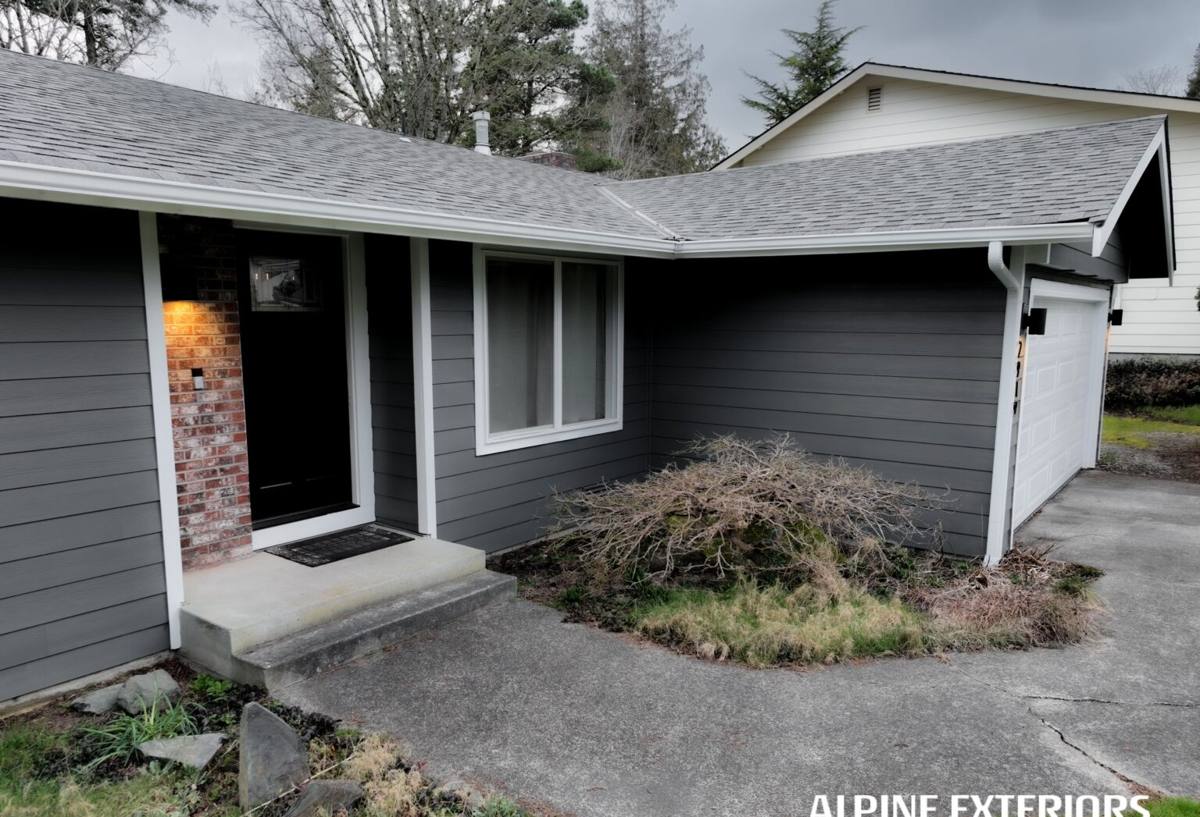
What Angus Valley Homes Actually Need From Their Siding
Wind resistance that doesn't turn into flying debris
Siding that isn't fastened correctly, or that's rated for a lighter wind zone than what actually reaches this part of Pasco County, can peel, crack, or detach in a strong storm. The panel itself matters, but so does the fastener pattern and the installer following the manufacturer's wind-zone specification rather than a generic nailing schedule.
Moisture management, not just moisture resistance
Wind-driven rain finds any gap it can. A correct installation manages water with overlapping layers — a weather-resistive barrier, proper flashing at every penetration, and siding that sheds water outward — rather than relying on the face material alone to keep a house dry. Products that absorb moisture at cut edges or rely on paint film alone to stay sealed are a poor match for this climate.
UV stability that actually holds color
Central Florida sun is intense every month of the year, not just in summer. Siding finishes that aren't engineered for UV exposure chalk, fade unevenly, and need repainting far sooner than a homeowner should have to budget for.
Why We Install Only James Hardie Fiber Cement Siding
We standardized on James Hardie fiber cement for every home we side, including in Angus Valley, and we don't install vinyl, LP SmartSide, cedar, or other engineered wood products. That's not a marketing position — it's a professional standard based on how these products behave in exactly the conditions described above.
James Hardie's HZ5 product line is engineered specifically for humid, high-UV, storm-prone climates like ours. It's non-combustible, which matters in a state where wildfire and ember exposure near wooded lots is a real consideration for insurance and building codes. The factory-applied ColorPlus finish is baked on and warrantied against fading, rather than relying on a field-applied paint coat to hold up against year-round sun. And the product carries a strong, transferable limited warranty that adds real value if the home is ever sold. None of that means other products are without merit — it means that, given what Angus Valley's climate does to a home's exterior, this is the system we're willing to put our name behind.
What a Correct Siding Installation Involves
The material is only part of the equation. A siding job holds up — or fails early — based on details that aren't visible once the house is finished:
- Inspecting and repairing sheathing before anything new goes up, so new siding isn't fastened over hidden rot or moisture damage
- A continuous, correctly lapped weather-resistive barrier behind the siding
- Flashing at every window, door, and penetration, installed so water is directed outward and down, never trapped behind the cladding
- Correct starter strip placement and panel gapping per the manufacturer's installation instructions
- Corrosion-resistant fasteners, sized and spaced to the wind-zone requirement for the home's location
- Caulking and touch-up only where specified — not as a substitute for proper flashing
- An air gap or drainage plane behind the cladding so incidental moisture can escape rather than sit against the wall
Skipping any one of these doesn't usually show up as a problem in year one. It shows up in year five or eight, as a soft spot, a stain, or a section that comes loose in a storm that a properly installed wall would have shrugged off.
Our Process for a Siding Installation in Angus Valley
- On-site assessment — we inspect the existing siding, sheathing, and trim for rot, moisture intrusion, or prior repair shortcuts before quoting the job
- Tear-off — full removal of the old siding down to the sheathing, not an install-over-existing shortcut
- Substrate repair — any damaged sheathing or framing is repaired before new material goes up
- Weather barrier installation — a continuous, correctly lapped barrier across the whole wall plane
- Flashing — every window, door, and penetration is flashed to shed water outward
- Hardie installation — panels installed per manufacturer spec, with fastener schedule matched to the local wind exposure
- Trim, caulk, and touch-up — finish details completed to the ColorPlus system's requirements
- Final walkthrough and cleanup — we review the finished work with the homeowner and clear the site
Siding Materials Compared for Angus Valley's Climate
| Material | Wind/Impact Resistance | Moisture & Rot Risk | UV/Color Stability | Salt-Air Durability |
|---|---|---|---|---|
| Vinyl | Can crack or blow off in high gusts | Low absorption but traps moisture behind it if installed poorly | Prone to fading and warping under sustained heat/UV | Fasteners and trim hardware can corrode over time |
| Cedar/wood | Moderate, depends on fastening | High — organic material absorbs water and is vulnerable to rot | Requires regular refinishing to hold color | Susceptible to accelerated weathering near salt air |
| Engineered wood (LP SmartSide) | Good when installed to spec | Moderate — edge sealing is critical and installation-sensitive | Paint film can chalk over time | Edge and seam integrity matters more in humid, salty air |
| James Hardie fiber cement | Engineered for high-wind zones (HZ5) | Low — cement-based, doesn't absorb and swell like wood | Factory ColorPlus finish warrantied against fading | Non-combustible, corrosion-resistant fastener specs |
Signs Your Angus Valley Home's Siding Needs Attention
- Panels that are cracked, buckled, or visibly bowing away from the wall
- Soft or spongy spots when you press on the siding, especially near the bottom courses
- Paint that's peeling, bubbling, or chalking off on your hand when touched
- Gaps opening up at trim, corners, or window edges, especially after a storm season
- Rising cooling bills that suggest the wall assembly isn't managing heat and moisture the way it should
- Streaking, dark staining, or a musty smell near exterior walls, which can point to moisture getting behind the cladding
Why Hiring a Crew That Already Works Angus Valley Matters
A contractor who regularly works in this part of Pasco County already understands the wind-load requirements the local building department enforces, knows the age and typical construction of homes in the area, and has a feel for how the microclimate here — the mix of humidity, sun exposure, and occasional salt-laden wind — actually behaves against a finished wall. That local familiarity shows up in fewer surprises during the job: fewer change orders for hidden sheathing issues, permitting that goes smoothly because the paperwork matches what the inspector expects to see, and a finished installation that's built for what this specific area experiences rather than a one-size-fits-all national spec.
It also matters after the job is done. A crew that's already local is the crew that's available if a warranty question comes up or a storm tests the installation. That's a meaningfully different relationship than hiring an out-of-area company for a one-time job.
Warranty and Long-Term Value
James Hardie backs its fiber cement products with a strong limited warranty, and the ColorPlus factory finish carries its own finish warranty separate from the substrate. Because the warranty is transferable, it's also a selling point if the home changes hands down the road — a documented, professionally installed Hardie system is something a buyer's inspector will recognize as a durable, low-maintenance exterior. We back our own installation work as well, because a warranty on the material only holds up if the installation behind it was done correctly in the first place.
If you're weighing a siding replacement for a home in Angus Valley, we're happy to come take a look, walk the exterior with you, and put together a straightforward, no-pressure estimate — just fill out the form below to get started.