 Land O'Lakes Siding
 Why Zephyrhills Homes Take a Beating From Florida's Climate
Zephyrhills sits inland in Pasco County, but "inland" doesn't mean sheltered here. During hurricane season, homes in this area still see sustained tropical-storm-force winds, and a direct hit or close pass can drive rain sideways through any gap in a wall system that isn't sealed correctly. Between storms, the sun does its own steady damage — Central Florida gets some of the most consistent, intense UV exposure in the continental U.S., month after month, with no real off-season. Layer in humidity that rarely drops below sticky and the salt-laden air that Gulf storms and onshore flow push well inland through Pasco County, and you get a climate that is genuinely hard on exterior building materials.
Siding that isn't built for that combination — heat, UV, wind, moisture, and periodic salt exposure — tends to show it within a few years: fading, warping at seams, cracking, or moisture working in behind the surface where you can't see it until the repair bill shows up. That's the practical reason we standardized on one product line instead of offering several.
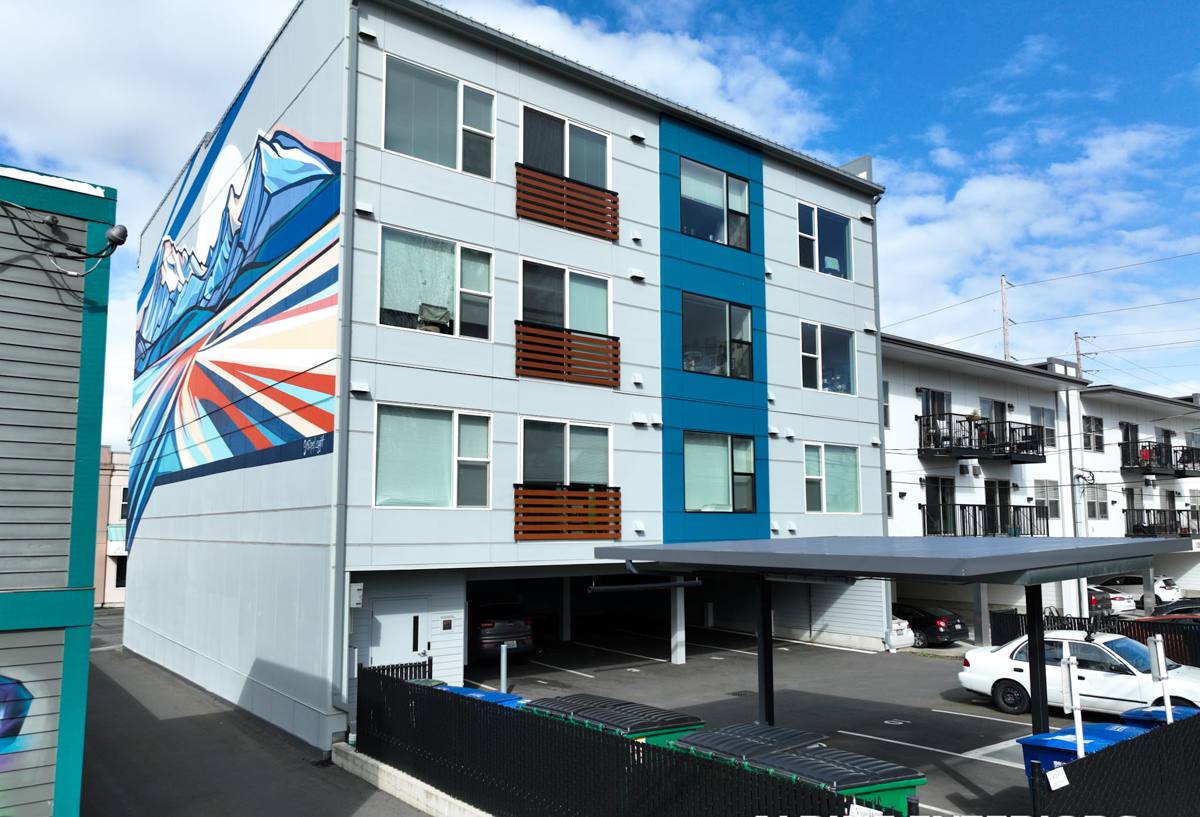
What James Hardie Fiber Cement Siding Actually Is
James Hardie siding is fiber cement — a mix of cellulose fiber, sand, and portland cement, pressed and cured into planks, shingles, and trim boards. It isn't vinyl, it isn't solid wood, and it isn't one of the wood-composite products like LP SmartSide. That difference in raw materials is exactly what makes it perform differently in a Gulf Coast climate:
- It's non-combustible, which matters for both safety and, in many cases, insurance considerations.
- It doesn't expand and contract with humidity swings the way wood and wood-composite products do, so seams and fasteners stay tighter over time.
- It won't rot and doesn't offer termites anything to feed on, which is a real consideration in this part of Florida.
- It holds paint and color far longer than wood because of how the factory finish is applied.
ColorPlus Finish and Why a Factory Finish Matters Here
Most James Hardie siding is available with a factory-applied ColorPlus finish, baked on and cured under controlled conditions before the boards ever leave the plant. That's a different process than field-painting siding after installation, and in a climate with this much UV and humidity, the difference shows up in how long the color holds and how well the finish resists chalking, peeling, and fading compared to a coat of paint applied on-site.
HardieZone Formulations: Built for Where We Live
James Hardie doesn't sell one universal product — it engineers its fiber cement formulations differently depending on climate. Regions that see hard freeze-thaw cycles get one formulation; hot, humid, storm-prone regions like the Gulf Coast — where Pasco County and Zephyrhills sit — get a formulation engineered specifically for consistent heat, high humidity, and moisture exposure. That's not a marketing detail. It's the reason a product line built for a dry, moderate climate somewhere else in the country isn't necessarily the right call for a home fifteen minutes from the Gulf's weather patterns, even if that home is inland.
What a Correct Installation Actually Involves
Fiber cement siding only performs the way it's engineered to if it goes on correctly. This is the part that gets skipped or rushed on cut-rate jobs, and it's usually where problems start:
- Weather-resistive barrier: A continuous, correctly lapped barrier goes behind the siding, not just around it — gaps here are where wind-driven rain finds its way into wall cavities.
- Flashing at every penetration: Windows, doors, hose bibs, and vents all need proper flashing so water sheds outward instead of tracking behind the siding.
- Clearance from grade, roofline, and decks: Hardie's installation specifications call for defined clearances between the bottom edge of the siding and the ground, roof surfaces, and other horizontal surfaces — skip this and you're inviting standing moisture against the board.
- Correct fasteners, correctly driven: Corrosion-resistant fasteners, set to the manufacturer's depth and spacing — overdriven nails crack the board's fiber cement edge and create a weak point that shows up later as a crack or a rust stain.
- Sealed cut edges and properly caulked joints: Every field cut needs to be primed and sealed before it goes up, and butt joints need the right sealant, applied correctly, not just caulk squeezed into a gap.
Every one of these steps is invisible once the job is finished — which is exactly why it matters who does the work, not just what material goes on the wall.
Our Process for Zephyrhills Siding Projects
- On-site inspection and measurement. We look at the existing siding, trim, and any visible problem areas before quoting anything.
- Tear-off and sheathing inspection. Once the old siding comes off, we check the sheathing and framing underneath for rot, water staining, or soft spots — issues that are common on older homes and invisible from outside.
- Repair before we rebuild. Any damaged sheathing gets repaired or replaced. Installing new siding over compromised sheathing just hides a problem instead of fixing it.
- Weather barrier installation. A new, correctly lapped weather-resistive barrier goes on before a single piece of siding.
- Siding installation to manufacturer spec. Fastener pattern, clearances, and flashing details are followed to James Hardie's published installation requirements — not shortcuts, not "close enough."
- Trim and detail work. Corners, window and door trim, and transitions get finished cleanly, since these are the spots most prone to water intrusion if rushed.
- Final walkthrough and cleanup. We go over the finished work with the homeowner and clear the site of debris and packaging.
What We Commonly Find When We Tear Off Older Siding
When we strip siding off an older Zephyrhills home, a handful of issues show up again and again, regardless of what material was on the wall before:
- Missing or failed weather barriers that let moisture track behind the siding for years without any visible sign from outside.
- Rotted sheathing near window sills, hose bibs, and other penetrations where flashing was skipped or installed wrong.
- Siding installed with little or no ground clearance, which keeps the bottom edge damp long after rain has stopped.
- Caulk used to cover gaps instead of proper flashing — a fix that looks fine for a season or two and then fails.
None of this is unique to one brand of siding. It's what happens when installation details get skipped, on any product, in a climate that doesn't forgive shortcuts.
James Hardie vs. Other Siding Options in This Climate
| Material | How It Handles FL Heat & Storms | Maintenance | Fire Resistance |
|---|---|---|---|
| James Hardie fiber cement | Engineered specifically for hot, humid, storm-prone climates; holds up well to UV and wind-driven rain when installed correctly | Occasional rinse and inspection; factory finish resists fading | Non-combustible |
| Vinyl siding | Can warp, buckle, or crack under sustained high heat and impact; seams are a common water-entry point | Low, but panels can't be spot-repaired without replacement | Combustible |
| Wood / engineered wood (LP-type) | Prone to moisture absorption, swelling, and rot in sustained humidity if any coating fails | Regular repainting and sealing needed to hold up here | Combustible |
This is why our answer to "do you install vinyl or LP SmartSide" is no. It's not that those products can't work anywhere — it's that we've made fiber cement, installed correctly, our standard for homes in this specific climate.
Maintenance Checklist for Hardie Siding in a Gulf Coast Climate
- Rinse the siding with a garden hose periodically to clear salt residue, pollen, and dirt buildup.
- Walk the exterior once or twice a year and check caulking at joints, trim, and penetrations for cracking or gaps.
- Keep gutters and downspouts clear so water is directed away from the base of the walls, not pooling against them.
- Trim back shrubs and landscaping so nothing stays pressed against the siding, trapping moisture.
- Look closely after major storms for loose trim, displaced flashing, or impact damage from debris.
- Touch up any nicks or scratches in the finish promptly rather than letting bare fiber cement sit exposed.
Why Hiring a Crew That Already Works in Zephyrhills Matters
Wind-load requirements, permitting details, and inspection expectations vary by jurisdiction, and Pasco County has its own process for exterior work like re-siding. A crew that regularly pulls permits and works with local building officials in this area moves through that process faster and with fewer surprises than one that's unfamiliar with it. There's also the practical matter of housing stock — Zephyrhills has a mix of older ranch-style homes and newer construction, and knowing what's typically hiding behind the walls of each helps us scope a job accurately from the start instead of discovering problems mid-project. And if a question comes up two years after installation, a local crew is easy to reach and has a reason to stand behind the work — we're not driving in from across the state.
If your siding is showing its age, or you're planning ahead for a replacement, we're happy to walk your home with you and give you a straight, no-pressure assessment of what it needs. Use the form below to request a free estimate.