 Land O'Lakes Siding
 Oakstead Roofs Take a Different Kind of Beating
Oakstead sits inland from Tampa Bay, but "inland" doesn't mean sheltered. Every hurricane season, homes throughout this part of Land O'Lakes get hit with the same wind gusts, wind-driven rain, and afternoon storm cells that batter the coast — just without the salt spray softening the edges. What Oakstead roofs deal with instead is a steady grind: sustained UV exposure almost year-round, sudden pressure swings during tropical systems, and heavy rain that doesn't fall straight down so much as get driven sideways under anything that isn't sealed tight.
Most homes in this part of Pasco County were built with dimensional asphalt shingle roofs, with tile showing up on some properties. Both hold up fine under normal Florida weather. Both can also develop hidden problems after a storm that don't show up as an obvious leak for months — which is exactly why storm damage repair here needs to be more than a patch job. It needs someone who knows what to look for underneath, not just what's visible from the driveway.
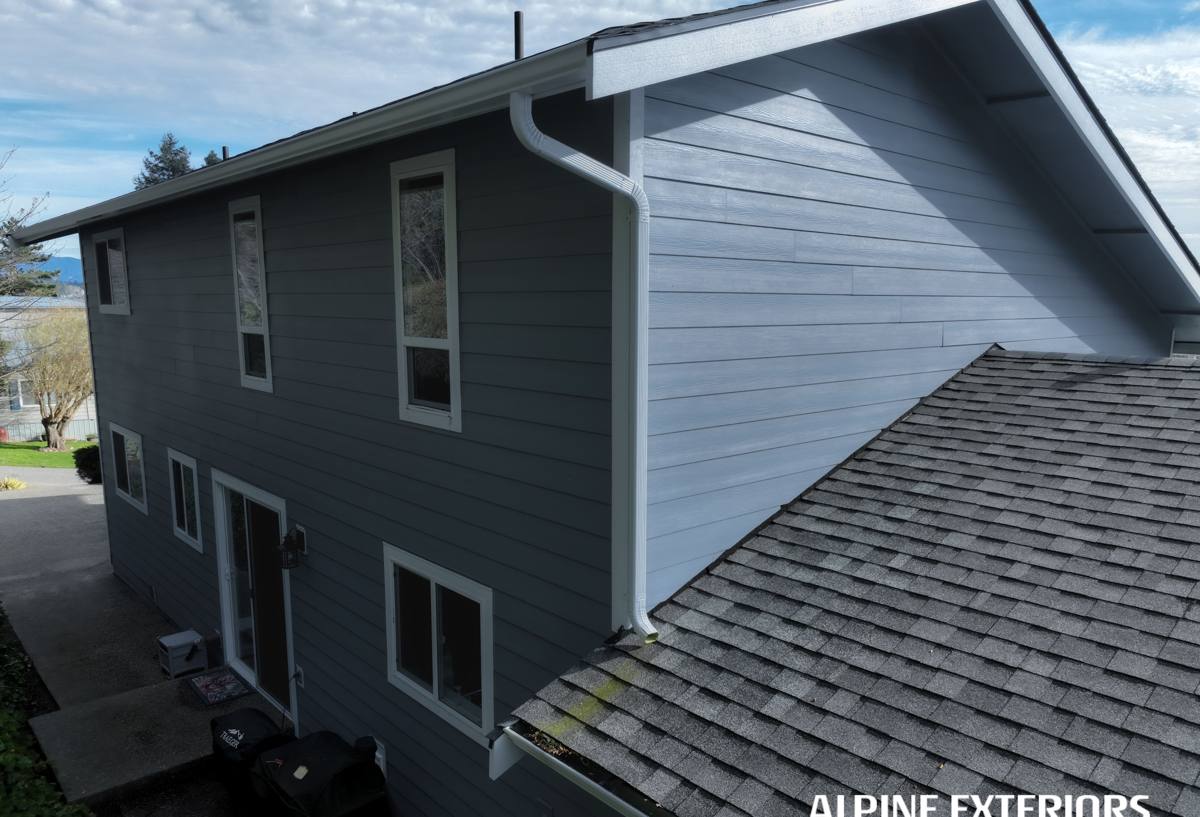
What Actually Counts as Storm Damage
Homeowners usually call us after they've spotted something obvious — missing shingles, a stain spreading across a ceiling, granules piled up in the gutter. Those are real signs, but they're often the tail end of the problem, not the start of it. Storm damage on a Florida roof frequently begins as something small and mostly invisible:
- Shingle seals broken by wind uplift, even where the shingle itself looks intact
- Lifted or cracked tiles that reseat almost flush, hiding a broken underlayment beneath
- Flashing pulled slightly loose around chimneys, vents, or skylights
- Nail pops and fastener backout from repeated wind flex
- Wind-driven rain forced sideways under ridge caps and into soffit vents
- Granule loss from hail or heavy wind that thins the shingle's UV protection
Every one of those can sit quietly for weeks before it turns into a ceiling stain, mold in the attic, or rotted decking. That's the core problem with treating storm damage repair casually — the visible damage and the real damage are rarely the same thing.
How Wind-Driven Rain and Sun Wear a Roof Down Over Time
Land O'Lakes doesn't get a break between storm seasons. Between June and November, tropical systems and pop-up thunderstorms push rain in at an angle strong enough to work past shingle laps, flashing edges, and vent boots that would keep out a normal rain. Underneath, the deck and underlayment are doing the real work of keeping water out — the shingles or tile are the first line of defense, not the only one.
Outside of storm season, the sun does its own kind of damage. Florida's UV exposure is intense nearly year-round, and it dries out asphalt shingles and cooks the sealant strips that hold them down. A roof that's already lost some of its flexibility to UV aging is far more likely to crack, lift, or fail outright the next time it takes a real wind load. That's why a roof that "looks fine" after one storm can fail badly during the next one — the damage is cumulative, and each event leaves the roof a little more vulnerable than the last.
Why This Matters More for a Roof, Less for Siding or Windows
Unlike siding or windows, a roof has almost no redundancy once its outer layer is compromised. A gap in siding might let a little moisture behind the wall, but a breach in a roof deck sends water straight into insulation, drywall, and framing. That's part of why storm damage roof repair needs to happen quickly and correctly, not just eventually.
Signs an Oakstead Homeowner Should Check For After a Storm
You don't need to get on a ladder to do a reasonable first check after a storm passes through. Walk the property and look for the following:
- Shingle pieces, tile fragments, or granules in the yard, driveway, or gutters
- Visible gaps, lifted edges, or discoloration on slopes facing the prevailing wind
- Sagging or uneven spots along the roofline
- Water stains on ceilings, especially near chimneys, skylights, or where two roof planes meet
- Damp or musty smell in the attic
- Loose or missing flashing around vents and roof penetrations
- Gutters pulling away from the fascia or full of shingle debris
If you see any of these, it's worth having someone qualified look at the roof soon — not necessarily because it's an emergency, but because the gap between "small fix" and "expensive repair" often comes down to how many more storms pass over an unrepaired weak point.
What a Correct Storm Damage Repair Actually Involves
A repair that's done right starts before anyone touches a shingle. It starts with figuring out how the water actually got in, not just where the stain showed up on the ceiling — those two points are frequently several feet apart, since water travels along the deck and rafters before it drips through drywall.
A Proper Repair Sequence Looks Like This
- Full roof inspection, including the attic side, not just the exterior
- Documentation of the damage — useful for your own records and for any insurance claim
- Removal of damaged shingles, tile, or flashing down to the deck in the affected area
- Inspection of the decking itself for soft spots, rot, or delamination from trapped moisture
- Repair or replacement of any compromised decking before anything goes back down
- New underlayment installed correctly — lapped and sealed the way the manufacturer specifies, not just stapled down fast
- Matching shingles or tile reinstalled, with attention to nailing pattern and sealant strip activation
- Flashing, boots, and ridge details rebuilt or resealed, since these are the most common repeat-failure points
- Final walkthrough so you know exactly what was done and why
Skipping the decking inspection is the most common shortcut we see from rushed repairs — shingles go back down over a deck that's already soft, and the homeowner is dealing with the same leak again within a year or two, except now it's hidden under a fresh-looking roof.
Repair or Replace: How to Think About the Decision
Not every storm-damaged roof needs full replacement, and not every roof can be reasonably patched. The right call depends on how much of the roof is affected, its age, and what's underneath the surface layer once we open it up.
| Factor | Favors Repair | Favors Replacement |
|---|---|---|
| Extent of damage | Localized to one slope or small area | Spread across multiple slopes or the whole roof |
| Roof age | Under roughly half its expected service life | Nearing or past its expected service life |
| Decking condition | Solid, dry decking under the damaged area | Soft, rotted, or delaminated decking found during inspection |
| Shingle/tile availability | Matching material still available | Discontinued color or profile, visible mismatch likely |
| Storm frequency of damage | First significant damage in years | Repeated damage from consecutive storm seasons |
We'll always tell you honestly which side of that table your roof falls on. If a repair will hold up and save you money, we'll recommend the repair — a full replacement isn't the answer just because it's more billable work.
Our Process for Oakstead Storm Damage Repairs
Because we already work in this part of Land O'Lakes, we're not learning the neighborhood on your dime. Our process for an Oakstead storm repair generally runs like this:
- Initial inspection and assessment — we get on the roof and in the attic, not just a look from the ground
- Clear explanation of findings — what's damaged, what's not, and what caused it
- Written scope and estimate — no vague verbal promises
- Insurance documentation support if you're filing a claim, including photos and a damage report you can hand to your adjuster
- Scheduled repair work using materials that match your existing roof as closely as possible
- Cleanup — magnetic sweep for nails, debris removed, gutters cleared of repair debris
- Final review with you before we consider the job done
We're not a storm-chasing crew that shows up from out of state after a hurricane and disappears once the check clears. If something needs a follow-up visit six months later, we're still local and still reachable.
Permits, Code, and Insurance in Pasco County
Roof repair work in Pasco County generally requires a permit through the county's building department, and for good reason — it means someone other than the contractor is checking that the work meets Florida Building Code. We handle that permitting as part of the job rather than treating it as optional paperwork.
One code detail worth knowing: Florida law requires that once a certain share of a roof's covering is being replaced, the whole roof has to be brought up to current code, including upgraded secondary water barrier protection. That threshold can turn what looked like a simple repair into a larger scope, and it's better to know that up front than to find out mid-project. We'll walk you through it if it applies to your situation.
On the insurance side, our job is to document damage accurately and give your insurer or adjuster something honest and thorough to work from. We won't inflate a claim or tell you damage exists where it doesn't — that approach causes problems for homeowners down the road, and it's not how we want to be known in this community.
A Note on HOA Requirements
Several sections of Oakstead have HOA architectural guidelines that touch on roofing — material, color, or visible profile. If your property falls under one of those, it's worth checking your HOA's requirements before repair work starts, especially if a full replacement is on the table. We can work within whatever those guidelines require.
Why Hiring a Crew That Already Works Oakstead Matters
After a bad storm, Land O'Lakes sees an influx of unfamiliar trucks and door-knockers offering fast roof repairs. Some are legitimate. Many are not local, won't be around if something needs a warranty fix, and have no track record in Pasco County to check.
A crew that already works in Oakstead knows the typical roof ages and materials in the area, has a working relationship with the county permitting office, and — most importantly — is still going to be a local business next year if a repair needs a follow-up. That matters more here than almost anywhere, because Florida roofs get tested again every single storm season. A repair that isn't done right the first time doesn't just risk failing — it risks failing again, on a shorter timeline, the next time wind-driven rain finds the same weak spot.
We'd rather spend an extra twenty minutes on an inspection now than have you calling us back after the next named storm with the same leak in a new spot.
If your Oakstead home has storm damage, or you just want an honest opinion on whether your roof is holding up the way it should, we're glad to take a look. Reach out for a free, no-pressure estimate using the form below.