 Land O'Lakes Siding
 Composite Decking for Stagecoach Village, Land O'Lakes
Stagecoach Village homes deal with the same weather every other property in Land O'Lakes and Pasco County deals with: long stretches of intense UV, sudden wind-driven downpours, and the kind of humidity that never really lets a deck fully dry out between storms. A deck built here isn't just an outdoor living upgrade — it's an exterior structure that has to survive a Florida summer every single year for as long as you own the house. Composite decking, installed correctly, is one of the few decking systems that holds up to that cycle without constant upkeep. Installed poorly, it fails in the same ways any other decking material fails, just more expensively.
This page covers what a composite deck actually needs to hold up in this specific neighborhood's conditions, what a correct installation looks like from the substructure up, and why it matters to work with a crew that already understands how Pasco County inspectors, HOA guidelines, and Florida framing requirements fit together — rather than a company that treats every deck the same regardless of where it sits.
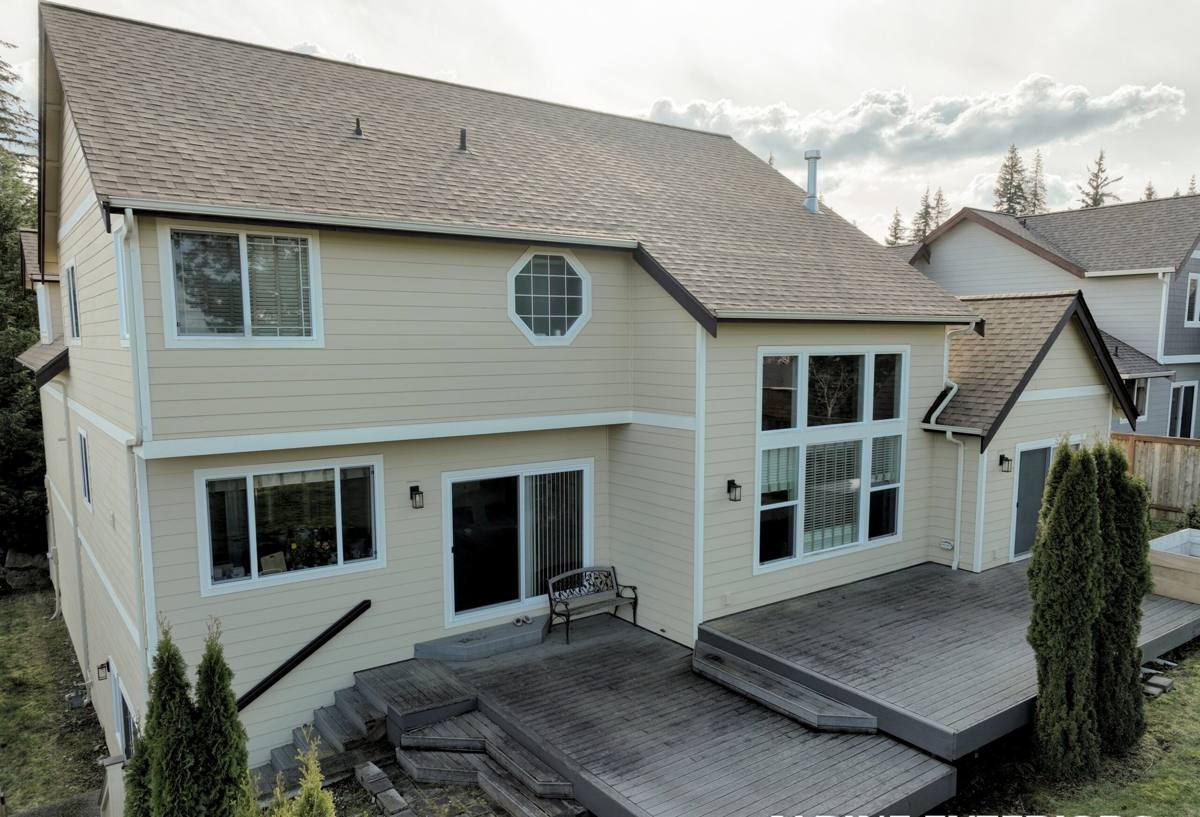
What Florida Weather Actually Does to a Deck
It's worth being specific about what "Florida climate" means for a deck, because the failure modes here are different from a deck in a drier or milder region.
UV Exposure
Land O'Lakes gets strong, direct sun essentially year-round. Untreated or poorly finished wood grays and splits under that exposure within a few seasons. Lower-grade composite boards without adequate UV inhibitors in their cap layer can fade unevenly, especially where furniture or planters shade part of a board and not the rest.
Wind-Driven Rain
Afternoon storms in this part of Pasco County don't just drop rain straight down — wind pushes it sideways, under railings, into ledger connections, and into any gap in flashing or fastener sealing. Water intrusion at the point where a deck attaches to the house is the single most common source of structural rot on Florida decks, composite or wood.
Heat and Humidity Cycling
Composite boards expand and contract with heat. A deck that bakes at well over 100°F on the surface in July and then gets soaked by an evening storm needs gapping, fastening, and substructure ventilation that accounts for that movement — otherwise boards buckle, cup, or push fasteners loose over time.
Storm and Wind Load
Hurricane-force wind events are a real design consideration for any outdoor structure in this region, not a hypothetical. Railings, post connections, and ledger attachment all need to meet the wind load expectations built into Florida's building code — a deck that looks fine on a calm day can fail exactly where it was under-built the first time real wind hits it.
None of this is unique to Stagecoach Village specifically, but it's the baseline every deck in this neighborhood is working against, and it's why a generic installation approach doesn't hold up as well here as it might elsewhere.
Why Composite Holds Up Better Here — With Honest Trade-offs
Composite decking isn't automatically better than every alternative in every situation. It's a good fit for this climate for specific reasons, and it comes with its own maintenance realities that homeowners should understand going in.
| Factor | Wood | Composite (capped) | PVC |
|---|---|---|---|
| UV fade resistance | Poor without regular refinishing | Good with quality cap layer | Good |
| Moisture/rot resistance | Requires sealing, still rots at fasteners over time | Very good — core doesn't absorb water like wood | Excellent — fully synthetic |
| Maintenance | Annual sealing/staining | Occasional cleaning, no sealing | Occasional cleaning |
| Upfront cost | Lowest | Mid-range | Highest |
| Heat underfoot | Moderate | Can run hot in direct sun, varies by color | Can run hot in direct sun, varies by color |
| Feel/appearance | Natural wood grain | Wood-look, consistent | Slightly more plastic look on some lines |
We install composite as our standard recommendation for most decks in this area because it balances upfront cost against long-term maintenance better than either wood or full PVC for most homeowners. We don't push a specific brand as "the only option" — the right board depends on your budget, the deck's sun exposure, and whether you want a grooved-edge hidden-fastener board or a traditional face-screwed profile. What we won't do is install a board or fastening system we know performs poorly in wind-driven rain just because it's cheaper up front — that's a maintenance and warranty headache we'd rather you avoid.
What a Correct Composite Deck Installation Actually Involves
The composite boards themselves get most of the attention, but the boards are the last thing installed, not the most important part. A composite deck that fails almost never fails because the board itself broke down — it fails because of what's underneath it.
Ledger Attachment
Where the deck ties into the house is the highest-risk point for water intrusion. Correct flashing at the ledger board, with proper fastener spacing and sealing, keeps wind-driven rain from working its way behind the siding and into the house framing.
Framing and Joist Spacing
Composite boards typically require tighter joist spacing than solid wood decking, especially at angles, stair treads, and picture-frame borders. Manufacturer span tables exist for a reason — spacing them too wide is a common shortcut that leads to bounce and premature board sagging.
Fasteners and Substructure Materials
Fasteners and structural connectors need to be rated for the moisture exposure this climate delivers, not just standard exterior-grade hardware. Galvanic corrosion between the wrong metals in a humid, salt-influenced environment can quietly weaken connections years before it's visible.
Ventilation Underneath
A deck built low to the ground or over a patio slab needs airflow underneath it. Without it, moisture gets trapped after every storm and never fully evaporates — which shortens the life of the substructure even when the composite boards on top look fine.
Board Gapping and Expansion
Composite expands and contracts more than people expect in Florida's heat swings. Gapping between boards has to account for that movement, particularly on longer runs, or you end up with boards that buckle at the ends after a hot summer.
A correct job gets every one of these right the first time. Composite boards themselves typically carry long manufacturer warranties, but that warranty covers the board — it does not cover a ledger that was flashed wrong or joists spaced too far apart.
Our Process for Stagecoach Village Decks
- On-site assessment — we look at your existing deck or patio slab, sun exposure, drainage, and how the structure ties into the house before quoting anything.
- Design and board selection — we walk through composite board options, colors, and fastening styles based on your budget and how the space gets used.
- Permitting — decking work in Pasco County typically requires a permit and inspection; we handle that process rather than leaving it to the homeowner.
- HOA documentation — Stagecoach Village, like many planned communities, may have design guidelines on deck styles, railings, or colors. We can prepare the documentation needed for HOA approval before work begins.
- Demo and substructure build or repair — old decking removed, framing inspected or rebuilt to current span and fastening standards.
- Composite installation — boards, fascia, and railings installed with proper gapping and fastening for this climate.
- Final walkthrough — we inspect the finished deck with you before calling the job complete, and cover basic care so it lasts.
Permits, Codes, and HOA Considerations
Decking work that changes the footprint, height, or structure of an outdoor space generally falls under Pasco County's permitting requirements, and inspections check things like railing height, stair geometry, and structural attachment — not just whether the boards look good. Skipping this step is a common way homeowners end up with problems at resale, when a buyer's inspector or the title company flags unpermitted structural work.
For a planned community like Stagecoach Village, there's often a second layer on top of the county permit: HOA architectural review for exterior changes, which can include deck materials, colors, and railing style. We factor both into the timeline up front so there are no surprises mid-project.
Quick Checklist: What a Properly Permitted Composite Deck Includes
- County building permit pulled before work begins, not after
- Framing and ledger attachment built to current wind load and span requirements
- Railing height and baluster spacing meeting code for fall protection
- Stair stringer and tread geometry built to code, not eyeballed
- Final inspection scheduled and passed before the job is considered done
- HOA design approval documented, where applicable, before installation starts
Maintaining a Composite Deck in This Climate
One of composite's real advantages is how little upkeep it needs compared to wood — but "low maintenance" doesn't mean "no maintenance," especially with the pollen, humidity, and storm debris that come through Land O'Lakes for much of the year.
- Rinse or sweep off pollen, leaves, and organic debris regularly — trapped debris holds moisture against the board surface.
- Clean with soap and water periodically to prevent mildew film in shaded, humid spots.
- Check railing and post connections annually, especially after a significant storm.
- Keep gutters and downspouts near the deck clear so runoff isn't dumping directly onto boards or the ledger area.
- Avoid dragging metal furniture or grills that scratch the cap layer, which is what protects the board from UV and staining.
Why a Local Crew Matters Here
A deck built by a crew that already works in this part of Pasco County isn't guessing at joist spacing from a manufacturer's generic chart written for a different climate zone, and isn't learning Land O'Lakes' permitting process on your job. We've built and repaired decks through Florida's heat, storm seasons, and humidity long enough to know where the shortcuts show up years later — the under-flashed ledger, the joists spaced too wide, the fasteners that weren't rated for this level of moisture exposure. Those are the things that separate a deck that looks right at handoff from one that's still solid five summers later.
We're not asking you to take shortcuts on trust — we're happy to walk through exactly how we're building your ledger connection, framing, and drainage before a single board goes down, and explain why.
Get a Straight Answer on Your Deck
If you're weighing a new composite deck or replacing an aging one in Stagecoach Village, we're glad to come take a look, measure the space, and give you an honest estimate — no pressure, no inflated scope. Use the form below to request a free estimate and we'll go from there.