 Land O'Lakes Siding
 Siding Repair Built for Stagecoach Village Conditions
Homes in the Stagecoach Village area of Land O'Lakes take a beating that homeowners in milder climates never have to think about. Between hurricane-force wind events, months of intense subtropical sun, and the wind-driven rain that comes through Pasco County every summer storm season, exterior siding here works harder than almost anywhere else in the country. When siding starts to fail, it's rarely one single cause — it's usually the cumulative effect of years of heat cycling, moisture exposure, and storm stress finding the weakest point in the material or the installation.
This page covers what siding repair actually looks like for homes in this specific neighborhood, what our crew checks for before we ever pick up a caulk gun or a pry bar, and why the repair approach that works in a dry, mild climate often falls apart in Land O'Lakes. If you're seeing warped boards, cracked panels, or soft spots near your trim, this is the information you need before you hire anyone.
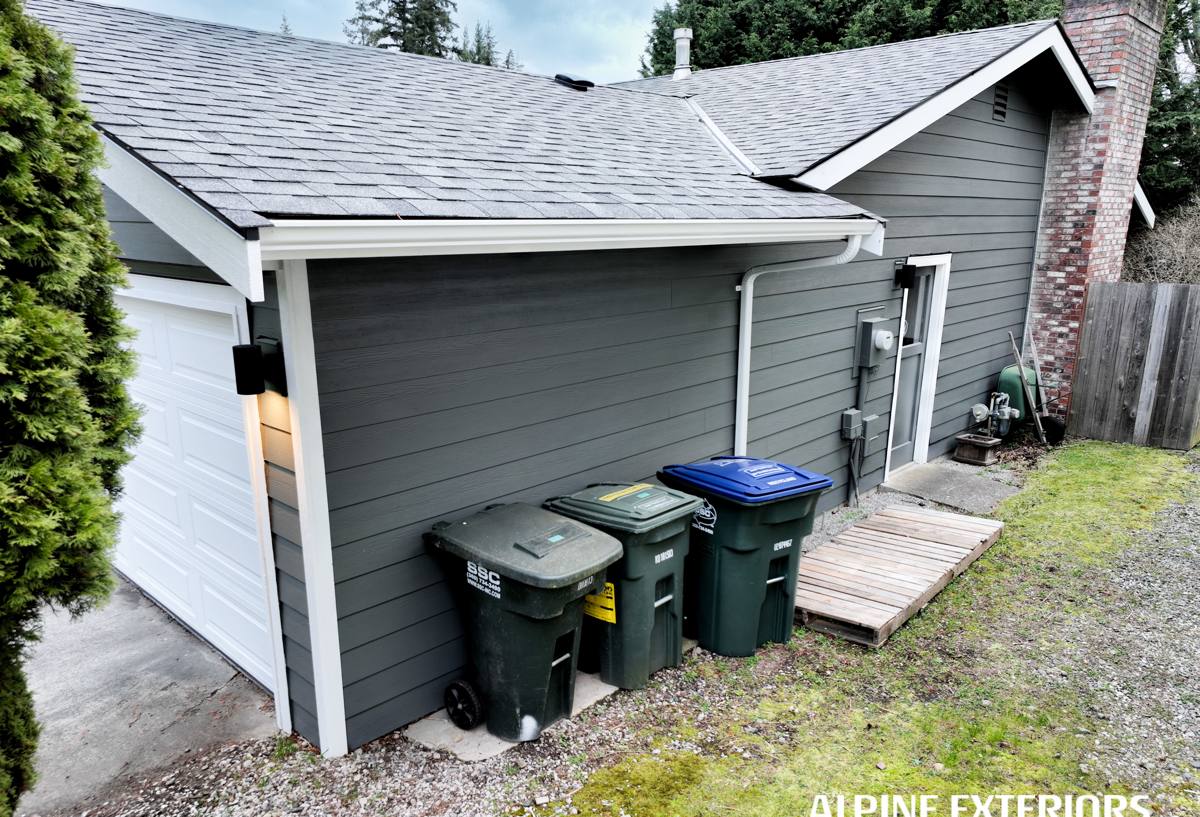
Why Stagecoach Village Siding Wears Differently
Land O'Lakes sits in a part of Pasco County that gets the full range of what Florida's climate can throw at a house. Summers bring near-daily thunderstorms with wind-driven rain that gets pushed sideways into siding seams and trim joints. Winds during tropical systems and seasonal storms stress every fastener and joint in the siding system. Layer on top of that the year-round UV exposure that bakes painted and coated surfaces day after day, and you have conditions that will expose any weakness in materials or workmanship within a handful of years — not decades.
The Three Forces at Work
- Wind and storm stress — repeated flexing loosens fasteners, opens seams, and can crack brittle or improperly fastened panels
- UV and heat cycling — constant expansion and contraction fatigues caulk, seals, and lower-grade finishes over time
- Wind-driven rain and humidity — moisture that gets behind siding through open joints or failed caulk has nowhere to dry out quickly in Florida's humidity, which is what leads to rot and hidden water damage
None of these forces are unique to Stagecoach Village, but the combination — high heat, high humidity, and regular storm exposure — is why siding repair here needs to be diagnosed and executed differently than a quick patch job.
Signs Your Siding Needs Attention
Most siding failures give warning signs well before they become structural problems. Catching them early is the difference between a targeted repair and a full section replacement.
- Visible cracks, splits, or chips in siding panels, especially near corners and butt joints
- Boards that look warped, bowed, or no longer sit flush against the wall
- Soft or spongy spots when you press on the siding, especially near the bottom courses or window trim
- Peeling, bubbling, or chalking paint that keeps coming back after repainting
- Gaps opening up at seams, corner boards, or where siding meets windows and doors
- Staining or dark streaks that suggest water is tracking behind the siding
- Visible fastener heads (nail pops) or siding that rattles or shifts in wind
If you're seeing more than one of these at once, it's worth having someone look at the whole wall assembly, not just the spot that's visibly damaged — moisture problems in Florida siding rarely stay contained to where you first notice them.
What a Correct Repair Actually Involves
Diagnosis Before Demolition
A repair that just replaces the damaged board and moves on is a temporary fix if the underlying cause isn't addressed. Before we touch a panel, we check what's behind it: is the moisture barrier intact, are the fasteners driven correctly, is there evidence of water tracking from a higher point on the wall, and is the damage isolated or spreading. Skipping this step is the single most common reason a "repaired" section fails again within a year or two.
Matching Materials, Not Just Color
Siding repair only looks right and performs right when the replacement material matches the existing product in profile, exposure, and thickness — not just paint color. Mismatched profiles create uneven shadow lines and, more importantly, can create gaps where water intrudes. This is one of the reasons we standardized on one product line: it keeps repairs on existing Hardie installations clean, predictable, and consistent.
Sealing and Flashing Details
Most siding failures in this climate trace back to a flashing or sealant detail, not the siding material itself. Proper repair means re-flashing around windows, doors, and penetrations where needed, not just caulking over a gap and hoping it holds through the next storm season.
Why We Only Repair and Install James Hardie Fiber Cement
We don't install vinyl siding, LP SmartSide, primed wood, or other fiber cement brands, and we're upfront about why. Vinyl softens, warps, and becomes brittle under sustained Florida heat and UV exposure, and it has clear limits in high wind events. Wood-based and engineered-wood products are more vulnerable to moisture intrusion in a climate where wind-driven rain is a near-weekly occurrence much of the year. These aren't defects unique to any one manufacturer — they're inherent trade-offs of the materials themselves, and homeowners deserve to know that before they choose a siding system for a house that has to survive Pasco County summers for decades.
James Hardie fiber cement is non-combustible, dimensionally stable across Florida's heat swings, and factory-finished with ColorPlus technology, which holds color significantly better under UV exposure than field-applied paint. Hardie's HZ5 product line is engineered specifically for high-humidity, high-moisture climates like ours, and the company backs it with a strong transferable warranty when the product is installed to their specifications. When we repair existing Hardie siding, or replace a damaged section, we're working with a material that's proven to hold up under exactly the conditions Stagecoach Village homes face — not a product we're hoping performs.
Our Repair Process, Step by Step
- On-site inspection — we assess the visible damage and check surrounding areas, trim, and penetrations for related issues
- Moisture and structural check — where damage suggests water intrusion, we open up the area enough to confirm the condition of the sheathing and barrier underneath
- Scope and estimate — you get a clear explanation of what needs to be repaired, what caused it, and what it will cost, before any work starts
- Material matching — replacement boards are matched to your existing Hardie profile, exposure, and finish
- Repair and reseal — damaged sections are removed and replaced, flashing and moisture barrier details are corrected, and joints are properly sealed
- Final check — we walk the repaired area with you and confirm fastening, caulking, and finish match the surrounding siding
We don't upsell a full re-side when a targeted repair will genuinely hold. We also won't tell you a patch will work when the underlying damage is more extensive than it looks — both calls come down to what we actually find once we open things up.
Repair vs. Replacement: What Drives the Decision
| Factor | Favors Repair | Favors Full Section Replacement |
|---|---|---|
| Extent of damage | Isolated to one or two boards or a single wall section | Multiple areas affected or spreading pattern |
| Moisture intrusion | Surface-level, sheathing dry underneath | Sheathing shows rot, staining, or soft spots |
| Age of existing siding | Relatively recent installation, still within expected service life | Siding nearing or past typical service life |
| Product match | Existing Hardie profile still available/matchable | Discontinued profile or non-Hardie product being replaced |
| Root cause | Isolated flashing or caulk failure, correctable | Systemic installation issue affecting multiple areas |
Cost for repairs varies with the extent of damage, accessibility, and whether hidden moisture issues are found once the siding is opened up — we'll always walk you through the specifics before committing you to anything.
Why a Crew That Already Works in Stagecoach Village Matters
Siding repair isn't just a materials question — it's a familiarity question. A crew that regularly works in Land O'Lakes and the surrounding Pasco County communities has already seen how the local building patterns, sun exposure, and storm direction typically affect a house in this specific area. That means faster, more accurate diagnosis and fewer surprises once we open up a wall. It also means we're not learning on your house how Hardie siding behaves in this particular combination of heat, humidity, and storm exposure — we already know.
Local presence also matters after the job is done. If a repair needs a follow-up check after the next big storm, or if a warranty question comes up, you're dealing with a crew that's still working in your neighborhood, not one that did a single job and moved on.
Protecting Your Siding After the Repair
A correct repair should last, but a little homeowner maintenance extends that lifespan further in this climate:
- Rinse siding periodically to remove salt residue, pollen, and organic buildup that can hold moisture against the surface
- Walk the exterior after major storms and look for new gaps, cracked caulk, or loose trim
- Keep gutters and downspouts clear so water isn't dumping directly onto siding or foundation areas
- Trim back vegetation that holds moisture against siding or rubs against panels in wind
- Address small cracks or caulk failures promptly — they're inexpensive to fix early and expensive to ignore
If you're seeing damage, wear, or storm impact on your Stagecoach Village home's siding, we're happy to take a look and give you a straight answer on what it needs. Request a free, no-pressure estimate using the form below — there's no obligation, just an honest assessment from a crew that knows this neighborhood.