 Land O'Lakes Siding
 Lake Padgett is one of the older lake communities in Land O'Lakes — larger lots, more mature tree canopy, and a mix of long-owned ranch homes and custom builds than you'll find in the newer subdivisions closer to US-41. That mix changes what a roof actually has to deal with day to day. A roof over a shaded, lake-adjacent lot in this part of Pasco County isn't just fighting the sun and the occasional named storm — it's dealing with shade cycles, falling debris, and humidity that a roof on an open, treeless lot a couple of miles away doesn't see the same way. Metal roofing done right for Lake Padgett means building the system around that specific combination, not installing a generic Florida roof and hoping it holds up.
Why Lake Padgett's Setting Changes the Approach
Three things about this neighborhood push roofing decisions here in a different direction than a standard Land O'Lakes subdivision. First, lot size and tree cover — many Lake Padgett properties sit under a real canopy, which means more shade, more organic debris on the roof, and slower drying after rain than a home on a bare lot. Second, the age and variety of the housing stock — a good number of homes here were built years ago and are on their second or third roof, often with additions, porches, or outbuildings that don't share a single simple roofline. Third, the lake and wooded setting itself, which means more branches and debris coming down in storms and more moisture held against the roof surface between rain events.
None of that rules out any particular roofing material. It just means the assessment has to start with the actual lot and the actual roof, not a standard checklist that assumes an open, sun-baked yard.
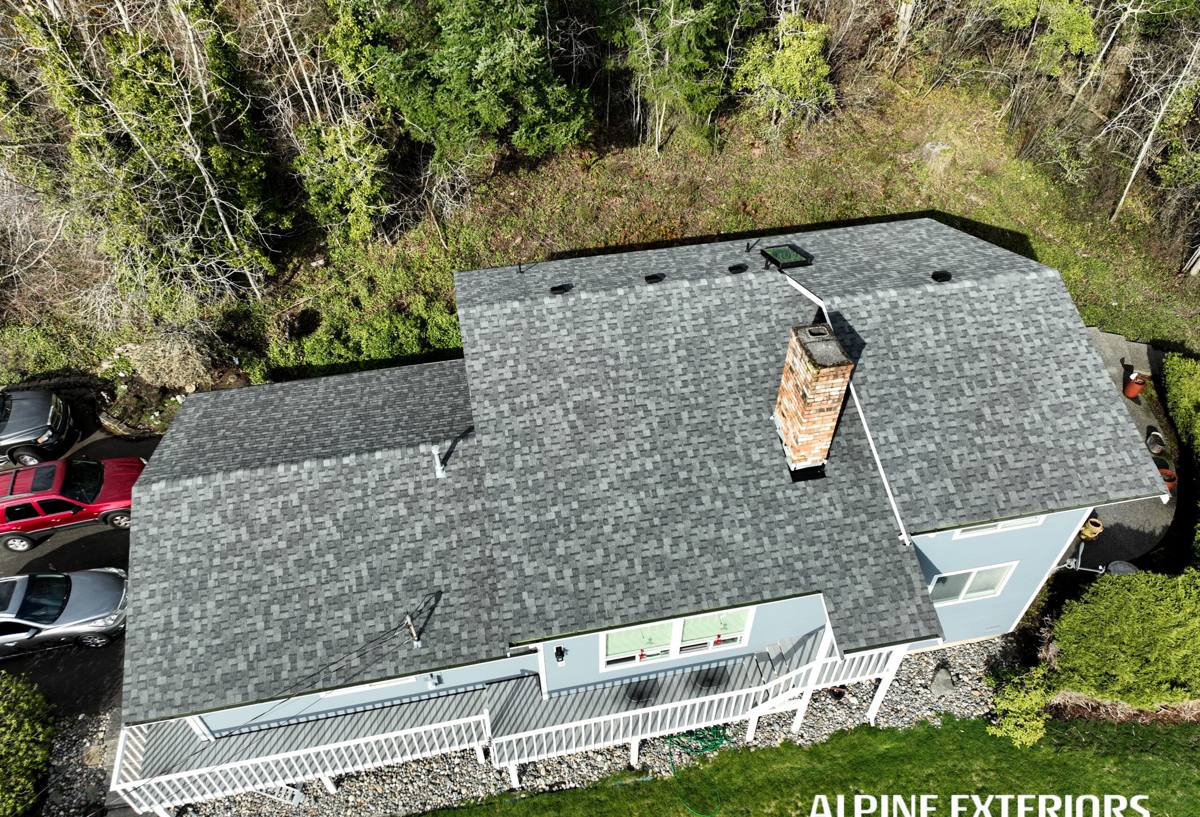
What Pasco County's Climate Puts a Roof Through
Every roof in this part of Florida deals with the same basic stresses, but they show up differently depending on the setting. Hurricane-force wind events put direct uplift pressure on a roof system, and that pressure concentrates at edges, ridges, and any point where a fastener or seam isn't holding as well as it should. Year-round, intense UV breaks down lesser coatings, sealants, and fastener gaskets faster than a moderate climate would, which is why a roofing product's real-world life here is often shorter than its rated life somewhere cooler and cloudier. Wind-driven rain doesn't just fall straight down during a storm — it gets pushed sideways and even upward under laps and around penetrations, which is exactly where a rushed installation shows its weak points first. And even set back from the coast the way Lake Padgett is, Gulf breezes still carry some salt inland; it's a slower, quieter factor than what a beachfront property deals with, but over the life of a roof it still works on exposed fasteners and flashing.
Under a heavy tree canopy, add one more factor: prolonged moisture. Shaded roof sections dry out slower after rain, and that extra dwell time is what lets algae, moss, and organic buildup get established in the first place. It's not a dramatic force like wind, but it's a constant one.
Where Metal Roofing Problems Actually Start
On a metal roof specifically, failures rarely start with the panel itself. They start at the fasteners — either exposed screws that back out over years of thermal expansion and contraction, or clip systems that weren't spaced correctly for the wind exposure. They start at penetrations — vent boots, pipe collars, and any place a panel was cut and sealed rather than factory-formed. And under tree canopy, they start wherever debris collects and holds moisture against a seam or fastener longer than it should sit. A correctly installed metal roof accounts for all three before the first panel goes down.
Why Metal Roofing Fits This Setting
Metal roofing has a few real advantages that matter specifically in a wooded, lake-adjacent setting like this one. It carries a higher wind-uplift rating than most shingle products when installed to spec, which matters directly for hurricane-force gusts. It sheds falling debris and holds up to impact better than asphalt shingles, which matters on a lot with real tree cover. It doesn't hold organic growth the way a shingle surface can, since there's no granule texture for algae and moss to root into, which matters under shade. And it reflects more heat than it absorbs compared to dark asphalt, which helps on a property that's already dealing with intense year-round sun. None of that makes metal roofing the automatic right answer for every home — the roof's pitch, the home's structure, and the owner's budget and long-term plans all factor in — but it's a genuinely strong fit for the conditions Lake Padgett actually presents.
Standing Seam vs. Exposed-Fastener Metal Roofing
Not all metal roofing is the same system, and the choice matters more here than it would on a simpler, open-lot roof.
| Factor | Standing Seam | Exposed-Fastener |
|---|---|---|
| Fastener exposure | Concealed clips, no exposed screws to work loose or leak over time | Screws penetrate the panel face; gaskets and screws need periodic checking |
| Wind performance | Generally higher uplift resistance due to the concealed clip attachment method | Solid performance when correctly spaced and installed, but more dependent on fastener condition over time |
| Upfront cost | Higher material and labor cost | Lower upfront cost, more budget-friendly option |
| Long-term maintenance | Lower — no exposed fasteners to re-tighten or reseal | Some ongoing maintenance as fastener gaskets age, especially under UV and thermal cycling |
| Best fit | Lake-facing or higher-exposure roof planes, longer ownership horizons | Outbuildings, workshops, or budget-driven projects where lower upfront cost matters more |
A lot of Lake Padgett properties have a detached garage, workshop, or barn in addition to the main house, and it's common to spec differently for each — standing seam on the primary residence where long-term performance matters most, exposed-fastener on a secondary structure where cost efficiency makes more sense. We'll walk through that trade-off honestly rather than pushing one system for every roof on the property.
Metal Roofing Situations We See Around Lake Padgett
- Older homes on their second or third roof — replacing aging shingles that have outlived their coating and granule life
- Heavily wooded lots — roofs dealing with regular debris, shade, and slower drying after rain
- Detached garages, workshops, and barns — larger properties with more than one roof structure, often needing different specs for each
- Additions and porch roofs — rooflines that don't match the original structure and need careful tie-in flashing
- Lake-facing roof planes — sections with more direct wind exposure than the rest of the home
- Homes preparing for hurricane season — owners upgrading proactively rather than after storm damage
What a Correct Metal Roof Installation Involves
Deck Inspection and Prep
Before any panel goes down, the existing roof deck gets inspected for rot, soft spots, or damage from the prior roof's age or any past leaks — common on older Lake Padgett homes on their second or third roof. Metal roofing is unforgiving of a bad substrate underneath it, so this step isn't optional.
Underlayment as the Real Water Barrier
The panels shed most of the water, but the underlayment is the actual secondary water barrier, and it's what protects the home if wind-driven rain ever works its way past a seam or fastener during a storm. We use underlayment rated for the exposure, not whatever's cheapest.
Panel System, Fasteners, and Wind Rating
The panel profile, fastener spacing, and attachment method all get specified to meet the wind-uplift requirements for Pasco County, not a generic minimum. On a lake-facing plane with more direct exposure, that spec is often tighter than what a sheltered slope needs.
Flashing and Penetration Detail
Every vent, pipe, valley, and roof-to-wall transition is a place water can get in if it's rushed. This is where a metal roof's long-term performance is actually decided — factory-formed flashing and correctly lapped, sealed transitions hold up; field-cut, generically sealed penetrations are usually the first thing to fail.
Ventilation
A metal roof needs proper attic ventilation to perform as designed — without it, heat and moisture build up underneath the panels instead of venting out, which shortens the life of the roof system and the insulation below it.
Quick Checklist Before You Hire
- Ask whether the deck will be inspected and repaired before panels go down, not just covered over
- Confirm the wind-uplift rating the system is specified to meet for your address
- Ask what underlayment is being used and why, not just what's cheapest
- Get the flashing plan explained for your roof's specific penetrations and transitions
- Confirm attic ventilation will be checked and corrected if it's inadequate
- Get panel and installation warranties in writing, and understand what each one actually covers
Our Process, Start to Finish
- On-site assessment — we inspect the existing roof, deck condition, and wind exposure for each roof plane on the property
- Honest recommendation — standing seam, exposed-fastener, or a mix across structures, with the reasoning and cost trade-offs explained
- Material selection — panel profile, gauge, and finish chosen for the home's exposure and the owner's budget
- Tear-off and deck prep — old roofing removed, deck inspected, and any rot or damage repaired before underlayment goes down
- Underlayment and flashing installation — the water barrier and all penetration details are set before a single panel goes on
- Panel installation and fastening — panels installed and fastened to the wind-uplift spec for the location
- Final inspection — ventilation, flashing, and fastener check before we call the job done
Why Hiring a Crew That Already Works Lake Padgett Matters
Manufacturer installation instructions are written for average conditions, and a wooded, lake-adjacent lot in Land O'Lakes rarely qualifies as average. A crew that doesn't regularly work this kind of setting can spec the right panel and still miss the details that actually keep water and wind out — how tight the fastener spacing needs to be on a lake-facing plane versus a sheltered one, how much extra attention a valley needs when it's collecting leaf and branch debris most of the year, when a sealant joint needs to be redone sooner because of constant UV and humidity cycling under shade. Those are judgment calls made on the roof, not something a spec sheet decides for you.
We work this part of Pasco County regularly, which means we're not guessing at how a particular lot, tree cover, or roof orientation tends to perform here over time. That experience is what decides whether a metal roof is still tight and performing well after a few hurricane seasons, or starting to show fastener and flashing problems within a few years.
Ready When You Are
If you're weighing a metal roof for a Lake Padgett home, replacing an aging shingle roof, or trying to figure out the right system for a house plus a detached garage or workshop, it's worth having someone look at the actual roof and lot before you start comparing quotes. We offer free, no-pressure estimates for metal roofing projects in Lake Padgett and the surrounding Land O'Lakes area — use the form below to get a time on the schedule.