 Land O'Lakes Siding
 Deck Replacement in New Port Richey and Pasco County
New Port Richey decks work hard. Between the intense, near year-round Florida sun, hurricane-season wind and rain, and the humid, moisture-heavy air that sits over this part of Pasco County, an outdoor structure here ages faster than the same deck would almost anywhere inland or up north. Add in the salt air that reaches many New Port Richey properties from their proximity to the Gulf of Mexico and nearby waterways, and it's easy to see why decks that looked fine five years ago can be genuinely unsafe today, even if the damage isn't obvious from a casual look.
Deck replacement is a different job than deck repair, and knowing which one you actually need is the first honest step. This page covers what wears a deck out in this climate, how to tell when repair has stopped being the smart option, what a correct replacement involves, and why a crew that already works New Port Richey regularly gets better results than one learning the area on your project.
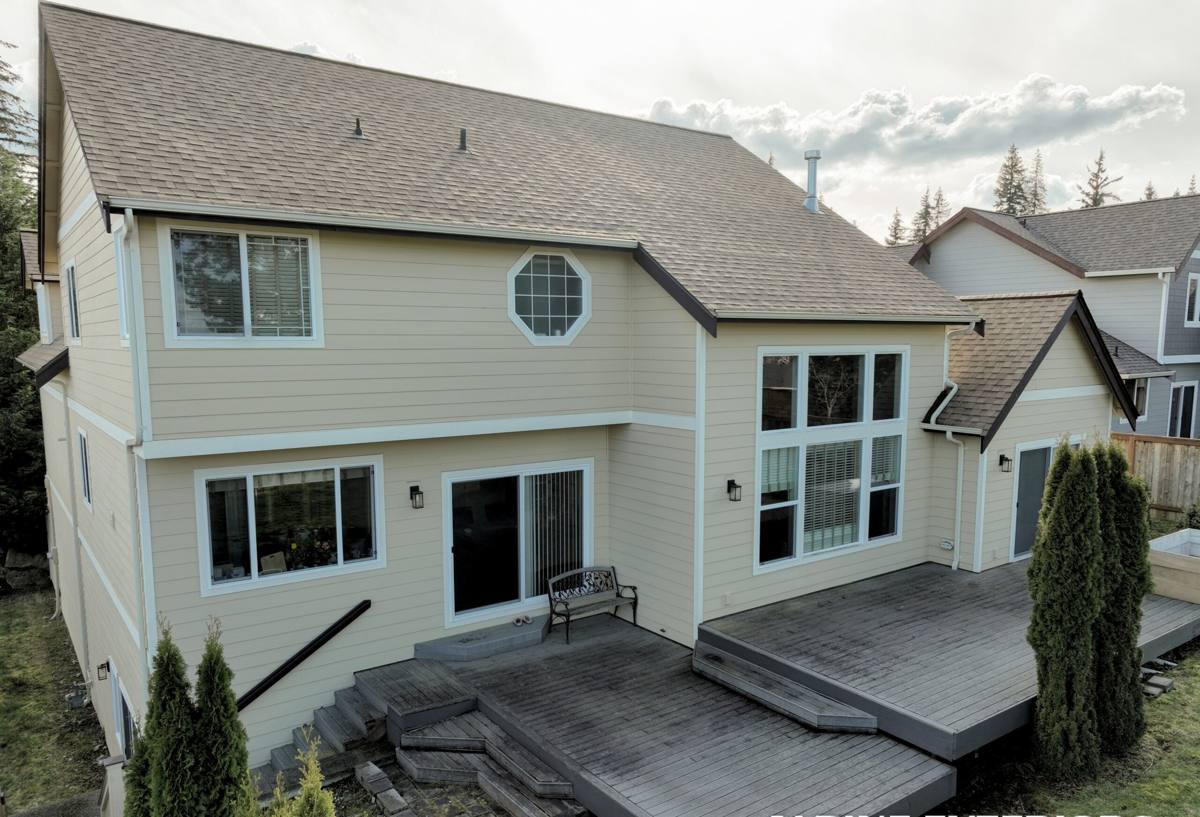
What Pasco County Climate Does to a Deck Over Time
Sun and UV Exposure
Florida gets some of the highest UV exposure in the country, and a deck surface takes that load directly, most of the day, most of the year, with little shade to soften it. On wood, UV breaks down surface fibers and finishes, leading to graying, cracking, and splitting. On composite decking, sustained UV exposure fades color and, on older or lower-grade boards, can degrade the surface over time. This kind of damage starts cosmetic but eventually opens the door to moisture getting into the material underneath.
Wind-Driven Rain and Storm Loads
Hurricane-force wind is a real design condition for anything built outdoors in this part of Florida, and it does more than just stress a deck's structure during a storm. Wind-driven rain gets pushed under railings, between boards, and into connection points that ordinary rainfall never reaches, which is why decks in Pasco County often show hidden moisture damage at spots that look dry on the surface. After storm season, it's common to find posts that have loosened, fasteners that have popped slightly, or a ledger connection that has shifted even when nothing looks obviously wrong.
Humidity and Ground Moisture
Pasco County's humidity stays high for most of the year, and many New Port Richey lots sit on flat ground with limited natural drainage. That combination keeps the underside of a deck damp far more often than homeowners realize, which accelerates rot in wood framing and corrosion in metal hardware. A deck can look completely fine from the top while the substructure underneath is already compromised.
Salt Air
Many New Port Richey properties sit close enough to the Gulf of Mexico or connected waterways that salt-laden air reaches fasteners, joist hangers, and other hardware on a regular basis, not just during storms. Salt accelerates corrosion in metal well before it's visible from above, and a corroded fastener or hanger loses holding strength quietly, long before a board actually feels loose underfoot.
Signs It's Time to Replace, Not Repair
Not every aging deck needs a full teardown, but certain signs point toward replacement rather than another round of patchwork repairs. If you're seeing several of these at once, it's worth a real inspection before spending more money chasing individual symptoms:
- Soft, spongy, or spring-feeling spots in multiple areas of the decking, not just one isolated board
- Visible rot, splitting, or decay in the ledger board where the deck attaches to the house
- Support posts that have shifted, settled, or show rot near ground contact
- Railings that flex, wiggle, or feel loose at multiple posts rather than one
- Rust staining spreading across several fasteners or hangers, not just a single spot
- A deck that's been repaired more than once in the same area within the past few years
- Structural framing built to older standards that predate current Florida wind load requirements
- A deck original to a home that's now 15-20+ years old and has never had a substructure inspection
Repair vs. Full Replacement: How That Decision Actually Gets Made
Homeowners often assume any deck problem means a full rebuild, or the opposite — that a repair is always the cheaper, equally good option. Neither assumption holds up consistently, and the honest answer depends on where the damage actually is.
| Factor | Repair Usually Makes Sense | Replacement Usually Makes Sense |
|---|---|---|
| Extent of damage | Isolated to a few boards, fasteners, or one hardware run | Spread across framing, ledger, or multiple support posts |
| Age of structure | Newer deck with sound framing overall | Older deck nearing or past its practical service life |
| Original build standard | Built to current wind load and code requirements | Built before current Florida Building Code wind provisions |
| Surface vs. structure | Structure is sound, surface boards are worn | Structural framing itself is compromised |
| Repair history | First repair, isolated issue | Same area repaired more than once already |
We'll give you a straight read on which category your deck actually falls into, including telling you when a repair is genuinely the smarter, cheaper path — not just defaulting to whichever job is bigger.
Choosing the Right Decking Material for This Climate
What you rebuild with matters as much as how it's built. Each option has real trade-offs in a climate with this much sun, moisture, and storm exposure, and there's no single right answer for every homeowner — it depends on budget, maintenance tolerance, and how long you want the deck to last before its next major service.
| Material | Sun/UV Behavior | Moisture Behavior | Maintenance |
|---|---|---|---|
| Pressure-treated wood | Grays and can crack without regular sealing | Vulnerable to rot if finish isn't maintained | Highest — sealing every 1-2 years in this climate |
| Composite decking | Fade-resistant surfaces, though quality varies by product line | Resists rot well, but core materials can still absorb moisture at cut edges if not capped | Low — periodic cleaning, no sealing |
| PVC/capped decking | Strong UV and fade resistance | Fully resists rot and moisture absorption | Lowest — cleaning only |
We'll walk you through what each option actually costs to install and to own over time, including realistic maintenance expectations, rather than just quoting the cheapest number and letting you find out about upkeep later.
What a Correct Deck Replacement Involves
Framing and Footings Built for This Climate
A deck is only as good as what's underneath it. Footings need to be sized and set correctly for Pasco County soil conditions, and framing needs to account for both structural load and the moisture exposure it will face for the next 20-plus years, not just meet the minimum to pass an initial inspection. This is the part of a replacement that never shows once the decking is installed, which is exactly why it has to be done right the first time.
Fasteners and Hardware Rated for Coastal Exposure
Given how much corrosion damage we see tied back to standard-grade hardware in this area, a proper replacement uses stainless steel or coastal-rated fasteners, joist hangers, and connectors throughout — not just at points that are easy to reach later. This is one of the most common places where a deck either holds up for decades or starts failing again within a few years.
Ledger Attachment and Waterproofing
The connection where a deck attaches to the house is the single most safety-critical point on the structure, and it's also one of the most common places wind-driven rain causes hidden damage. Correct flashing and waterproofing at this connection keeps water from working its way into the house's structure, not just off the deck itself.
Permitting and Florida Building Code
Deck replacement in Pasco County requires permitting and inspection under the Florida Building Code, including wind load provisions relevant to this region. That process exists to confirm the structure can actually hold up to local conditions, not just look finished. We handle permitting as a normal part of the job rather than treating it as an optional step.
How Our Deck Replacement Process Works
- On-site inspection of the existing deck, including probing the substructure, not just a visual walk-through
- An honest conversation about repair versus replacement, with our reasoning explained, not just a recommendation
- Material selection and a clear estimate that accounts for both installation cost and long-term maintenance
- Permitting handled through Pasco County before any demolition begins
- Removal of the old structure and inspection of ledger and framing points that were hidden underneath it
- Construction using coastal-rated fasteners and hardware throughout, not just at visible connection points
- Final inspection and walkthrough so you understand what was built and what maintenance it needs going forward
Why It Matters That We Already Work New Port Richey
A crew that mostly builds decks elsewhere in the county can still do competent work here, but New Port Richey properties come with variables that show up more often in this area than a few miles inland — corrosion patterns tied to proximity to the Gulf and local waterways, drainage considerations on flatter lots, and permitting handled through Pasco County that we're already familiar with rather than learning mid-project. Working this area regularly means we know what fastener grade actually holds up here, what a ledger connection needs to survive a real Florida storm season, and how the local permitting process actually runs.
That familiarity also means a more accurate estimate from the start, with fewer surprises once work is underway, because the inspection accounted for how this climate actually behaves rather than applying a generic checklist built for a different part of the country.
Get a Free Deck Replacement Estimate
Whether your deck is showing clear structural problems or you're just trying to figure out if it's closer to the end of its life than you'd like, we're glad to take a straight look and tell you what we find, including if repair is genuinely the better call. Reach out below for a free, no-pressure estimate.