 Land O'Lakes Siding
 Decks Built for Dade City's Climate, Not Just Any Deck
Dade City sits inland in eastern Pasco County, away from the immediate coastline but still squarely in Florida's path for hurricane-force wind, drenching summer storms, and some of the most intense year-round UV exposure in the country. A deck built here has to survive a different combination of stresses than one built in a coastal subdivision or a shaded northern yard. We're not designing for salt spray in Dade City the way we might for a bayfront property closer to Tampa Bay — but we are designing for sustained high heat, wind-driven rain that finds every gap in flashing, and sun that breaks down finishes and fasteners faster than most homeowners expect.
A deck that looks fine going in can start showing problems within a year or two if it wasn't built with this climate in mind: cupped boards, rusted screws bleeding through the wood, a ledger board quietly rotting where it meets the house. This page covers what actually matters for deck building in the Dade City area, and how we approach the job so it holds up.
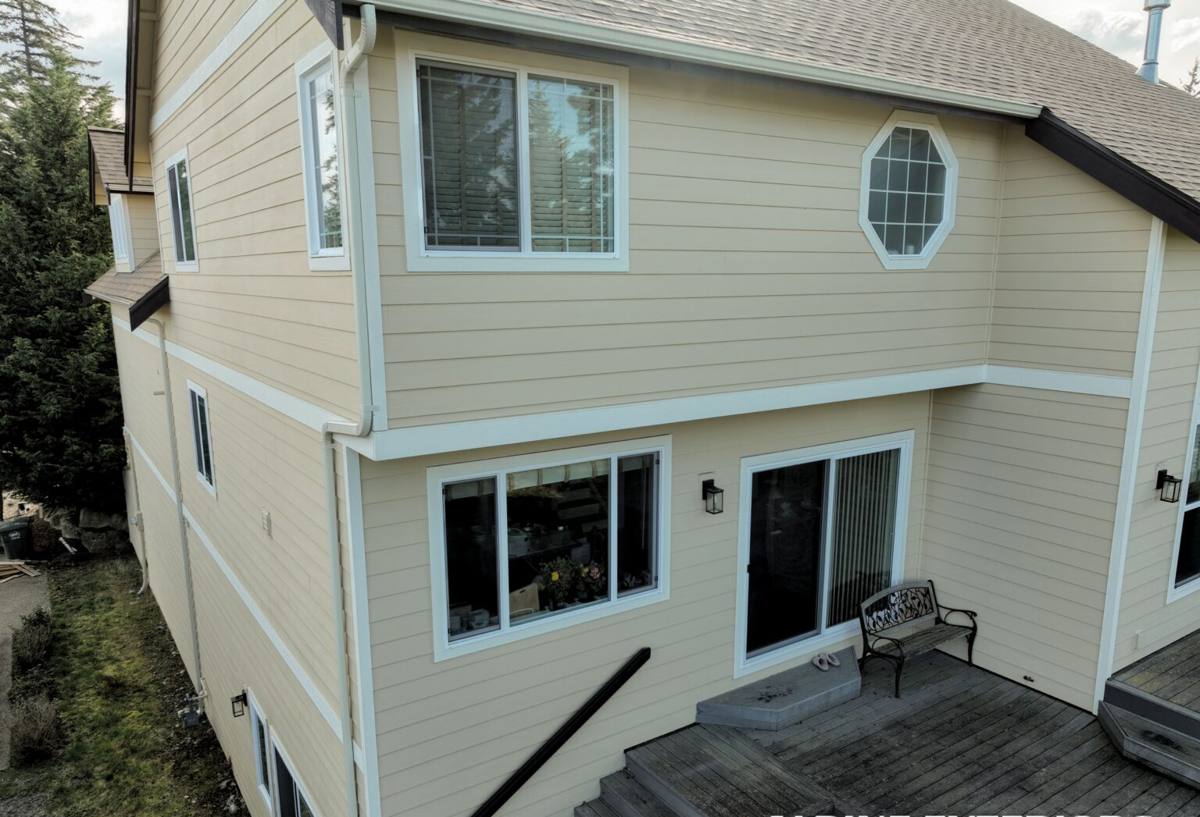
What Florida Weather Actually Does to a Deck
Heat and UV
Central Florida sun is relentless on horizontal wood surfaces. UV breaks down the lignin in wood fibers, and without regular sealing, boards gray, splinter, and cup within a few seasons. Dark composite decking can also get hot enough underfoot to be uncomfortable in July and August, which is worth thinking through before you pick a color.
Wind-Driven Rain and Humidity
Afternoon storms in Pasco County don't just fall straight down — they come in sideways, driven by gusty outflow winds. That matters most at the point where a deck attaches to the house. If the ledger board isn't properly flashed, water gets pushed up and behind it, and you end up with hidden rot in the band board or rim joist long before the decking itself shows any wear.
Hurricane-Force Wind
Pasco County isn't in Florida's High-Velocity Hurricane Zone, but the Florida Building Code still requires decks here to be engineered for real wind loads, including uplift. A deck attached with undersized ledger bolts or lightweight joist hangers is a weak point during a tropical storm or hurricane, and it's one of the more common failures we see on older decks that were never properly engineered in the first place.
Corrosion
Modern pressure-treated lumber uses copper-based preservatives (ACQ) that are more corrosive to standard steel fasteners than older treatments were. Combine that with Florida humidity and you get fastener corrosion — streaking, weakening, sometimes failure — well before the wood itself is due for replacement, if the wrong hardware was used.
Choosing the Right Decking Material
There's no single "best" decking material — it depends on budget, how much upkeep you're willing to do, and how the deck will be used. Here's how the common options actually perform in a Dade City backyard.
| Material | Upfront Cost | Maintenance | Heat Underfoot | Realistic Lifespan Here |
|---|---|---|---|---|
| Pressure-Treated Pine | Lowest | Annual cleaning + sealing recommended | Moderate | 10-15 years with upkeep |
| Capped Composite | Higher | Occasional soap-and-water cleaning | Can run hot in direct sun, especially dark colors | 20-30 years |
| Tropical Hardwood (e.g., ipe) | Highest | Periodic oiling to maintain color; low structural maintenance | Moderate | 25+ years structurally |
Pressure-treated pine remains a solid, budget-conscious choice as long as the homeowner is realistic about the sealing schedule it needs in this sun. Capped composite costs more up front but trades ongoing labor for material cost — a reasonable trade for homeowners who want to spend weekends doing something other than deck maintenance. Tropical hardwoods perform extremely well structurally in humidity and are dense enough to resist rot, but they're a bigger investment and need proper fastening due to their density.
The Structural Details That Actually Determine How Long a Deck Lasts
Decking material gets most of the attention, but the framing and connections underneath are what actually determine whether a deck survives a decade of Pasco County weather. This is where we spend the most design and inspection attention, because it's also where corner-cutting is hardest to spot after the fact.
Ledger Board Flashing
The ledger board — where the deck bolts to the house — is the single most common failure point on Florida decks. Proper flashing (and, ideally, a small air gap or drainage path behind it) keeps wind-driven rain from getting trapped against the house framing. We treat this as non-negotiable, not an upgrade option.
Footings and Post Bases
Florida doesn't have frost-line depth requirements the way northern states do, but footings still need to be sized and set correctly for soil-bearing capacity and wind uplift, with post bases that keep wood from sitting in standing water after a storm.
Fasteners and Hardware
Everything in contact with modern treated lumber — screws, joist hangers, structural bolts — needs to be rated for that lumber's chemical treatment (typically hot-dip galvanized or stainless). Mixing in standard steel hardware to save a few dollars is one of the most common shortcuts that leads to premature rust staining and weakened connections.
Joist Hangers and Uplift Connectors
Code-compliant joist hangers and uplift/hurricane connectors at key structural points aren't optional extras on a Florida deck — they're what keeps the structure tied together when wind gets under it.
Permits and Pasco County Requirements
New decks and significant deck rebuilds in Pasco County — including in and around Dade City — require a building permit and inspection under the Florida Building Code. This isn't paperwork for its own sake: the permit process is what confirms footing size, structural connections, and railing/guard requirements are actually adequate for local wind loads, rather than just "looks sturdy." If your property is in a subdivision with an HOA, there may be an additional design review step before construction starts. We handle the permit drawings and submission as part of our process so this isn't something the homeowner has to navigate alone.
How We Approach a Deck Build in Dade City
- On-site assessment. We look at the house's ledger location, existing grade and drainage, sun exposure, and any access constraints before recommending a layout.
- Material and design consultation. We walk through the trade-offs above in plain terms — cost, maintenance, and how the deck will actually be used — so the decision fits the homeowner, not a sales script.
- Engineering and permitting. We prepare plans that meet Florida Building Code wind and structural requirements and submit for the Pasco County permit.
- Construction. Footings, framing, ledger flashing, decking, and railings are built in that order, with corrosion-appropriate hardware throughout.
- Inspection and walkthrough. We coordinate the required inspections and walk the finished deck with the homeowner, including basic care guidance for whichever material was installed.
Keeping a Dade City Deck in Good Shape
Maintenance needs differ by material, but a few habits apply across the board in this climate:
- Sweep off leaves, pollen, and debris regularly so moisture doesn't sit trapped against the surface
- Reseal or stain pressure-treated wood on a schedule appropriate to sun exposure — often more frequently than product labels suggest in full-sun Florida yards
- Rinse composite decking with soap and water periodically to prevent mildew buildup in humid stretches
- Check the area around the ledger board and any post bases yearly for signs of trapped water or soft wood
- Inspect visible fasteners for rust streaking, which can signal the wrong hardware was used or is starting to fail
- Trim back landscaping that shades the deck excessively, since constant dampness accelerates wood decay
Why It Matters Who Builds Your Deck
Deck building looks straightforward from the outside — posts, joists, boards — but the parts that fail in Florida are almost always the parts you can't see once the project is finished: flashing, fastener choice, footing depth, and connection hardware. A crew that's worked in Pasco County has already seen how these details play out over years, not just at handoff. That includes knowing what the local permitting process actually expects, how local soil and drainage behave, and which shortcuts show up as callbacks two or three years down the road.
Land O'Lakes Siding Company builds and repairs decks throughout the Dade City area as part of our broader exterior work in Pasco County. We're not a national franchise cycling through unfamiliar territory — we're a local crew that understands what this specific climate does to outdoor structures and builds accordingly.
Get a Straightforward Estimate
If you're planning a new deck or need an honest opinion on repairing or replacing an existing one, we're happy to take a look. Use the form below to request a free, no-pressure estimate for your Dade City property.