 Land O'Lakes Siding
 Dade City sits inland in Pasco County, away from the immediate coastline, but that doesn't spare it from the weather that wears down siding across west-central Florida. Hurricane-force wind gusts still push through during named storms and their outer bands. Wind-driven rain still gets forced sideways into wall seams during summer thunderstorm season. UV exposure runs close to year-round, with few stretches of the calendar that give a painted or vinyl surface a real break. And when a Gulf storm system moves through, the salt-laden air it carries doesn't stop at the coastline — it works its way inland and settles on exposed fasteners and finishes well past where most homeowners expect it to matter. For a Dade City home, that combination adds up to real, cumulative wear on siding, whether the house is a few years old or a few decades old.
This page is about one thing: fiber cement siding, done correctly, for homes in and around Dade City. We install James Hardie fiber cement exclusively, and this page walks through what local homes actually need from their siding, what a correct installation involves, how we run a project from first look to final walkthrough, and why hiring a crew that already works this part of Pasco County is worth something.
What Dade City's Climate Actually Does to Siding
The damage siding takes here rarely shows up as one dramatic event. It's cumulative — small failures that compound over years until a homeowner notices peeling paint, a soft spot near a window, or a section that looks tired next to the rest of the wall. Four conditions drive most of it in this part of Pasco County:
- Hurricane-force wind gusts — even when Dade City isn't in the direct path of a storm, outer bands and remnant systems bring sustained wind loads that test fastening patterns and panel edges
- Wind-driven rain — summer storms and tropical systems push rain sideways into laps, seams, and trim joints instead of letting it run straight down a wall the way a light rain does
- Intense, near year-round UV — central Florida sun breaks down field-applied paint and unstable finishes faster than it would in a milder climate, fading color and drying out caulk
- Inland salt exposure — Gulf-origin storm systems carry salt-laden air well past the coastline, and that salt accelerates corrosion on exposed fasteners and stresses lower-grade finishes
None of these conditions are unique to Dade City. What matters is that they hit the same house at the same time, over and over, for as long as that siding is on the wall. A product or installation approach that's rated for "average" national conditions is being asked to do more here than it was built for.
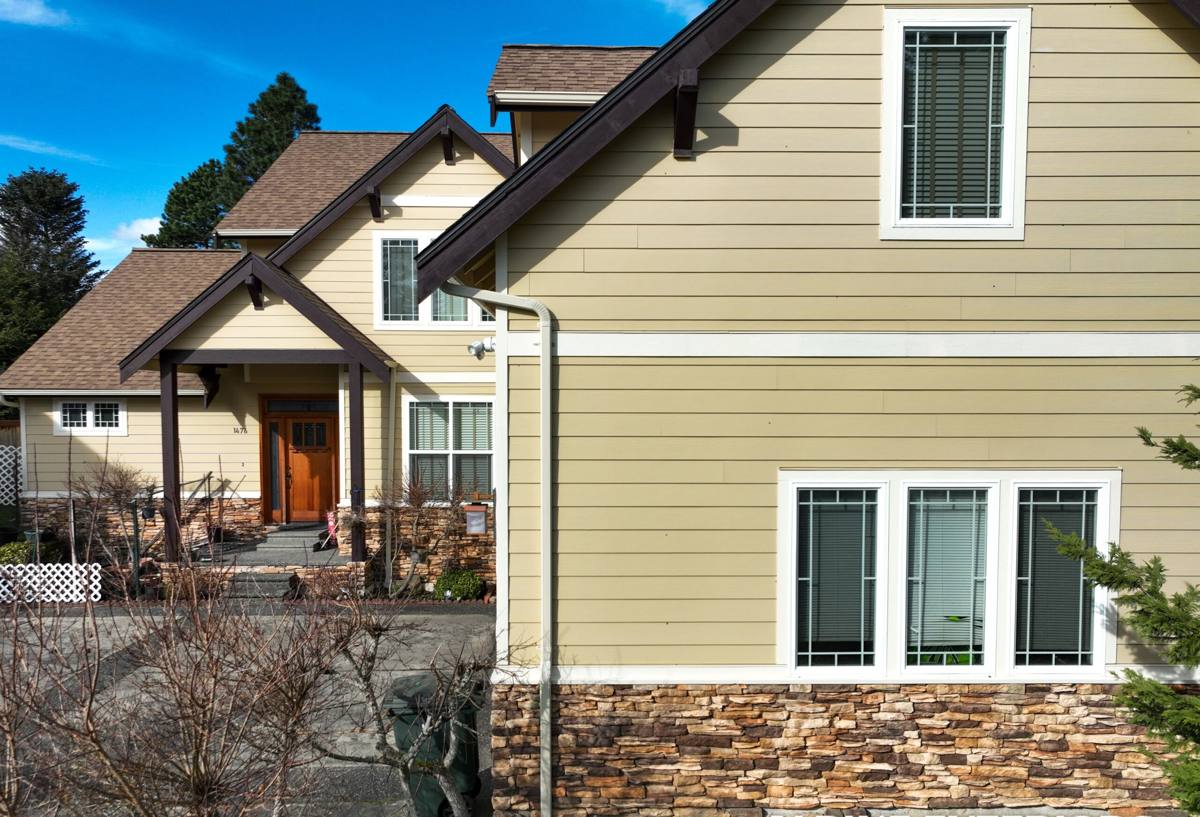
Why We Install Only James Hardie Fiber Cement
We don't offer vinyl siding, LP SmartSide, Cemplank, Allura, primed spruce, or cedar. That's not a limited product lineup — it's a professional standard we've held to because of what this climate does to a house over time. Each of those alternatives gets something right. Vinyl is inexpensive and low-maintenance in milder conditions. Engineered wood products install quickly and take a factory or field finish well. Cedar has real, honest character that some homeowners genuinely want. But each one carries a trade-off that matters more here than it does in a drier, calmer climate.
Vinyl can warp, buckle, or grow brittle with heat and age, and its interlocking panels and J-channels are exactly the kind of gap that wind-driven rain finds its way into over a hurricane season. Wood-based siding, no matter how well it's treated at the factory, still has an organic core — it depends on flawless field priming and caulking at every cut edge to keep sustained Florida humidity and rain out, a hard standard to hold across every job, every year, for the full life of the siding. Cedar is genuinely attractive, but it's organic too, and it asks for real recurring upkeep — refinishing, sealing, moisture monitoring — in a climate that doesn't offer much of a dry season to recover in between storms.
Fiber cement handles the core problem differently because it isn't organic. There's no wood substrate for moisture to work into, and it doesn't feed rot or pest activity the way wood-based products can. James Hardie also engineers climate-specific product formulations rather than selling one generic mix everywhere in the country — homes in our part of Florida receive the HZ5 line, built around high-humidity, high-moisture-exposure conditions. Paired with a factory-applied ColorPlus finish, baked on under controlled conditions instead of brushed on-site, it holds color and resists cracking far longer than most field-applied paint manages under central Florida sun.
What Correct Installation Actually Involves
Fiber cement is only as good as the installation behind it, and that's especially true in a climate that punishes shortcuts. A correct Hardie installation on a Dade City home includes:
- Proper clearance from grade, decks, and roofline so the bottom edge isn't sitting in standing water after a storm
- Correctly lapped and sealed flashing at every window, door, and penetration — not caulk applied over a gap after the fact
- Manufacturer-specified fastening patterns matched to local wind exposure, not a generic nailing schedule
- Joint and seam treatment appropriate to each wall's actual sun and rain exposure
- Factory-finished color matched correctly at trim and touch-up points instead of a mismatched field repaint
Skip any one of these and you've built in a weak point. It usually doesn't show up as a problem in year one — it shows up two or three storm seasons later, as the kind of callback nobody wants to make.
James Hardie Product Lines That Fit Dade City Homes
Not every Hardie profile makes sense for every house, and part of doing this work right is matching the product line to the home rather than defaulting to whatever's easiest to install. The most common options for homes in this area:
| Product Line | Best Fit For |
|---|---|
| HardiePlank lap siding | Traditional full-wall siding replacements; the most common choice for standard Dade City homes |
| HardiePanel vertical siding | Board and batten style, gables, and accent walls where a vertical architectural line is wanted |
| HardieShingle | Homes where a shingle or shake-style texture is part of the architectural character |
| HardieTrim | Fascia, corner boards, and window/door trim to match and protect the field siding |
All of these come in the HZ5 formulation for our region and are available with factory-applied ColorPlus finish in a range of color options, which matters here specifically because it reduces how often a homeowner has to plan around a repaint.
Our Process for a Dade City Siding Project
A siding replacement is disruptive enough without added surprises, so we run every project through the same sequence:
- Inspection and assessment — we walk the exterior, check for hidden moisture or rot behind the existing siding, and assess trim, flashing, and window conditions before quoting anything
- Scope and product selection — we walk through which Hardie product line and profile fits the home and the homeowner's goals, and put together a written scope
- Tear-off and prep — old siding comes off, and any rot or moisture damage found underneath gets addressed before new material goes up, not covered over
- Weather barrier and flashing — a properly lapped weather-resistant barrier goes on first, with flashing integrated at every window, door, and penetration before any siding is installed
- Installation — siding goes up to manufacturer fastening and clearance specifications, matched to this home's wind exposure and orientation
- Trim, caulk, and touch-up — trim is finished, caulking is applied only where specified, and any factory-finish touch-up is color-matched correctly
- Final walkthrough — we walk the finished exterior with the homeowner before calling the job done
Comparing Siding Approaches for a Dade City Home
| Factor | National-Average Approach | Pasco County-Specific Approach |
|---|---|---|
| Siding material | Whatever's cheapest or most common regardless of region | James Hardie HZ5 fiber cement, engineered for humidity and moisture exposure |
| Flashing detail | Standard, one-size-fits-all approach | Sized to wind-driven rain and hurricane-season wind loads |
| Finish | Field-applied paint on a recoating schedule | Factory-baked ColorPlus finish, less field maintenance |
| Fastener selection | Not considered relative to inland salt exposure | Chosen to resist corrosion from storm-carried salt air |
| Installation standard | Generic nailing schedule | Manufacturer fastening pattern matched to wind exposure |
Cost Factors for Dade City Fiber Cement Projects
We don't publish blanket pricing because it wouldn't be an honest number — every home's real cost drivers are specific to the house in front of us. The factors that actually move a project's cost, though, are consistent enough to lay out plainly.
| Factor | How It Affects Cost |
|---|---|
| Existing exterior condition | Hidden moisture or rot found during tear-off adds repair scope before new siding goes up |
| Home size and wall complexity | More corners, gables, and penetrations mean more flashing detail and labor time |
| Product line and profile | Board and batten or heavier trim packages run higher than standard lap siding |
| Access and site conditions | Tree cover, tight lot lines, or difficult staging can affect labor time |
| Scope bundling | Combining siding with trim or fascia replacement in one project can reduce overlapping setup costs |
What to Look for When Hiring a Siding Contractor in Dade City
Fiber cement siding is a long-term investment, and the installation quality matters as much as the material. Before hiring anyone for a Dade City siding project, look for:
- Manufacturer training or certification on the specific James Hardie product being installed
- A clear explanation of how flashing will be handled at every window, door, and roofline transition
- Willingness to explain why they recommend one product or profile over another for this specific climate
- Proper licensing, bonding, and insurance verifiable before any contract is signed
- A written scope of work and warranty terms you can read and understand before committing
- A track record of work specifically in Pasco County conditions, not just a general service area claim
A crew that already works Dade City on a regular basis has already worked through the local permitting process, knows what inspectors here look for, and has seen how the local wind and rain exposure actually plays out on real houses — not just on a spec sheet.
Maintaining Fiber Cement Siding After Installation
One of the practical advantages of a correctly installed Hardie system is what it doesn't require. There's no annual caulk-and-repaint cycle to chase, and the boards aren't feeding rot or pest activity between rain events the way wood-based siding can. Realistic upkeep for a Dade City home looks like:
- An occasional rinse to clear pollen, dust, and general grime, especially on wall faces that catch prevailing wind
- A visual check after major storms for any loosened trim, cracked caulk, or shifted flashing
- Keeping irrigation and sprinklers from spraying directly onto the base of the wall
- Touch-up only where physical damage occurs — not as a routine maintenance item
If you're weighing a siding replacement or repair on a Dade City home, we're happy to walk the property, talk through what your specific house actually needs, and put together a free, no-pressure estimate — no generic sales pitch, just a straight assessment.