 Land O'Lakes Siding
 Custom Decks Built for How Dade City Actually Lives Outdoors
Dade City sits a little apart from the rest of Pasco County — more open land, older neighborhoods, a slower pace than the growth corridor around Land O'Lakes and the Suncoast Parkway. A lot of homes here have room to spare in the backyard, and a well-built deck is one of the few home improvements that actually gets used year-round. But a deck in this part of Florida has to earn its keep against sun, humidity, and the occasional serious storm. A design that would hold up fine in a drier, cooler climate can fail here in a handful of years if the materials and details aren't chosen with Pasco County conditions in mind.
This page is about custom deck construction specifically for Dade City properties — what the climate demands, how we build to handle it, and what to expect from the process.
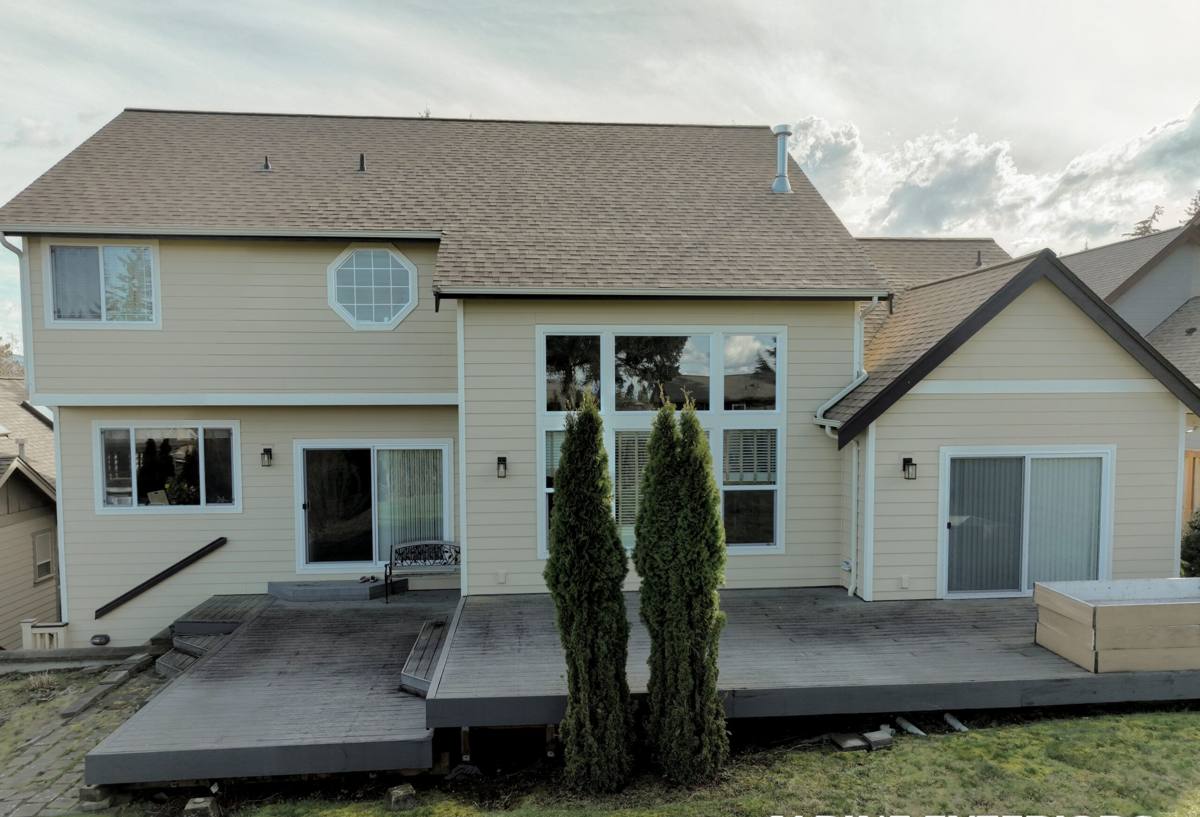
What Dade City's Climate Actually Does to a Deck
Dade City is inland compared to the Gulf-facing parts of the county, so it doesn't take the direct salt spray that decks closer to the coast deal with. That's a real advantage — hardware and fasteners here have an easier life than they would in Clearwater or on the barrier islands. But inland doesn't mean easy. The things that actually wear down a deck around here are:
- Year-round UV exposure. Florida sun is intense nearly every month of the year. It bleaches and dries out wood fibers, breaks down cheaper composite formulations, and degrades sealants and adhesives faster than most manufacturer literature assumes.
- Humidity and afternoon thunderstorms. Pasco County's summer pattern of heat followed by sudden downpours means decking boards go through constant wet-dry cycling. Wood swells and shrinks with every cycle; if it isn't installed with the right gaps and fastening, it cups, splits, or pulls loose over time.
- Hurricane-season wind loads. Even away from the coast, Pasco County sees hurricane-force gusts often enough that framing and railing connections need to be engineered for uplift and lateral load, not just vertical weight.
- Ground moisture and drainage. Central Florida's mix of sandy soil, seasonal high water table, and heavy rain events means footings and post bases need real thought — not the same footing depth you'd use up north.
None of this means a deck can't be built to last here. It means the build has to account for these forces from the design stage, not patched around later.
Older Dade City Homes Add Their Own Wrinkle
A good number of homes in and around Dade City predate current code and were built with ledger connections, siding, or foundation details that don't match what a modern deck attachment expects. Before we ever cut a board, we look at how the deck will actually tie into the house — the rim joist condition, the siding or masonry it's attaching through, and whether the existing structure can take the load a properly built deck will place on it.
Choosing Decking Material for This Climate
There's no single "best" decking material — there's the right material for the budget, the maintenance appetite, and how the deck will be used. Here's how the common options actually compare for a Pasco County backyard:
| Material | Upfront Cost | Maintenance | How It Handles Florida Sun & Rain |
|---|---|---|---|
| Pressure-treated pine | Lowest | Annual cleaning, re-sealing every 1-2 years | Good if maintained; neglected boards gray, splinter, and cup faster in this climate than in drier regions |
| Composite decking (capped) | Mid to high | Occasional washing, no sealing | Strong UV and moisture resistance; capped boards resist fading and moisture wicking far better than uncapped |
| Tropical hardwoods | High | Regular oiling to hold color | Naturally dense and rot-resistant, but demands upkeep to avoid graying and checking under constant sun |
| PVC decking | Highest | Very low | Fully impervious to moisture; performs well long-term but shows heat underfoot on full-sun decks |
Our standard is to steer homeowners away from uncapped composite in full-sun Pasco County installations — the early generation of uncapped boards had well-documented moisture-wicking and fading issues in hot, humid climates, and we'd rather set that expectation up front than have a customer disappointed in year three. That's a maintenance and warranty-structure conversation, not a knock on any particular brand — every material has trade-offs, and we walk through them honestly based on how the deck will actually be used.
The Structure Underneath — Where a Deck Actually Succeeds or Fails
The decking boards are the part everyone sees, but the framing underneath is what determines whether a deck is still solid in fifteen years or wobbling in five. For Dade City builds, that means:
Ledger Attachment and Flashing
Where the deck ties into the house is the single most common failure point on Florida decks — water intrusion behind a poorly flashed ledger board rots the rim joist from the inside, invisible until the deck starts to feel spongy. We flash every ledger connection properly and confirm what it's actually fastening into before we commit to the attachment method.
Footings Sized for Local Soil
Pasco County's sandy soil and seasonal water table mean footing depth and diameter matter more here than in soil with better natural load-bearing characteristics. We size and dig footings to the load the deck will carry, not a one-size-fits-all minimum.
Hardware That Matches the Environment
Structural connectors, screws, and post bases are stainless steel or coated for the intended exposure — not the cheapest fastener that happens to fit. Given Dade City's inland location, the priority is corrosion resistance to constant humidity and wet-dry cycling rather than direct salt exposure, but we don't cut corners on hardware grade either way.
Wind-Rated Railing and Post Connections
Railing posts and joist-to-beam connections are engineered to handle Florida's wind loads, with hardware and blocking sized for uplift and lateral force, not just the weight of people standing on the deck.
Railings, Stairs, and Permitting in Pasco County
Decks in Pasco County require a permit, and inspectors check specific things: railing height, baluster spacing (so a small child can't slip through or climb it), stair rise-and-run consistency, and structural connection details. Skipping the permit is tempting when a homeowner just wants the project done, but an unpermitted deck can become a real problem at resale — buyers' inspectors flag it, and it can hold up a closing. We pull the required permits and build to the code Pasco County actually enforces, not a generic national minimum.
Our Process, Start to Finish
- On-site estimate. We walk the property, look at how the deck will attach to the house, check drainage and soil conditions, and talk through how you'll actually use the space.
- Design and material selection. We put together a layout and material plan that fits the budget and the site — not a stock template.
- Permitting. We handle the Pasco County permit submission and inspections so you're not the one chasing paperwork.
- Framing and structural work. Footings, posts, beams, and joists go in first, engineered for Florida wind and moisture conditions before a single decking board is laid.
- Decking, railing, and stairs. Final surfaces go in with attention to fastening, spacing for expansion, and clean, code-compliant railings.
- Final walkthrough. We go over the finished deck with you, cover basic care for the material you chose, and make sure everything's signed off.
Keeping a Dade City Deck in Good Shape
Every material needs some upkeep in this climate — it's a matter of how much. A short seasonal checklist we give Dade City customers:
- Sweep off leaves, pollen, and organic debris regularly — trapped moisture under debris is what starts rot and mildew.
- Check railing and stair connections for looseness once or twice a year, especially after storm season.
- Rinse composite or PVC decking with soap and water a few times a year to prevent mildew film in humid months.
- Re-seal or re-stain wood decking on the schedule the product calls for — don't wait until it visibly grays.
- Look underneath the deck after heavy rain events for standing water or drainage issues near the footings.
- Have connections and structural hardware inspected every few years, particularly on older decks or ones that predate current wind-load standards.
Why It Matters to Hire a Crew That Already Works in Dade City
Deck-building isn't unique to Florida, but building one that lasts here takes some local knowledge that a crew unfamiliar with Pasco County won't necessarily have — how the permitting office here actually reviews plans, what soil and drainage conditions look like on the ground, and how much margin to build into wind-load connections for this specific area. A crew that already works Dade City regularly has been through the local permit process, has seen how different materials actually hold up a few summers in, and isn't learning Pasco County's requirements on your project.
We treat every deck as a structure first and a living space second — the framing, fastening, and drainage decisions all happen before the finish work, because that's what determines whether the deck is still tight and safe a decade from now.
If you're planning a new deck or replacing one that's past its prime, we're happy to come take a look and put together a straightforward, no-pressure estimate. Use the form below to get started.