 Land O'Lakes Siding
 Composite Decking Built for Dade City's Climate, Not a Showroom in Ohio
Dade City sits inland from the Gulf, up in the rolling northeast corner of Pasco County, and homeowners out here sometimes assume that being away from the immediate coastline means less to worry about when it comes to outdoor structures. It doesn't work that way. A deck in Dade City still sits under the same relentless Florida sun as one on the beach, still takes on the same wind-driven rain during summer storms and hurricane season, and still deals with humidity that never really lets up. Composite decking earns its keep here because it's built to shrug off exactly those conditions, but only when it's installed correctly by people who understand what this climate does to a structure over ten, fifteen, twenty years.
We're a Land O'Lakes-based crew that works Dade City regularly. That matters more than it sounds like it should — a deck built by someone who does one job in this area and moves on doesn't carry the same accountability, and doesn't have the same working knowledge of how local soil, drainage, and weather patterns actually behave.
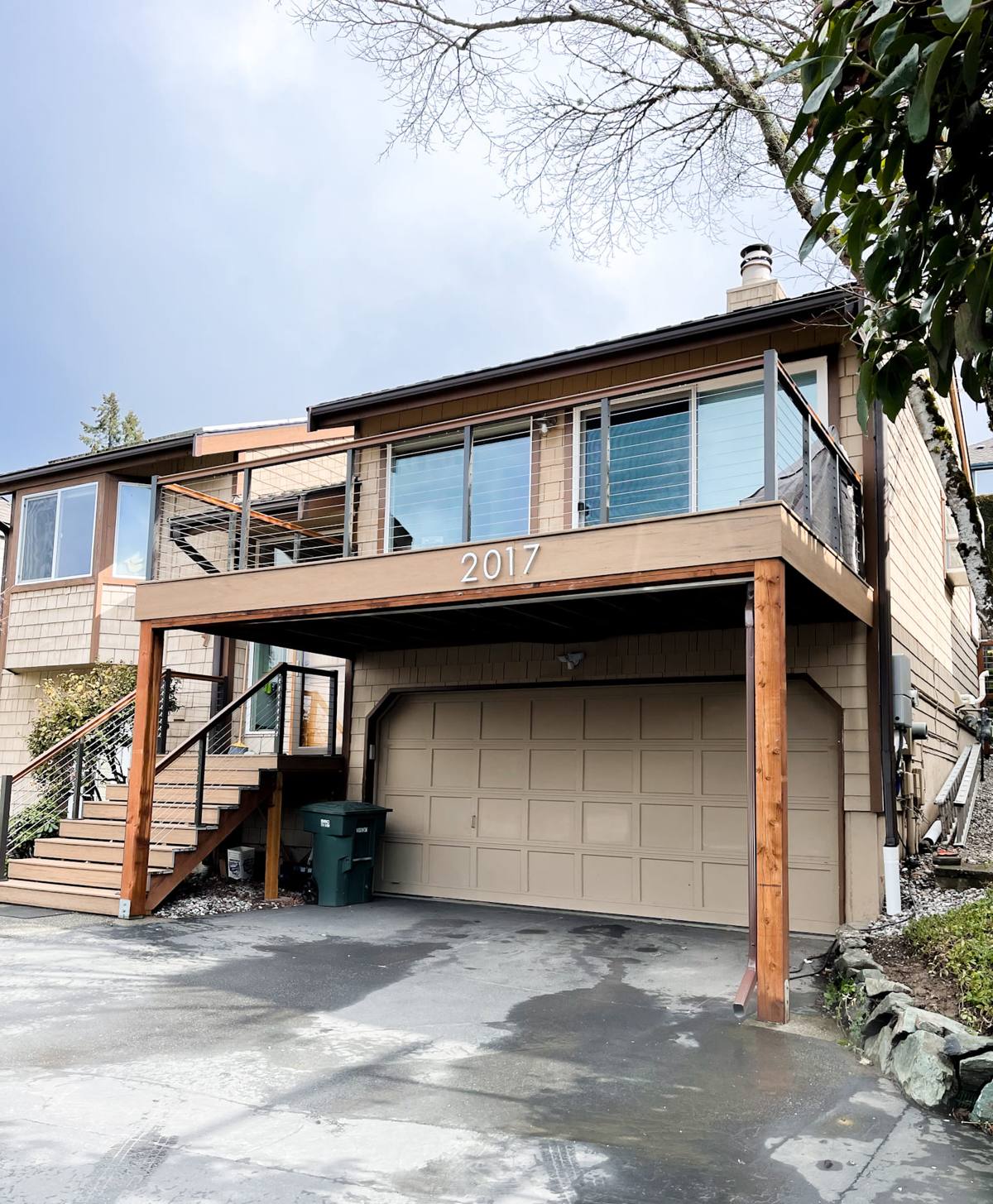
What Dade City's Climate Actually Does to a Deck
Before talking about materials or installation, it's worth being straight about what an outdoor deck in this part of Florida is up against every single year.
Intense, Year-Round UV
Florida sun doesn't take a season off. UV exposure here is more constant and more intense than in most of the country, and it's the single biggest reason cheap decking materials fade, chalk, and go brittle years before their expected lifespan. Wood decking that isn't stained and resealed on a strict schedule will gray and crack. Lower-grade composite boards without real UV inhibitors in the capping will fade unevenly, especially wherever furniture, planters, or rugs create uneven sun exposure.
Wind-Driven Rain and Humidity
Pasco County gets serious rain, and a lot of it arrives sideways during summer thunderstorms and tropical systems. That means water doesn't just fall on a deck — it drives into every gap, seam, and fastener point it can find. Combined with the humidity that sits over this whole region most of the year, any decking material that isn't genuinely moisture-resistant is fighting a losing battle. Wood absorbs, swells, and eventually rots at the joints and ledger connections. Poorly capped composite can wick moisture at cut edges if those edges aren't sealed correctly during install.
Hurricane-Force Wind Loads
Dade City isn't immune to hurricane season just because it's inland. Wind gusts during tropical storms and hurricanes put real lateral and uplift stress on a deck structure — not just the boards, but the ledger attachment, the posts, the joist hangers, and the railing system. A deck that looks fine on a calm day can have understrength connections that only show themselves when a storm actually tests them.
Ambient Salt Exposure
Dade City is far enough inland that salt spray isn't a daily concern the way it is right on the Gulf, but Tampa Bay's humid, salt-tinged air still moves through this whole region, especially during onshore flow events. Over years, that low-level salt exposure accelerates corrosion on cheap fasteners and hardware — one more reason we don't cut corners on the metal parts of a deck just because the boards themselves are composite.
Why Composite Makes Sense for This Area
Composite decking — a blend of wood fiber and recycled plastic, capped with a protective polymer shell — was developed largely to solve the problems wood has in exactly this kind of climate. It doesn't rot, it doesn't need annual staining, and a quality capped board resists fading, moisture absorption, and insect damage far better than natural wood ever will. That doesn't mean every composite product performs the same, and it doesn't mean composite is maintenance-free — it means the maintenance burden shifts from constant upkeep to occasional cleaning.
| Factor | Wood Decking | Quality Capped Composite |
|---|---|---|
| UV/fading resistance | Grays and fades within 1-2 years without refinishing | Fade-resistant cap holds color for years |
| Moisture/rot resistance | Absorbs water, prone to rot at joints over time | Resists water absorption when properly capped |
| Annual maintenance | Sanding, staining, sealing on a recurring schedule | Periodic washing, no staining or sealing |
| Upfront material cost | Lower | Higher |
| Long-term cost over 15-20 years | Higher, due to labor and material for upkeep | Lower, due to minimal upkeep |
| Insect resistance | Vulnerable without treatment | Not a food source for termites/wood-boring insects |
The tradeoff is honest: composite costs more upfront than pressure-treated lumber, and it's less forgiving of installation mistakes because the boards expand and contract with heat differently than wood. That's exactly why correct installation matters more with composite than with wood, not less.
What a Correct Composite Deck Install Actually Involves
A lot of deck problems we get called out to inspect trace back to shortcuts taken during the original build, not the decking material itself. Here's what we hold every job to, regardless of who's watching.
The Substructure Comes First
Composite boards are only as good as what's underneath them. That means pressure-treated or otherwise rot-resistant framing, joists spaced to the manufacturer's specification for the specific board (composite often requires tighter joist spacing than wood, especially at angles or picture-frame borders), and a ledger board attachment engineered to handle both the vertical load of the deck and the lateral wind loads this region sees during storm season.
Fastener and Hardware Selection
Given the humidity and ambient salt exposure in this region, we don't use standard hardware. Structural connectors, joist hangers, and fasteners need to be corrosion-resistant — stainless steel or a coated hardware rated for the level of exposure the deck will actually see. This is one of the most common places we see cost-cutting on decks that fail early, because the hardware is invisible once the boards go down.
Ventilation and Drainage Underneath
A deck built too close to grade, or without proper airflow underneath, traps humidity against the framing even if the surface boards are composite. We grade and plan the substructure so water sheds away from the house and air can move underneath, which protects the framing lumber that composite boards are fastened to.
Expansion Gaps and Fastening Pattern
Composite boards expand and contract with Florida's heat swings more than most homeowners expect. Gaps at board ends, around posts, and at any fixed object need to be sized correctly per manufacturer spec, or you get buckling, squeezing at seams, or fasteners that back out over time. We follow the manufacturer's fastening pattern exactly — hidden fastener clip systems have their own spacing tolerances that, if ignored, cause boards to lift or rattle.
Railing and Stair Structural Integrity
Railings take direct wind load and, frankly, take the brunt of casual daily use — people lean on them, kids climb on them. We build railing posts through-bolted into the structural framing, not just screwed to the rim joist, because that's the connection point that has to hold up in a wind event.
Our Process, Start to Finish
- On-site assessment: We look at the existing structure (if there is one), grade, sun exposure, and how the space is actually used before recommending anything.
- Honest material walkthrough: We'll show you real composite board options and price ranges, explain the tradeoffs plainly, and won't push a product just because it has a better margin.
- Written estimate: Clear scope, materials, and price before any work starts — no surprise change orders for things we should have caught upfront.
- Permitting: Deck construction in Pasco County typically requires a permit and inspection; we handle that process so it's done correctly and doesn't create problems when you go to sell the house.
- Demo and structural build: Old decking removed if applicable, framing built or reinforced to spec, hardware installed to the corrosion-resistant standard described above.
- Decking and railing install: Boards and railing installed per manufacturer specification, including expansion gaps and fastening pattern.
- Final walkthrough: We go over the finished deck with you, including basic care so it holds up.
Maintenance: What Composite Actually Needs
Composite is low-maintenance, not no-maintenance. Homeowners who expect to never touch their deck again are sometimes surprised, so here's the honest list.
- Sweep off leaves, pine needles, and debris regularly — organic matter trapped on the surface can cause mildew staining, especially in Florida's humidity.
- Wash the deck surface a few times a year with mild soap and water or a manufacturer-approved cleaner; a garden hose and soft brush handle most of it.
- Avoid pressure washing at close range or high PSI — it can damage the cap layer on some composite products.
- Check railing connections and fasteners annually, especially after hurricane season, since wind events can loosen hardware over time.
- Keep planters and rugs off the deck surface periodically to prevent uneven fading and trapped moisture underneath them.
- Clear gutters and downspouts near the deck so water isn't dumping directly onto or under the structure.
Common Problems We See on Existing Decks in This Area
When we're called out to inspect or repair a deck someone else built, a handful of issues show up over and over in Pasco County:
| Problem | Root Cause | Why It Happens Here |
|---|---|---|
| Ledger board pulling away from house | Improper flashing or fastening at the house connection | Wind-driven rain finds any gap and rots the connection point over years |
| Rusted or corroded hardware | Non-rated fasteners used to cut cost | Humidity and ambient salt air accelerate corrosion on standard hardware |
| Buckled or cupped composite boards | Missing or wrong-size expansion gaps | Heat swings cause more board movement than installers accounted for |
| Wobbly railings | Posts screwed to rim joist instead of through-bolted to framing | Undersized connection fails under repeated lateral load |
| Rot in substructure under intact composite deck boards | Poor ventilation or drainage beneath the deck | Trapped humidity attacks framing even though the surface looks fine |
Why a Local Land O'Lakes Crew Working Dade City Matters
Decking work isn't complicated in theory, but the details that actually determine whether a deck lasts fifteen years or needs rebuilding in five are the kind of thing you only get right by working this specific climate and this specific county's permitting process repeatedly. We're not driving in from out of the region for one job — we work Dade City and the rest of Land O'Lakes on an ongoing basis, which means we're the ones you call back if a question comes up two years from now, and we have a real reputation in this community to stand behind.
We'd rather give you a straight answer about what your project actually needs than oversell a package. If a smaller footprint or a mid-tier board fits your budget and your use case better than the top-of-the-line option, we'll tell you that.
Ready to Talk Through Your Deck Project?
If you're planning a new composite deck in Dade City or want an honest look at an existing one, we're happy to walk the property with you and talk through real options. There's a free, no-pressure estimate form below — reach out and we'll get you scheduled.