 Land O'Lakes Siding
 Building a Deck That's Made for Lutz, Not Just Installed Here
Lutz sits in that stretch of Pasco and Hillsborough County where Florida living really does happen outdoors — mornings on the deck before the heat sets in, evenings after it breaks. That same climate that makes outdoor living worthwhile is also what wears a poorly built deck down fast. Intense year-round UV bleaches and dries out wood fibers. Wind-driven summer storms push rain sideways into joints and connections that were never meant to stay wet. Hurricane-force gusts test every fastener and footing a few times a season, not just once a decade. Even this far inland, humid air moving up from Tampa Bay carries enough moisture and occasional salt influence to matter for hardware selection.
A deck built to a generic national spec — the kind you'll find in big-box plans or out-of-town crews unfamiliar with local conditions — often looks fine for a year or two and then starts showing problems: cupped boards, rusting screws bleeding through the finish, a railing post that's gone soft at the base. A deck built for this specific climate and this specific soil is a different project from the ground up.
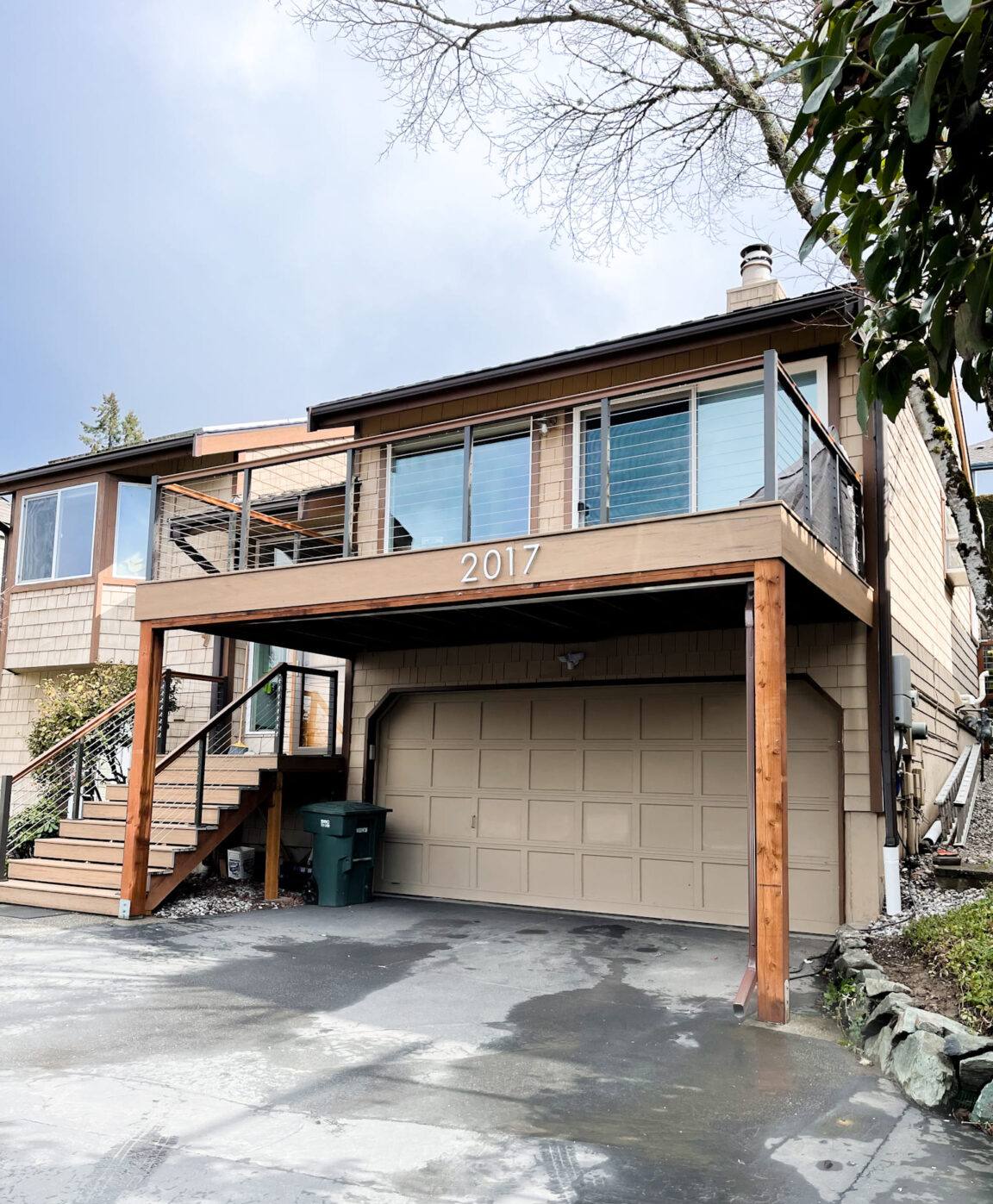
What Local Homes Actually Need From a Deck
Most homes in the Lutz and Land O'Lakes area sit on sandy, well-draining soil, which is good news for footings but doesn't eliminate the need to dig to proper depth and size footings correctly for the load and wind exposure. Many properties also have a pool or screened lanai nearby, which changes how a deck needs to tie into the house and how water is expected to move around it.
Climate factors that drive the build
- UV exposure — near-constant sun breaks down unprotected wood surfaces and degrades cheaper composite formulations faster than the manufacturer's marketing suggests.
- Wind-driven rain — afternoon storms don't fall straight down here; rain gets driven into ledger connections, post bases, and any gap that isn't properly flashed or sealed.
- Hurricane and tropical-storm wind loads — railings, guardrails, and the ledger-to-house connection all need to be engineered for uplift and lateral load, not just built by eye.
- Humidity and occasional salt-laden air — standard interior-grade or bargain exterior fasteners corrode faster here than in drier inland climates.
- Heat underfoot — surface temperature matters for a deck that gets real use around a pool or in bare feet.
Material Options, Honestly Compared
There's no single "best" decking material — there's the right material for how a homeowner actually uses the space, how much upkeep they want to do, and what budget they're working with. Here's how the common options actually perform in this climate:
| Material | UV/Sun Resistance | Moisture Behavior | Maintenance | Typical Lifespan Here |
|---|---|---|---|---|
| Pressure-treated pine | Fades and can gray/check without regular sealing | Absorbs water at cut ends and fastener holes if not sealed | Re-seal every 1-2 years | 10-15 years with upkeep |
| Composite decking | Good; capped boards resist fading better than early composites | Doesn't rot, but poor-quality cores can swell if the cap is scratched or cut edges aren't sealed | Occasional cleaning, no sealing | 20-25+ years |
| PVC/cellular decking | Very good, minimal fading | Fully moisture-resistant, doesn't absorb water | Low; occasional cleaning | 25-30+ years |
| Tropical hardwood (ipe, etc.) | Naturally UV- and rot-resistant, but grays without oiling | Dense, low absorption | Annual oiling to keep color | 25+ years structurally |
We won't push composite or PVC decking as a fix-all — a well-built, properly sealed pressure-treated deck is a legitimate, budget-conscious choice for a lot of homeowners, especially on a smaller footprint. Where we get selective is with low-end composite products that use uncapped or poorly capped boards; in this much sun and humidity, those show fading and moisture wicking at the cut ends within a few years, and the repair is a full board replacement, not a touch-up.
Framing and Fasteners: Where Decks Actually Fail
Almost every deck failure we get called out to inspect in this area starts below the surface — not in the decking boards themselves. The framing, the ledger connection, and the fasteners are where a deck earns its lifespan or loses it.
What a correct build includes
- Ledger boards properly flashed and bolted (never just nailed) to the house structure, with flashing that actually sheds water away from the connection.
- Footings sized and set to the depth required for the structure's load and Pasco County's soil and wind requirements — not just "deep enough to look right."
- Joist hangers and structural hardware rated for exterior/coastal-influence exposure (typically hot-dip galvanized or stainless, depending on the wood treatment used, since some chemicals in modern treated lumber corrode standard galvanized coatings).
- Stainless or coated deck screws — not the cheapest box on the shelf, which streaks and rusts within a season or two in humid, sun-heavy exposure.
- Railing posts through-bolted to framing, not just toe-screwed, so they hold under real lateral wind load.
- Proper board spacing and airflow underneath so the structure can dry out between storms instead of trapping moisture.
Permitting and Code in Pasco County
Decks attached to a house, decks above a certain height, and any deck with a roof or that changes drainage typically require a permit in this area, along with an engineered plan for the ledger connection and footing sizing once you're above a modest size or height. Skipping the permit might save a little time up front, but it creates real problems later — insurance claims, home sales, and code enforcement complaints all tend to surface unpermitted work, and by then it's a much more expensive fix than doing it right the first time. We handle the permitting and inspections as part of the project so it's one less thing on your plate.
Our Process for a Lutz Deck Build
- On-site assessment — we look at your yard's drainage, sun exposure, proximity to a pool or lanai, and how you actually plan to use the space.
- Design and material selection — honest conversation about what fits your budget and maintenance appetite, not a upsell script.
- Permit and engineering — we pull the permit and handle the required plans so the structure is signed off, not just built.
- Framing and inspection — footings, ledger, and framing go in and get inspected before decking closes anything up.
- Decking, railing, and finish work — boards, railings, stairs, and any lighting or accessories go in last.
- Final walkthrough — we go over care and maintenance specific to whatever material you chose.
Maintenance That Actually Matters Here
What a deck needs in this climate is different from what a deck needs in a drier, cooler part of the country. A few habits go a long way toward protecting the investment:
- Rinse pollen, leaf litter, and organic debris off the surface and between boards regularly — trapped debris holds moisture against the wood or composite cap.
- Check fastener heads once or twice a year for early rust streaking, which usually means a coating has failed and it's worth addressing before it spreads.
- Re-seal pressure-treated wood on the schedule the sealant manufacturer recommends for high-UV climates — often more frequently than the label's general guidance.
- Keep gutters and downspouts near the deck clear so runoff isn't dumping extra water onto footings or framing.
- After a named storm, walk the structure and check railings and stair connections for movement before assuming everything's fine.
Why a Crew That Already Works Lutz Makes a Difference
A contractor who works this specific area regularly already knows which fastener grades hold up, which footing depths pass inspection without a fight, and which material choices homeowners regret two summers later. That's not something you get from a national franchise rotating in crews from out of the region, and it's not something a homeowner should have to find out the hard way. When we quote a deck for a Lutz or Land O'Lakes property, the framing, hardware, and material recommendations are built around what actually holds up here — not a generic spec sheet.
What It Costs — and What Drives the Number
Deck pricing varies a lot based on size, material, height off the ground, and site complexity. Rather than throw out a number that doesn't mean much without context, here's what actually moves the price:
| Cost Factor | Why It Matters |
|---|---|
| Material choice | Pressure-treated is the lowest upfront cost; PVC and hardwood run highest, composite in between. |
| Deck height and footing depth | A deck several feet off the ground needs deeper footings, more bracing, and stairs — all add cost. |
| Railing style | Cable, glass, or composite railing systems cost more than standard wood or aluminum balusters. |
| Roof or cover | Adding a roof structure changes the engineering and permit scope significantly. |
| Site access | Tight side yards or pool-adjacent builds can slow the work and affect labor cost. |
| Permitting and engineering | Larger or elevated decks require engineered plans, which add a fixed cost regardless of size. |
If you're weighing a new deck or need to replace one that's showing its age, we're glad to come take a look and put together a straightforward estimate — no pressure, no upsell script, just an honest read on what your yard and budget call for. The form below gets you started.