 Land O'Lakes Siding
 Storm Season in Land O'Lakes Doesn't Skip Concord Station
Concord Station sits inland from the Gulf, but "inland" in Pasco County still means direct exposure to everything a Florida storm season brings. Tropical systems don't weaken meaningfully by the time they reach Land O'Lakes, and the sustained, hurricane-force wind gusts that come with them work on a roof from angles that calmer weather never tests. Add in the wind-driven rain that rides along with those gusts — rain that doesn't fall straight down but gets forced sideways and upward under shingle edges and flashing — and you have the two forces that account for most of the storm damage we see on roofs in this neighborhood.
It's not just the named storms, either. Land O'Lakes gets intense, nearly year-round UV exposure that bakes shingle asphalt and accelerates granule loss between storms, and the humid, salt-tinged air that moves inland from the greater Tampa Bay area slowly works on exposed metal fasteners, flashing, and vent boots. A roof here is under a slow, constant load long before a single named storm ever makes landfall. Storm damage repair in this area isn't just patching what a hurricane broke — it's recognizing which parts of the roof were already weakened by sun and humidity and gave way first.
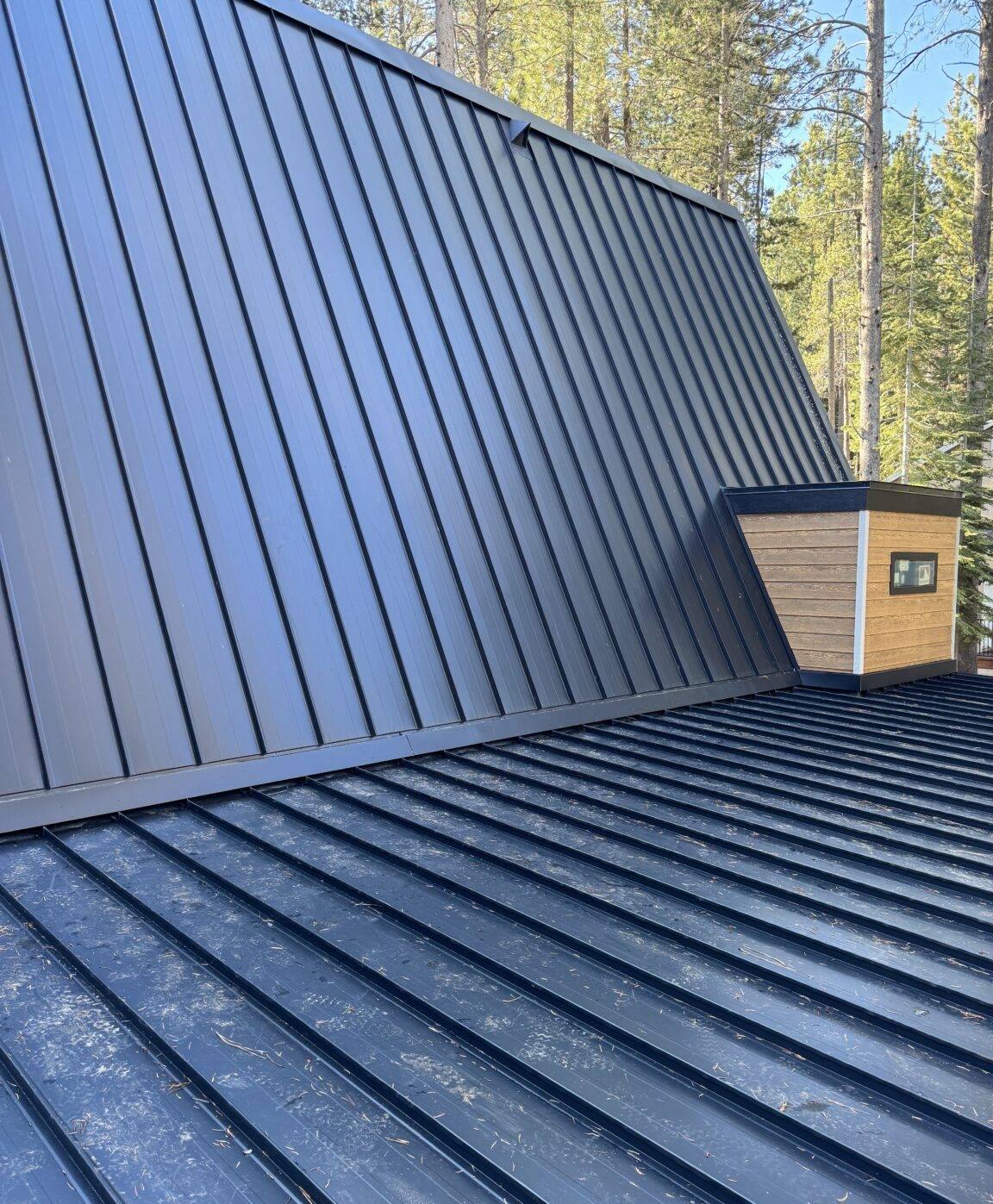
What Storm Damage Actually Looks Like on a Concord Station Roof
Wind damage
Wind rarely peels a roof off in one dramatic sheet. More often it works loose a run of shingles along a ridge, a rake edge, or around a roof-to-wall transition, breaking the seal strip without necessarily tearing the shingle itself. From the ground, that can look like nothing at all — until the next rain finds the opening.
Hail and impact damage
Direct hail is less common here than in some parts of the country, but wind-driven debris — palm fronds, oak limbs, loose gutter sections from a neighbor's house — causes similar bruising: soft spots in the shingle mat where granules have been knocked loose and the underlying asphalt is exposed to UV and moisture it was never meant to face alone.
Water intrusion you can't see from the driveway
The damage that costs homeowners the most is usually invisible until it's a stain on a ceiling. Wind-driven rain that gets under a lifted shingle or past a compromised flashing detail can travel along the underlayment or decking for feet before it ever shows up inside. By the time you see a mark on the ceiling, the wood underneath has often been wet for a while.
Why Storm Repair in Pasco County Isn't a One-Size Job
Much of Concord Station was built out over the 2000s and 2010s under fairly consistent HOA architectural guidelines, which means a lot of homes here share similar roof pitches, shingle profiles, and approved color ranges. That's useful information for us on a repair — it usually means we can source a close match rather than leaving an obvious patch — but it also means storm damage tends to hit a lot of roofs in the neighborhood the same way at the same time. After a significant wind event, we're often looking at the same failure points — ridge caps, valley flashing, pipe boots — across multiple homes on the same street, just in different stages of severity.
That pattern matters for how we prioritize work after a storm. A roof with an active leak over living space gets attention before a roof with cosmetic granule loss, even if both technically qualify as "storm damage."
Our Storm Damage Repair Process
1. Inspection and documentation
We walk the roof, not just the yard. Storm damage assessment from the ground misses the details that matter — lifted seal strips, cracked pipe boots, bent flashing — so we get on the roof, photograph what we find, and give you a written summary of the damage in plain language, not just an estimate total.
2. Emergency mitigation
If there's an active leak or exposed decking, stopping further water intrusion comes first. A tarp or temporary seal buys time to do the repair correctly instead of rushing it because water is actively getting in.
3. Repair-or-replace decision
We tell you honestly whether the damage is isolated enough to repair or widespread enough that a repair would just be a short-term patch on a roof that's reaching the end of its service life. We don't have an incentive to push a full replacement when a targeted repair will genuinely hold up.
4. The repair itself
Matching shingle color and profile, replacing damaged decking rather than covering over it, correcting flashing details rather than just re-sealing them with caulk, and confirming proper fastening patterns so the repaired section performs as well as the surrounding roof in the next storm.
Repair vs. Full Replacement: How We Help You Decide
Not every storm-damaged roof needs to come off. The table below covers the factors we actually weigh — not a rule of thumb, but the real questions that determine whether a repair is the sound long-term choice or a temporary fix.
| Factor | Leans toward repair | Leans toward replacement |
|---|---|---|
| Extent of damage | Isolated to one slope, valley, or section | Spread across multiple slopes or the whole roof |
| Age of roof | Roof is well within its expected service life | Roof was already nearing the end of its lifespan |
| Decking condition | Decking is sound underneath the damaged area | Decking shows rot or repeated soft spots |
| Shingle availability | Existing shingle line is still in production and matchable | Shingle is discontinued and a patch would be visibly different |
| Underlying wear | Surrounding shingles still have good granule coverage | Surrounding shingles show widespread granule loss and brittleness |
Cost follows the same logic. A targeted repair — a section of shingles, a flashing detail, a run of ridge cap — is typically a few hundred to a couple thousand dollars depending on scope and accessibility. A full replacement is a much larger investment, but it's the right call when the damage is spread out enough, or the roof is old enough, that repairing piece by piece would end up costing more over time than doing it once.
Working With Your Insurance Company
Storm damage claims move faster and go smoother when the damage is documented clearly and promptly. We provide the kind of photo documentation and written scope of damage that insurance adjusters expect to see, and we're straightforward with both you and the carrier about what's storm-related damage versus what's pre-existing wear — that honesty is what keeps a claim credible instead of getting flagged for review. We don't inflate scopes or invent damage to pad a claim; a documented, accurate repair is in everyone's interest, including yours if you ever need to make another claim on this roof down the road.
Materials and Workmanship Standards We Hold Ourselves To
- Replace damaged decking outright rather than screwing shingles down over soft or delaminated plywood
- Use appropriate underlayment for the exposure, not just whatever was on the roof originally
- Correct flashing geometry at walls, valleys, and penetrations rather than relying on sealant to cover a bad detail
- Match fastening patterns and nail placement to manufacturer specifications, which matters for wind rating
- Match shingle color and style as closely as current product lines allow, so a repair doesn't stand out for the next ten years
A repair that looks fine on the day it's finished but wasn't built to the same standard as a full install is a repair you'll be paying for twice — once now, and again after the next hard blow finds the shortcut.
What To Do in the First 48 Hours After a Storm
- Check ceilings and attic spaces for new stains, drips, or damp insulation, not just the roof from outside
- Photograph any visible damage from the ground before cleanup crews or debris removal changes the scene
- Avoid walking a wet or wind-damaged roof yourself — loose shingles and soft decking are a real fall risk
- Cover any active leak with a tarp if it's safely reachable, or call for temporary mitigation if it isn't
- Get an inspection promptly, even if the damage looks minor — small lifted shingles are cheap to fix now and expensive to ignore
- Keep any receipts or photos related to storm damage for your insurance file, even before you file a claim
Why a Crew That Already Works Concord Station Matters
After a storm sweeps through Land O'Lakes, demand for roofing help spikes fast, and out-of-area crews chasing storm work show up with no knowledge of local permitting requirements, HOA architectural review processes, or the shingle lines and colors that are actually approved in this community. A local crew that already does work in Concord Station knows what Pasco County's permitting office expects for a repair versus a full re-roof, knows how to get a matching shingle without triggering an HOA color dispute, and isn't disappearing once storm season traffic dries up if a warranty issue comes up later. That continuity is worth more than a slightly faster quote from a company that will never come back to this neighborhood again.
If your roof took a hit in the last storm — or you're just not sure whether recent wind and rain left damage you can't see from the ground — we're happy to come take a look. The estimate is free, there's no pressure to sign anything on the spot, and you'll get a straight answer about what actually needs to be done. Use the form below to get started.