 Land O'Lakes Siding
 Why Concord Station Siding Wears Differently Than You'd Expect
Concord Station is a newer, densely built community, which means most of the homes here are still within their first one to two decades of exterior life. That's exactly the window when siding problems start showing up — not from age, but from how the original material has held up against Pasco County's climate. Hurricane-force wind events push rain sideways into seams and laps that were never designed to handle water moving horizontally. Between storms, the sun does its own damage: Florida's UV load is among the highest in the country, and it breaks down caulking, fades finishes, and dries out wood-based products from the outside in.
None of that is unique to one street or one builder phase in Concord Station — it's the reality for every exterior surface in this part of Land O'Lakes. What makes a repair job here different from a generic siding repair is knowing which failure patterns show up first in this specific climate, and repairing them in a way that actually holds instead of failing again in a season or two.
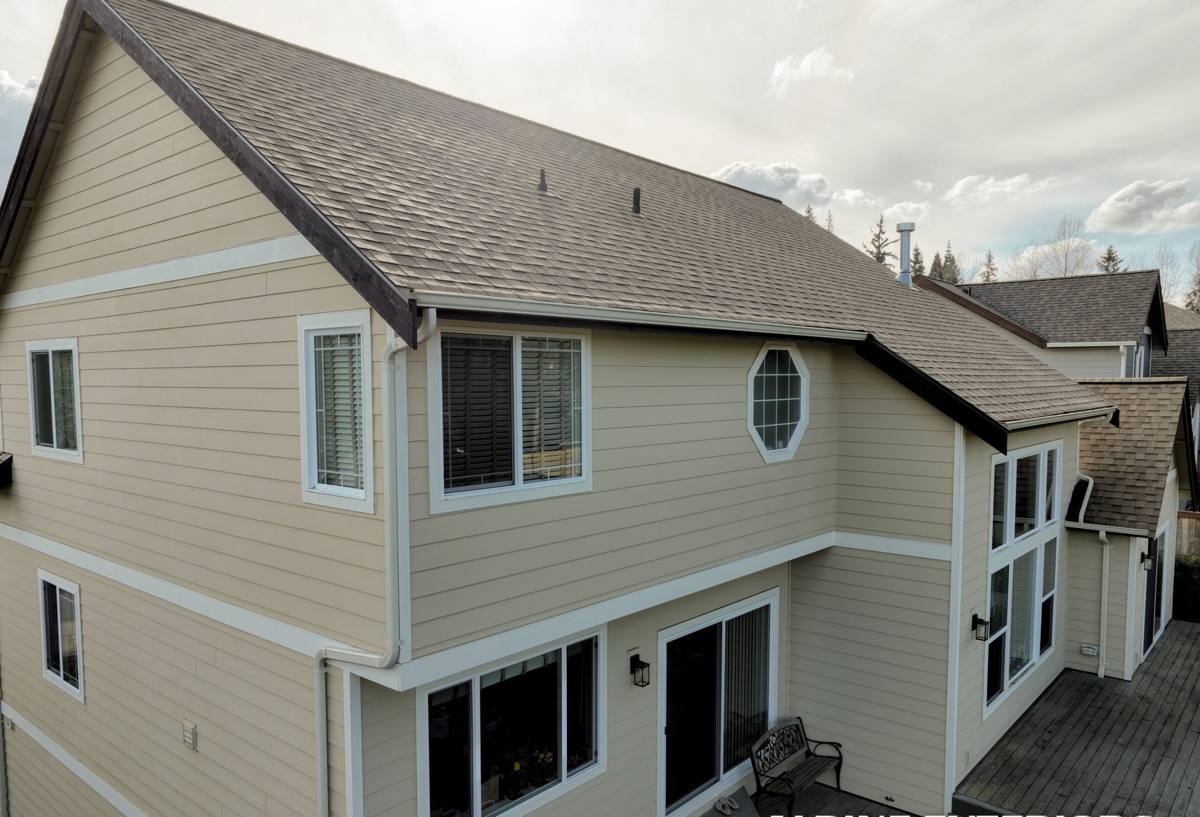
The Repair Problems We Actually See in This Area
Moisture Behind the Siding
Wind-driven rain doesn't need a big opening to get in — a hairline gap at a butt joint, a nail hole that's backed out, or caulking that's shrunk away from a trim board is enough. Once water gets behind the siding, it can sit against sheathing and framing for weeks between dry spells, especially in shaded side yards that don't get direct sun to help dry things out. By the time a homeowner notices a stain or soft spot on the interior wall, the damage has usually been developing outside for a while.
UV and Heat Cycling
Constant sun exposure, especially on west- and south-facing walls, cooks paint and caulk faster than most people expect. Caulking that's rated for a milder climate can go brittle and crack within a few years down here. Paint film that's thin or was applied over a chalky surface will fade unevenly and start peeling at the edges of boards first.
Wind and Storm Impact
Sustained high wind and wind gusts don't just tear siding off in dramatic fashion — more often they work boards loose at the fasteners, crack panels at corners, or drive debris into a wall hard enough to punch or crease the surface. Loose or cracked siding that survives one storm is far more vulnerable in the next one, because the seal that used to keep water out is already compromised.
Salt Air and Humidity
Even away from the immediate coastline, Gulf-influenced humidity and salt-laden air accelerate corrosion on fasteners and metal trim, and they keep organic growth (mildew, algae) active on shaded siding surfaces nearly year-round. That constant dampness is part of why caulk and paint fail here faster than the manufacturer's general climate assumptions.
What Correct Siding Repair Actually Involves
A lot of "siding repair" in this area is really just cosmetic patchwork — caulk squeezed into a gap, a mismatched board nailed over a soft spot, paint rolled over an unaddressed moisture problem. That kind of fix looks fine for a few months and then fails again, usually worse than before, because it never addressed what let water in the first place.
A correct repair starts with figuring out why the damage happened, not just where it happened. That means:
- Removing enough surrounding siding to expose the full extent of any water intrusion, not just the visible damaged section
- Checking the condition of the water-resistive barrier and sheathing behind the siding before anything new goes back on
- Identifying the actual entry point — a failed joint, a bad flashing detail, a fastener pattern that's too tight or missing entirely
- Replacing damaged structural material (not just cosmetic siding) if moisture has been sitting long enough to cause rot
- Re-installing or upgrading flashing and joint details so the same failure doesn't repeat in the next storm season
- Matching new material and finish to the existing siding as closely as the product line allows
Skipping any of these steps is how a homeowner ends up paying for the same repair twice — once for the patch, and again a year or two later for the damage the patch didn't actually fix.
Repair or Replace: How We Help You Decide
Not every damaged section needs a full re-side, and not every "small" repair should be treated as small. The right call depends on how much of the wall is affected, what's underneath it, and what the siding is made of.
| Factor | Leans Toward Repair | Leans Toward Replacement |
|---|---|---|
| Extent of damage | Isolated to one or two sections | Spread across a wall or multiple elevations |
| Sheathing condition | Dry, solid framing underneath | Soft, discolored, or rotted sheathing found |
| Siding material | Repairable fiber cement or sound wood | Deteriorated wood, cracked/warped composite boards |
| Age of existing siding | Still well within its expected service life | Nearing or past typical lifespan for the material |
| Recurring problem | First occurrence at this location | Same spot has already been patched before |
We'll always tell you honestly which side of that table your situation falls on. If a targeted repair genuinely solves the problem, that's what we recommend — a full replacement isn't automatically the "safer" answer if the underlying structure is sound.
Our Repair Process
- On-site inspection. We look at the damage itself, but also the surrounding siding, trim, and flashing details that could be contributing to it.
- Diagnosis before demolition. We identify the actual water or wind entry point before removing anything, so the repair addresses the cause, not just the symptom.
- Controlled removal. We take off only what needs to come off, but we don't stop short if the damage runs further than it first appeared.
- Structural check. Any soft or wet sheathing gets dealt with before new siding goes back on — covering it up is not an option.
- Correct re-installation. Proper fastener spacing, joint treatment, and flashing detail, matched to how the rest of the wall is built.
- Finish match. We match color and profile as closely as the existing product allows so the repair blends in rather than standing out.
Why We Steer Repair Sections Toward James Hardie Fiber Cement
When a repair calls for replacing a damaged section — or when a homeowner asks whether it's worth upgrading the material instead of just patching like-for-like — we point toward James Hardie fiber cement, and we're upfront about why. It's the only siding product we install on full jobs, and that standard carries over into repair work whenever a material swap makes sense.
Fiber cement doesn't absorb and swell the way wood-based products do, which matters enormously in a climate with this much wind-driven rain and humidity. It's non-combustible, which is a real consideration during Florida's dry, high-wind stretches. Hardie's ColorPlus factory finish is baked on under controlled conditions rather than field-applied, so it resists the fading and peeling that UV exposure causes on site-painted products — and the company's HZ5 product line is specifically engineered for hot, humid, storm-prone climates like ours. It also carries a strong transferable warranty, which matters if a homeowner ever sells the house.
We're not going to pretend every product we don't install is bad — some have real strengths. But when we're the ones putting our name behind a repair, we install what we've seen hold up correctly in this climate when installed to spec, and that's Hardie.
Why a Crew That Already Works Concord Station Matters
Repair work goes faster and holds up better when the crew doing it already understands the housing stock in the neighborhood — common siding materials used during this development's build-out, typical wall assemblies, and the specific ways Pasco County's storm patterns hit homes here versus more inland areas. That familiarity means less guesswork on the first visit and fewer surprises once a wall is opened up.
There's also a practical side to working locally: a crew that's already in Land O'Lakes regularly can respond faster after a storm event, source matching materials without a long delay, and stand behind the repair because they're not driving in from across the region for a one-time job. For something like siding repair, where the quality of the fix matters more than the speed of the sales pitch, that local presence is worth asking about when you're vetting a contractor.
Signs Your Siding Needs a Repair Call Now
Some damage is obvious. Some builds quietly behind the wall for months before it shows itself. Watch for:
- Visible cracks, splits, or holes in siding panels or boards
- Boards that feel soft, spongy, or visibly warped to the touch
- Caulking that's cracked, shrunk away from joints, or missing entirely
- Peeling, bubbling, or heavily faded paint concentrated in one area
- Staining, bubbling, or a musty smell on interior walls near an exterior corner
- Siding that's visibly loose, shifted, or rattles in the wind
- Increased mildew or algae growth on one section compared to the rest of the house
- Any repair that was patched before and has already started failing again
Catching these early is almost always cheaper than waiting — a small repair now is a fraction of the cost of dealing with rotted sheathing or framing later.
Get a Straight Answer on Your Repair
If you're dealing with damaged, aging, or previously patched siding on a Concord Station home, we're happy to take a look and give you an honest read on what it actually needs — a targeted repair, a section replacement, or something in between. There's no pressure and no upsell script; we'll tell you what we'd do if it were our own house. Fill out the form below for a free estimate.