 Land O'Lakes Siding
 Composite Decking in Zephyrhills: Built for the Weather We Actually Get
Zephyrhills sits inland from the Gulf, but "inland" in Pasco County doesn't mean shelter from Florida's weather. Homes here still see months of intense summer sun, heavy afternoon humidity, sudden downpours, and the same hurricane-season wind events that move through the rest of the Tampa Bay area. A deck built without that reality in mind will show it fast — fading, cupping, splintering, or worse, hardware that quietly corrodes where you can't see it. Composite decking, installed correctly for this climate, is one of the more sensible ways to get a deck that still looks and performs well five and ten years in.
This page is about that one job — composite decking for homes in and around Zephyrhills — not a general decking overview. What follows is what we look at on-site, what a correct build actually involves, and why the details matter more here than they would in a drier, milder climate.
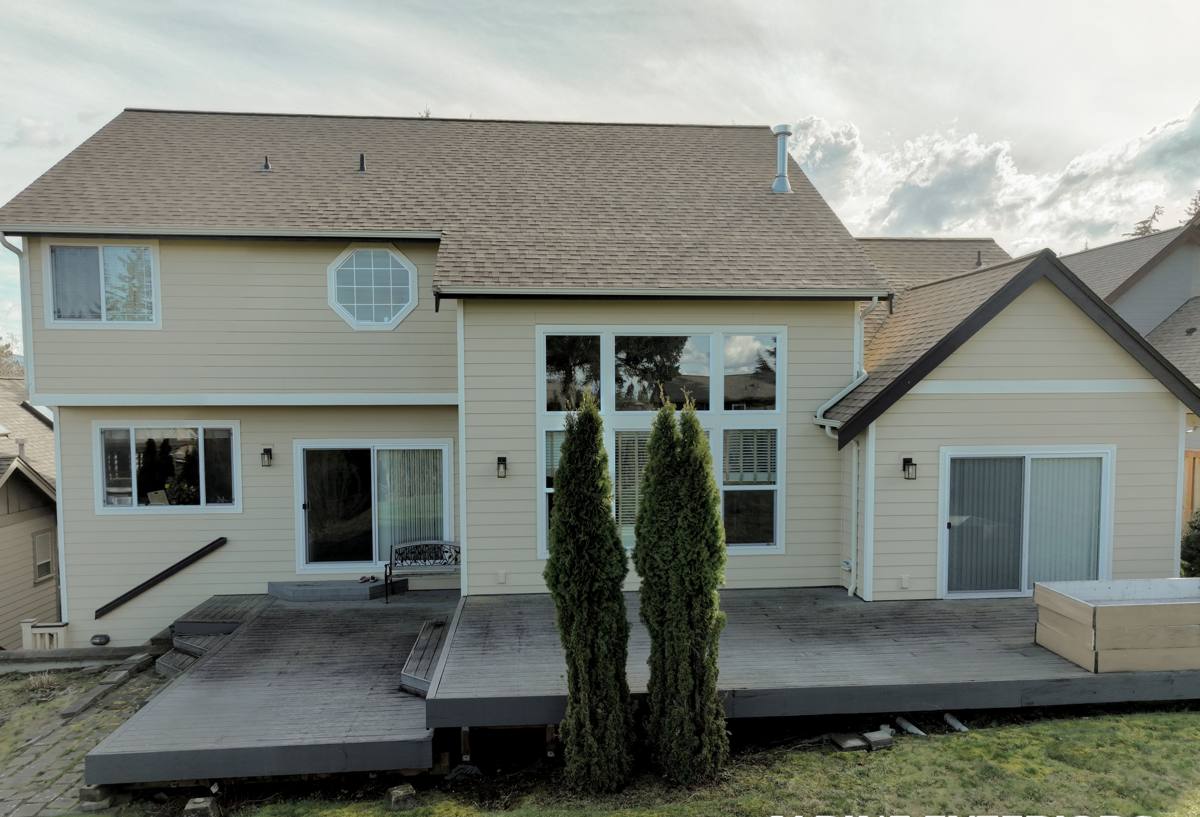
What Zephyrhills' Climate Actually Does to a Deck
Heat and Year-Round UV
Florida sun doesn't take a season off. Deck boards facing west or sitting fully exposed take a steady beating from UV exposure nearly every day of the year, not just in summer. Cheap capping or thin color layers on a composite board will chalk, fade unevenly, or lose their finish well ahead of schedule. It's one of the reasons board selection matters as much as installation quality — a mid-grade board with a thin cap won't hold color the way a fully-capped, UV-stabilized board will.
Humidity, Wind-Driven Rain, and Standing Water
Pasco County's rainy season brings fast, heavy downpours, and storm winds routinely drive that rain sideways under railings and against ledger boards. Combined with the region's humidity, any framing member that stays damp longer than it should becomes a rot and mold risk — even under a composite deck surface that itself doesn't absorb water the way wood does. The substructure underneath is still almost always wood, and that's where most of the real long-term problems start.
Storm-Force Wind Loads
Pasco County falls within Florida Building Code wind design requirements that assume real hurricane exposure, not a token safety margin. A deck's ledger attachment, post connections, and railing anchoring all need to be built to resist uplift and lateral load, not just support foot traffic on a calm day. This is structural work, and it's the part of a "composite deck" that has nothing to do with the decking material itself.
What a Correctly Built Composite Deck Involves
Composite boards get most of the attention because they're what you see and touch, but the boards are the last thing installed, not the most important decision. A deck that holds up here needs the same attention paid to everything underneath.
- Ledger attachment: bolted into the home's structural framing (rim joist or band board) — never lag-screwed through siding or stucco into foam sheathing — with flashing that sheds water away from the house rather than trapping it against the wall.
- Joist protection: a moisture barrier tape over the tops of pressure-treated joists, since the wood substructure is still the part most exposed to trapped moisture under a composite surface.
- Fasteners and hardware: stainless steel or heavily coated fasteners and joist hangers rated for the corrosive, high-humidity environment — standard galvanized hardware corrodes faster here than in drier climates.
- Footings sized for wind uplift: post footings and post-base connections engineered for the actual wind loads that apply in Pasco County, not a generic prescriptive span table.
- Board spacing and airflow: proper gapping between boards and ground clearance underneath so the deck can dry out after heavy rain instead of holding moisture against the frame.
- Picture-frame and fastening detail: hidden fastener systems where the product allows it, with attention to expansion and contraction gaps since composite boards move more with heat than most homeowners expect.
None of this shows up in a sales brochure for composite decking, but it's the difference between a deck that's still tight and quiet in eight years and one that's squeaking, staining, or pulling away from the house in three.
Composite vs. Wood vs. PVC: What Actually Fits This Climate
We get asked fairly often why we lean toward capped composite for most Zephyrhills projects instead of pressure-treated wood or full PVC. Here's the honest trade-off breakdown:
| Factor | Pressure-Treated Wood | Capped Composite | Full PVC |
|---|---|---|---|
| Upfront cost | Lowest | Mid-range | Highest |
| Maintenance | Annual sealing/staining | Occasional cleaning only | Minimal cleaning |
| UV fade resistance | Poor — grays and roughens | Good to very good | Very good |
| Heat underfoot | Moderate | Can run warm in dark colors | Can run warm in dark colors |
| Moisture/mold resistance | Weakest, prone to splintering | Strong, capped surface resists staining | Strongest surface resistance |
| Typical lifespan here | 10-15 years with upkeep | 25+ years | 25+ years |
Wood isn't a bad material, but in this climate it demands upkeep most homeowners underestimate when they first price it out — the low sticker price gets eaten up in sealant, sanding, and board replacement over a decade. PVC performs well but comes at a real premium and can feel and sound different underfoot than composite. Capped composite tends to land in the sweet spot for Zephyrhills homeowners: strong weather performance without PVC's price jump.
Our Process, Start to Finish
1. On-Site Assessment
We look at sun exposure, drainage around the footprint, ledger attachment points, and existing structure before we talk board selection. A deck plan that ignores how water moves around your specific lot is a plan that fails early.
2. Design and Permitting
Deck additions and replacements typically require a permit in Pasco County, and the structural plan has to reflect Florida Building Code wind requirements — this isn't optional paperwork, it's what protects the structure and you as the homeowner if anything is ever questioned later. We handle the permit process as part of the job rather than leaving it to you.
3. Framing and Substructure
This is where the ledger flashing, joist protection, footing depth, and hardware grade actually get set. It's also the stage that's invisible once the decking goes down, which is exactly why it deserves the most attention, not the least.
4. Composite Board Installation
Boards go down with attention to fastening pattern, expansion gaps, and any picture-framing or border detail in the design. We also make sure any post sleeves, railing, and stair components match the wind and code requirements for the structure, not just the aesthetic.
5. Final Walkthrough and Inspection
We walk the finished deck with you, cover manufacturer warranty registration where applicable, and make sure any required final inspection is closed out properly.
Maintenance: What to Actually Expect Over Time
Capped composite decking isn't zero-maintenance, just low-maintenance. In this climate, that mostly means periodic washing to clear pollen, mildew film, and organic debris from humidity, especially in shaded or low-airflow areas of the deck. Boards can still get warm underfoot on a July afternoon regardless of material — that's sun exposure, not a product defect — and lighter colors help if bare feet on the deck matters to your household. What you won't be doing is annual sanding, staining, or sealing the way a wood deck demands.
Why Hiring a Crew That Already Works in Zephyrhills Matters
Decking looks like a straightforward product install from the outside, but the parts that actually determine how long it lasts — ledger flashing, hardware grade, footing design, permit requirements — are all local-condition decisions. A crew that already pulls permits in Pasco County and builds in this climate day to day isn't guessing at wind load requirements or hardware corrosion resistance; it's routine. That familiarity also matters after the install: if a warranty question or a post-storm inspection ever comes up, you're calling a crew that's still working in your area, not chasing down a company that only passed through once.
A Homeowner's Planning Checklist
- Confirm the framing plan is engineered for local wind loads, not a generic prescriptive span table
- Ask specifically whether joist tape or another moisture barrier is included over the substructure
- Confirm fasteners and hardware are stainless steel or rated for high-humidity, coastal-influenced environments
- Verify who is pulling the permit and confirm the contractor's license number directly
- Ask how the ledger board will be attached and flashed — this is the single most common failure point in deck structures
- Get the manufacturer's warranty terms in writing, including what is and isn't covered for fading or staining
- Ask about expansion gaps and fastening pattern before boards are ordered, not after
If you're weighing a new composite deck or replacing an aging wood one in Zephyrhills, we're happy to walk the property, talk through what your specific lot and sun exposure call for, and give you a straight, no-pressure estimate. There's a form below — reach out and we'll get you scheduled.