 Land O'Lakes Siding
 Composite Decking Built for Trinity's Climate
Trinity sits inland from the Gulf but still lives under the same Tampa Bay-area weather pattern that hits the rest of Pasco County: long stretches of intense UV, heavy summer humidity, wind-driven rain during storm season, and the occasional hurricane-force gust that tests every fastener on a structure. A deck in this neighborhood isn't a seasonal feature — it's outdoor living space for ten or eleven months of the year, which means the material and the build quality both have to hold up to daily sun exposure, not just an occasional storm.
Composite decking has become the go-to choice for homeowners here because it resists the two things that wreck wood decks fastest in this climate: moisture cycling and UV breakdown. Wood swells, cups, and splinters as it absorbs humidity and then dries out repeatedly through a Florida summer. Composite boards, when installed correctly, don't. That said, "composite" covers a wide range of products and a wide range of installation quality, and the difference between a deck that looks good in year one and one that still looks good in year ten comes down to details most homeowners never think to ask about.
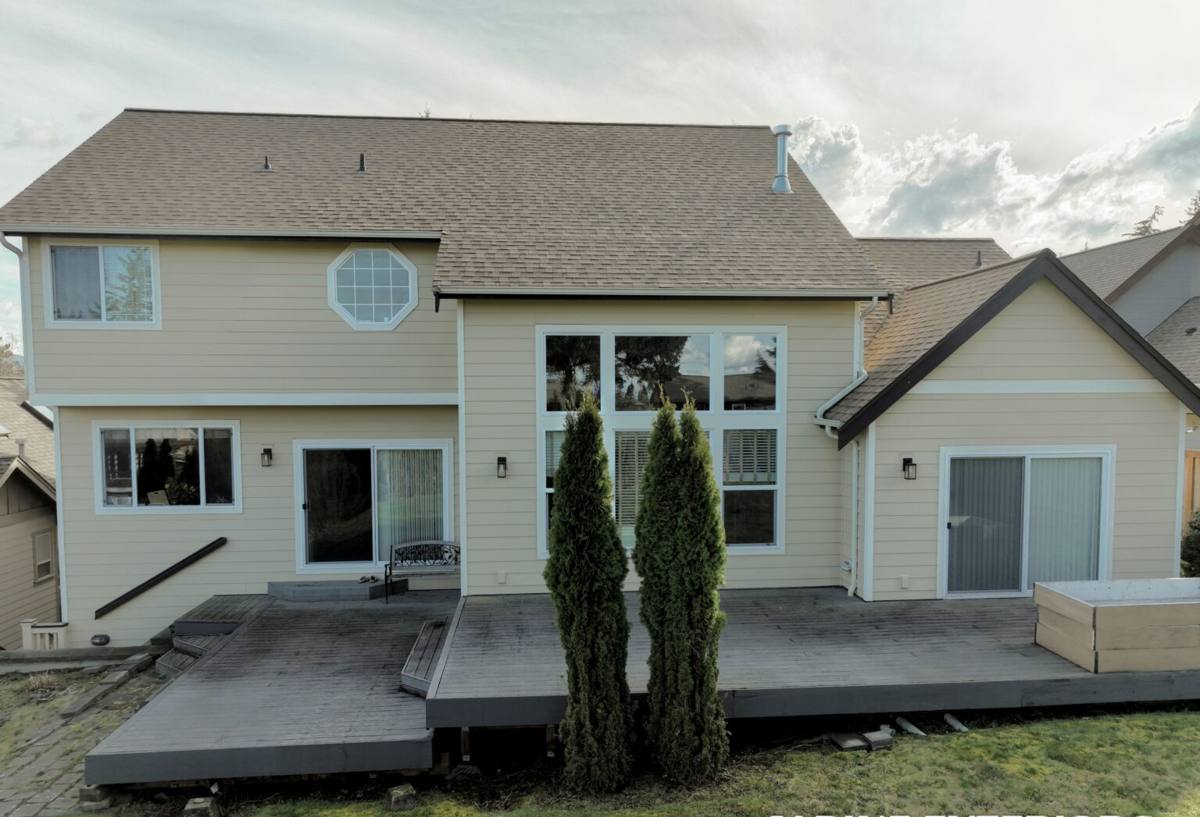
What Trinity Homes Actually Need From a Deck
Before talking about boards, it's worth being honest about what the climate demands structurally:
- UV stability — boards facing full sun for years need color and surface technology that resists fading and chalking, not just a painted-on finish.
- Moisture management underneath — Pasco County's humidity means anything trapped under a deck without airflow stays damp longer than you'd expect, inviting mold and wood rot in the substructure even if the surface boards are composite.
- Wind uplift resistance — framing, ledger attachment, and railing posts need to be fastened to current wind-load standards, not just "however the last deck was built."
- Corrosion-resistant hardware — humid, occasionally salt-tinged air corrodes standard fasteners faster than most homeowners realize; the wrong screws rust and stain composite boards from the inside out.
What a Correct Composite Deck Build Involves
The Substructure Comes First
The composite boards get the attention, but the framing underneath is what determines whether the deck survives a decade of Florida weather. Pressure-treated pine framing is standard and works fine when it's properly flashed and ventilated. Some homeowners in this price range opt for aluminum or composite substructure systems, which cost more up front but eliminate the wood-rot risk entirely — worth discussing if the deck will sit low to the ground or in a shaded, slow-drying spot of the yard.
Ledger Board and Flashing
Where the deck attaches to the house is the single most common failure point on any deck, composite or not. A ledger board that isn't properly flashed lets water track behind it and into the house's rim joist and siding — a problem that stays hidden until there's real rot damage. We flash every ledger connection as a matter of standard practice, not an upsell.
Airflow and Drainage
Composite boards need airflow underneath to shed the humidity that Pasco County air carries year-round. Decks built too close to grade, or without gaps for drainage, trap moisture against the framing even when the surface material itself is inert. Proper joist spacing, ground clearance, and in some cases a drainage system under the deck all factor into a build that won't have hidden problems in five years.
Fasteners
Hidden fastener clip systems are standard on most composite lines now and give a cleaner look than face-screwing, but they have to be rated for the board manufacturer's specific product and installed with the correct expansion gaps — composite boards expand and contract with heat more than people expect in a Florida sun.
Comparing Composite Board Types
Not all composite decking is the same, and the right choice depends on budget, sun exposure, and how much long-term maintenance a homeowner wants to deal with.
| Board Type | What It Is | Best For | Trade-Offs |
|---|---|---|---|
| Uncapped composite | Wood fiber and plastic blended throughout the board | Budget-conscious projects, covered or shaded decks | More prone to moisture absorption and fading over time; lowest cost tier |
| Capped composite | Composite core with a protective polymer shell on some or all sides | Most Trinity decks — full-sun exposure, high humidity | Higher upfront cost, but significantly better fade and stain resistance |
| PVC / cellular vinyl | All-plastic board, no wood fiber | Pool decks, ground-level decks, high-moisture areas | Highest cost tier; can run hotter underfoot in direct sun than capped composite |
We install from established composite manufacturers with real warranty backing and a track record in humid climates — we don't push a homeowner toward a specific brand without walking through the board's warranty terms, fastening system, and how it's actually performed in Florida installations, not just what the marketing claims.
Our Process, Start to Finish
- On-site visit — we measure the space, check drainage and grade, and look at sun exposure through the day to help guide board color and type recommendations.
- Design and material walkthrough — an honest conversation about board options, railing styles, and budget, including trade-offs between tiers rather than steering to the most expensive option by default.
- Permitting — decks in Pasco County typically require a permit, and we handle that process rather than leaving it to the homeowner.
- Demo and framing — old deck removal if applicable, then a properly flashed, ventilated substructure built to current code and wind-load requirements.
- Composite installation — boards installed with correct expansion gaps and manufacturer-approved fastening.
- Final walkthrough — we inspect the finished deck with the homeowner before calling the job done.
Permits, Setbacks, and HOA Approval
Most communities in and around Trinity operate under an HOA with architectural review requirements for exterior additions, and deck projects are one of the more common items HOAs ask about — color, railing style, and footprint can all be subject to approval before work starts. We factor that into the timeline up front rather than letting it become a surprise mid-project. Separately, Pasco County permitting covers structural requirements like footing depth and attachment methods, which matters more than most homeowners assume until an inspection catches a shortcut.
Maintenance: What Composite Actually Requires
One of the real selling points of composite is how little upkeep it needs compared to wood — but "low maintenance" isn't "no maintenance," especially in this climate.
- Rinse or wash the deck a few times a year to clear pollen, mildew spores, and dust that build up fast in Florida's humidity.
- Keep an eye on areas under furniture, planters, or grills — trapped moisture and debris can promote mildew growth on the board surface even though the board itself won't rot.
- Check railing hardware and fastener caps annually, especially after storm season, for loosening from wind stress or thermal cycling.
- Avoid pressure-washing at high PSI directly into board seams — it can drive water into the substructure over time.
What to Check Before Hiring a Deck Contractor
Composite decking looks straightforward, but a lot of the failures we get called to fix started with an install that skipped a step nobody could see once the boards went down. Before hiring anyone for a composite deck in Trinity, it's worth asking:
- Do they flash every ledger board connection, or only "when needed"?
- What fastener system are they using, and is it rated for the specific board brand?
- Are they pulling a permit through Pasco County, or suggesting you skip it?
- Do they know your HOA's architectural review process, or is this their first project in the neighborhood?
- Can they explain the trade-offs between board tiers instead of just quoting one price?
Why a Crew That Already Works Trinity Matters
A deck project touches a lot of local variables — HOA review timelines, Pasco County permitting specifics, and the practical reality of how a given board holds up once it's been through a full Florida summer and hurricane season. A contractor who's already built decks in this neighborhood has usually already worked through the HOA process, knows what inspectors here are looking for, and has a sense of how different composite lines have actually aged locally rather than just on paper. That local track record shows up in fewer surprises during the build and fewer callbacks after it.
If you're weighing a composite deck for your Trinity home, we're happy to walk the site, talk through board options honestly, and put together a straightforward estimate — no pressure, no upsell. Use the form below to get started.