 Land O'Lakes Siding
 Decking in Suncoast Meadows Has to Answer to Florida Weather, Not a Brochure
Suncoast Meadows is a community of established homes in Land O'Lakes, and like most of Pasco County, a lot of those homes were built with an outdoor living space in mind — a deck off the back door, a landing by the pool, a spot to sit under the lanai screen. What works on a deck in a catalog photo or in a cooler, drier state doesn't always hold up here. Land O'Lakes sees intense year-round UV, long stretches of high humidity, sudden wind-driven downpours, and the occasional hurricane-force wind event that puts real uplift and racking stress on anything built outdoors. A composite deck installed correctly for this climate should look and perform the same in year ten as it did in year one. One installed to a generic spec sheet usually doesn't.
This page is specifically about composite decking for homes in and around Suncoast Meadows — not a general decking overview. If you're comparing composite to other materials for a Land O'Lakes home, the climate factors below are the ones that actually decide how a deck ages, not the marketing on the board itself.
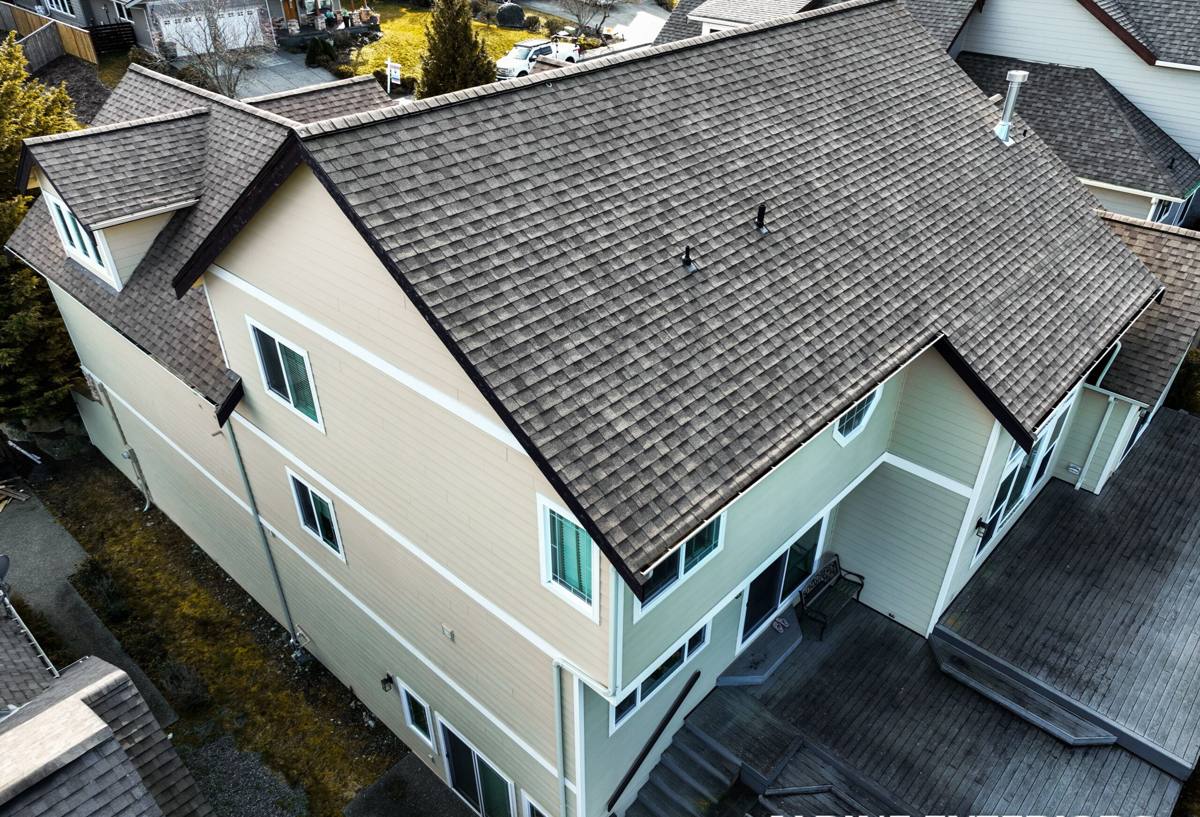
What Florida Weather Actually Does to a Deck Over Time
Every material reacts to this climate differently, but composite decking has specific weak points that show up only if the installation ignored them.
UV and Heat
Direct Florida sun breaks down surface color and can cause lower-grade composite to chalk, fade unevenly, or get noticeably hot underfoot. Board orientation, shading from structures, and the quality of the cap layer all affect how a deck looks after a few summers, not just the first one.
Humidity and Moisture Cycling
Composite boards don't rot like wood, but they still expand and contract with heat and moisture. In a climate that swings between soaking-wet summer afternoons and dry, sun-baked stretches, boards that were installed without correct gapping can buckle, cup, or push against fascia and framing.
Wind-Driven Rain and Standing Water
Land O'Lakes gets sideways rain during storms, and it finds its way under and around a deck surface no matter how the top looks. If drainage and slope weren't planned into the substructure, water sits against joists, ledger boards, and fasteners longer than it should — and that's where problems start, even with a "waterproof" decking surface.
Wind and Storm Loading
Hurricane-force gusts don't usually rip up composite boards themselves — they expose weak fastening, undersized framing, or ledger attachments that were never built to handle uplift and lateral load. A deck that looks fine in calm weather can reveal exactly where it was under-built the first time a real storm comes through.
Salt-Tinged Air
Land O'Lakes isn't beachfront, but this part of the Tampa Bay region still carries salt-influenced air inland, especially with onshore wind patterns. Over years, that accelerates corrosion on cheap or exposed fasteners and hardware — a slow problem that only shows up as squeaks, rust streaks, or loosening boards well after installation.
What a Correct Composite Deck Installation Actually Involves
Substructure and Ground Clearance
Composite decking is only as good as what's underneath it. That means pressure-treated or corrosion-resistant framing, proper joist spacing rated for composite span (composite generally needs tighter joist spacing than wood — check the manufacturer's span table, don't guess), and enough ground clearance and slope for water to actually leave the area instead of pooling under the deck.
Fasteners and Hardware
Given the moisture and salt-air exposure here, we use stainless or coated fasteners rated for coastal-adjacent conditions rather than standard hardware. This is one of the most common corners cut on budget installs, and it's usually invisible until the hardware starts failing years later.
Ventilation and Drainage
Enclosed or low-clearance deck areas need airflow underneath to keep moisture from lingering against the framing. Skirting, lattice, or enclosed deck bases all need vents or gaps designed in — not added as an afterthought.
Board Selection
Capped composite (a solid polymer shell around a composite core) handles Florida sun, moisture, and stains far better than uncapped composite, which absorbs more moisture and fades and mildews faster in humid climates. For a Land O'Lakes home getting full sun exposure most of the year, we generally steer homeowners toward capped composite unless there's a specific reason not to.
Composite vs. Other Decking Materials for This Climate
| Material | Moisture Behavior Here | Maintenance | Typical Lifespan |
|---|---|---|---|
| Capped Composite | Resists swelling, staining, and mildew well; minimal moisture absorption | Occasional wash; no sealing or staining | 25+ years |
| Uncapped Composite | Can absorb moisture at cut ends and fade/mildew faster in humidity | Periodic cleaning; more prone to surface mold | 15-20 years |
| Pressure-Treated Wood | Absorbs moisture, prone to warping/splitting with wet-dry cycling | Regular sealing/staining, ongoing repairs | 10-15 years with upkeep |
| Tropical Hardwood | Naturally moisture-resistant but still moves seasonally | Periodic oiling to maintain appearance | 20-25 years with upkeep |
None of these materials are "bad" — they're trade-offs. We install composite most often for Suncoast Meadows homeowners because it matches the maintenance expectations most people actually want in a Florida climate: less sanding, sealing, and re-staining in exchange for a higher upfront material cost.
How We Approach a Composite Decking Project in Suncoast Meadows
- On-site assessment — we look at existing structure (if replacing an old deck), drainage patterns, sun exposure, and how the space is actually used.
- Structural check — ledger attachment, footing condition, and framing are evaluated against current wind and load requirements, not just what was there before.
- Permitting — Pasco County requires permits for most new decks and deck replacements; we handle that process rather than leaving it to the homeowner.
- Material selection — we walk through board options and color choices based on your sun exposure and how the space is used, not just what's cheapest.
- Installation — correct fastener spacing, gapping for expansion, drainage slope, and hardware rated for this climate.
- Final walkthrough — we go over the finished deck together before we consider the job done.
Mistakes We Routinely See From Other Installations
- Hidden fastener clip systems installed without confirming they're rated for the wind uplift this area can see
- Joist spacing built for wood decking, then covered with composite boards that need tighter support
- Missing or poorly flashed ledger board connections, which let water into the house structure over time
- No expansion gapping between boards, leading to buckling after a few humid seasons
- Standard hardware store fasteners used instead of corrosion-resistant hardware suited to this air
- Skipping the permit process, which can create problems later at resale or insurance renewal
If your community has HOA design guidelines, that's worth confirming before material and color selection too — some communities have specific rules about decking colors, railing styles, or visibility from the street.
What Affects the Cost of a Composite Deck
| Factor | Why It Matters |
|---|---|
| Deck size and shape | More linear footage of framing, boards, and cutting/fitting labor |
| Existing structure condition | Rot, undersized framing, or bad footings mean rebuilding before the new deck goes on |
| Board tier | Capped composite costs more upfront than uncapped, but generally needs less upkeep |
| Railing and stairs | Composite or aluminum railing systems add cost versus a simple wood rail |
| Site access | Tight side yards, pool cages, or elevated decks affect labor time |
| Permit and inspection | Required by Pasco County for most new or replacement decks |
We'd rather walk your specific space and give you real numbers than throw out a broad range that doesn't mean much for your project.
Maintaining a Composite Deck in a Land O'Lakes Climate
- Sweep off leaves, pollen, and debris regularly so moisture doesn't sit trapped against the surface
- Rinse periodically to remove pollen film and prevent surface mildew, especially in shaded areas
- Check railing and stair fasteners once or twice a year for looseness or corrosion
- Keep gutters and downspouts nearby clear so runoff isn't dumping directly onto or under the deck
- Trim back landscaping that keeps a section of the deck shaded and damp longer than the rest
Why Hiring a Crew That Already Works in Suncoast Meadows Matters
A deck installed for a Colorado mountain home or a dry-climate suburb is not built for what Land O'Lakes throws at it every year. A crew that already works in Suncoast Meadows and the surrounding Pasco County area knows the local permitting process, has already worked through HOA guidelines in comparable communities, and has seen firsthand which fastener choices, framing details, and board types actually hold up after a few Florida summers and storm seasons — not just what looks good on installation day. That local track record is the difference between a deck that needs attention in year three and one that's still solid well past year fifteen.
If you're considering composite decking for your Suncoast Meadows home, we're happy to walk the space, talk through material options honestly, and put together a free, no-pressure estimate using the form below.