 Land O'Lakes Siding
 Siding Installation Built for Bexley's Climate
Bexley is one of the newer master-planned communities in Land O'Lakes, and most of its homes are still well within their first siding cycle. That makes this the right time to think about what's actually protecting the exterior of your house — not after a problem shows up, but while the original siding is still doing its job. Whether you're dealing with a builder-grade product that's starting to show its age or you're planning ahead for a replacement down the road, the material and the installation matter more in this part of Pasco County than almost anywhere else in the state.
Land O'Lakes sits inland from Tampa Bay but still gets the full package: hurricane-force wind events, intense year-round UV exposure, wind-driven rain that gets pushed sideways into wall assemblies, and salt air carried in off the Gulf. None of those forces are theoretical here. They're the reason siding fails early in Florida even when it looks fine from the street, and they're the reason installation quality matters as much as the product itself.
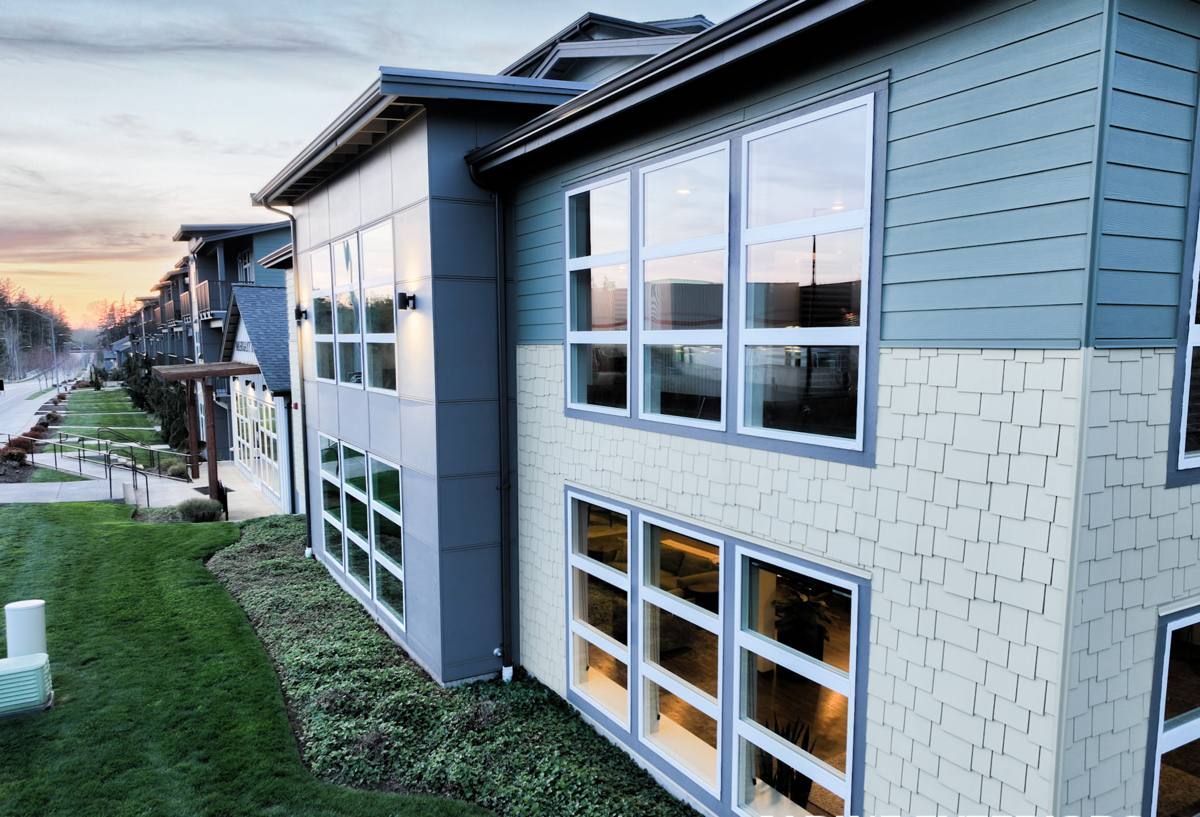
What Bexley's Climate Actually Does to Siding
Wind-Driven Rain
Florida storms rarely drop rain straight down. Wind pushes it sideways, forcing water into every gap, seam, and fastener hole in a wall system. Siding that isn't installed with the right clearances, flashing, and overlap will let that water behind the cladding, where it can sit against sheathing and framing long after the storm passes.
Year-Round UV
Central Florida sun doesn't take a season off. Constant UV exposure breaks down paint film, dries out wood fibers, and accelerates the kind of fading and chalking that makes a house look tired years before it should. Products and finishes that aren't engineered for this level of sun exposure show it fast.
Salt Air
Bexley isn't beachfront, but Pasco County is close enough to the Gulf that salt-laden air still reaches inland neighborhoods, especially during onshore wind events. Salt accelerates corrosion on fasteners and trim hardware and speeds up the breakdown of coatings that weren't formulated to handle it.
Wind Load
Hurricane-force winds put real pressure on a wall assembly, and siding that isn't fastened to spec — wrong nail pattern, wrong penetration depth, missing clips at the right intervals — is the siding that comes loose or lifts first. This is almost always an installation issue, not a product defect.
Where Siding Failures Actually Start
In our experience, most premature siding failures in this area trace back to installation, not the product itself. A house can have a good siding material on it and still fail early because of how it went up. Common culprits include:
- Panels installed too tight to the ground or roofline, with no clearance for water to drain away
- Missing or incorrect flashing at windows, doors, and roof-to-wall transitions
- Fasteners driven too deep, too shallow, or in the wrong pattern for the wind zone
- Seams and butt joints that weren't properly gapped, caulked, or backed
- No weather-resistant barrier, or a barrier installed incorrectly behind the cladding
Every one of these is preventable with a crew that installs correctly the first time. That's the entire reason installation quality gets equal billing with product quality on this page.
Why We Install Only James Hardie Fiber Cement
We install one siding system: James Hardie fiber cement, in the HZ5 formulation engineered for Florida's humidity and storm exposure. We don't install vinyl, LP SmartSide, primed wood, cedar, or other fiber cement brands. That's a standard we hold ourselves to, not a knock on every alternative — but here's the honest reasoning behind it, specific to what a Bexley home goes through:
- Non-combustible. Fiber cement doesn't feed a fire the way wood-based products can, which matters for insurance and for peace of mind.
- Built for wind and moisture. Hardie's HZ5 line is formulated for the Gulf Coast climate zone, with moisture and impact resistance that holds up to wind-driven rain and storm debris better than vinyl or engineered wood.
- ColorPlus factory finish. The finish is baked on at the factory under controlled conditions, not brushed on at the jobsite, which gives it far better UV and fade resistance than field-applied paint.
- Won't rot or swell. Unlike wood-based siding, fiber cement doesn't absorb moisture and swell, warp, or rot, which matters in a climate where wall assemblies stay damp for extended stretches during rainy season.
- Long, transferable warranty. Hardie backs its products with a strong warranty structure that adds resale value, something that matters in a growing community like Bexley where homes change hands.
Standardizing on one product also means our crews install it constantly. There's no learning curve, no guessing on fastener schedules or flashing details — just a system we know inside and out, installed the same correct way every time.
How We Approach an Installation in Bexley
Assessment and Measurement
We start with a full exterior walkthrough: current siding condition, trim and window details, drainage patterns around the foundation, and any areas where the house is more exposed to wind or rain — corners, gable ends, and anywhere water tends to collect.
Prep and Water Management
Before any panel goes up, we confirm the weather-resistant barrier and flashing details are correct at every penetration — windows, doors, hose bibs, light fixtures, and roof-to-wall transitions. This layer is what keeps incidental moisture from reaching the sheathing, and it's the step that gets rushed on jobs that fail early.
Installation to Spec
Panels go up with the correct clearances, fastener pattern, and joint treatment for our wind zone. We don't cut corners on nail spacing or penetration depth just to move faster — those details are what keep siding attached through a real storm.
Trim, Caulk, and Final Detail
Corners, trim boards, and joints get sealed with products rated for this climate, and we do a final walk to check reveal lines, fastener finish, and overall fit before calling the job done.
Choosing the Right Hardie Product Line
Not every part of a Bexley home needs the same product. Hardie makes several lines, and matching the right one to the right application is part of doing the job correctly.
| Product | Best Use | Why It Fits |
|---|---|---|
| HardiePlank Lap Siding | Primary wall cladding | Most common choice for whole-house coverage; wide range of textures and reveals |
| HardiePanel Vertical Siding | Accent walls, gables | Clean vertical lines for modern facades common in newer Bexley builds |
| HardieTrim Boards | Corners, window and door trim | Matches the fiber cement performance of the field siding instead of mixing in wood trim |
| HardieSoffit Panels | Eaves and overhangs | Resists the humidity and pest exposure that eaves see year-round |
Cost Factors for a Bexley Siding Installation
Every home is different, so we don't quote pricing without seeing the house, but the same factors drive cost on almost every job in this area:
| Factor | Why It Matters |
|---|---|
| House size and wall complexity | More corners, gables, and dormers mean more cutting, trim, and labor time |
| Current siding removal | Tear-off and disposal of existing material adds to the scope |
| Substrate condition | Any sheathing repair found once old siding comes off affects both cost and timeline |
| Product line and profile | Lap width, texture, and trim selections shift material cost |
| Access and site conditions | Two-story sections, tight lot lines, and landscaping can affect labor time |
Signs a Bexley Home May Need New Siding
Since many homes in this community are still relatively young, most siding issues we see here are early warning signs rather than full failures. Worth a look if you notice:
- Visible cracking, buckling, or warping in any section of siding
- Soft spots or discoloration near the bottom edge of walls
- Paint or finish that's fading unevenly, especially on sun-exposed sides
- Gaps opening up at seams, corners, or trim joints
- Any signs of moisture or staining on interior walls that back up to exterior siding
Catching these early, whether the fix is a repair or a full replacement, is almost always cheaper and less disruptive than waiting until the damage spreads.
Why a Crew That Works Bexley Regularly Matters
Installation details that work fine in a dry, low-wind climate don't hold up here. A crew that regularly works Land O'Lakes and the surrounding Pasco County communities already understands the wind zone requirements, the moisture behavior of the local climate, and the flashing details that actually keep water out of a wall assembly during a real Gulf Coast storm season. That local track record is worth as much as the product itself — the best siding on the market still fails if it's installed like it's going on a house in a milder climate.
If you're planning a siding project in Bexley — whether it's a full replacement, a repair, or you just want an honest read on your current siding's condition — we're happy to walk the property and give you a straight answer. Reach out below for a free, no-pressure estimate.