 Land O'Lakes Siding
 If you live in Wiregrass Ranch, you already know what a Florida summer does to an outdoor deck. The sun sits high and hot for most of the year, afternoon storms roll in fast and heavy, and the humidity never really lets up. A deck that was built to a bare-minimum standard, or one that's simply reached the end of its service life, doesn't fail all at once — it fails a board at a time, a fastener at a time, until one day you notice it's not safe to have six people standing on it for a cookout. Deck replacement in this part of Land O'Lakes isn't about chasing a trend. It's about putting down a structure that can actually take what Pasco County weather throws at it, year after year.
This page covers what deck replacement looks like specifically for homes in and around Wiregrass Ranch — what the climate demands, what a correctly built deck actually involves below the surface, and how we run the job from first look to final walk-through.
Why Decks Wear Out Faster Here Than Homeowners Expect
Most homeowners assume deck damage is mainly a sun problem — boards fade, maybe they get a little dry and cracked. UV exposure is real and it's constant here, but it's rarely what actually takes a deck down. The bigger threat is moisture cycling combined with heat.
A typical Wiregrass Ranch deck goes through this cycle dozens of times a season: intense afternoon sun heats and dries the wood or composite surface, then a fast-moving thunderstorm soaks it within hours, then humidity keeps the underside of the boards and the framing damp long after the surface looks dry. That repeated swelling and shrinking is what loosens fasteners, opens up seams around posts and ledger boards, and lets water get into end grain and connection points where rot and corrosion start. Add in the wind-driven rain that comes with our stronger storm systems, and water gets pushed sideways into gaps that would stay dry in a milder climate.
None of this is unique to any one deck material, but it does mean a deck built without Florida-specific detailing — proper flashing, correct fastener types, adequate drainage and airflow underneath — will show problems years before a deck built correctly for this environment.
What We Look For on an Aging or Failing Deck
- Soft, spongy, or spring-loaded spots when you walk across the deck
- Rust streaking around fasteners or visible corrosion on hardware
- Gaps or separation where the deck attaches to the house (the ledger board)
- Cracked, cupped, or delaminating boards, especially near the ground or in shaded areas
- Wobble in railings or posts when pushed sideways
- Visible mold, mildew, or dark staining on the underside of the deck
- Standing water or slow drainage after rain instead of water shedding off cleanly
If you're seeing two or more of these, the deck is telling you it's past patching and into replacement territory. Trying to sister in a few boards on a structure with failing framing underneath just delays a bigger problem and adds cost later.
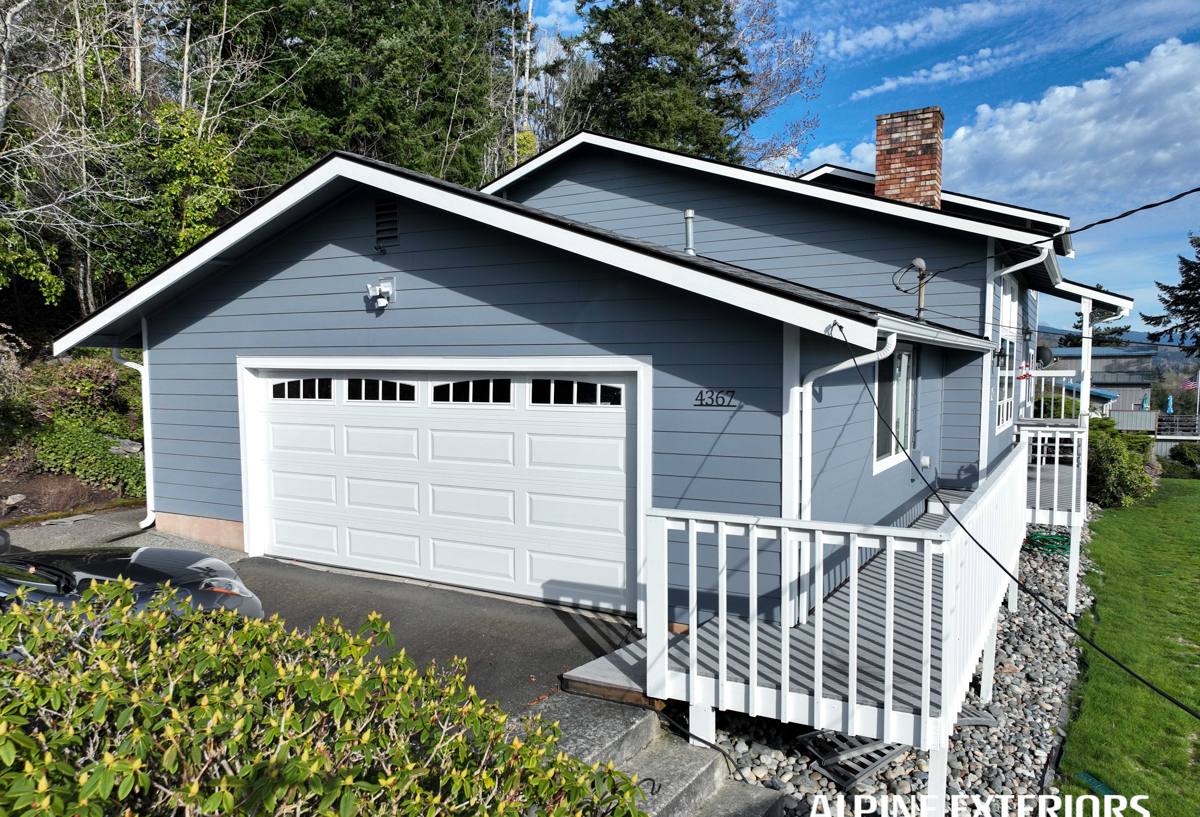
What a Correct Deck Replacement Involves
Deck replacement is more than pulling up old boards and screwing down new ones. A rebuild done right addresses the structure homeowners never see, because that's the part that determines whether the deck lasts 8 years or 25.
The Framing and Substructure
This is where most corner-cutting happens on lower-cost deck jobs, and it's the part that matters most in our climate. Correct framing means pressure-treated lumber rated for ground contact where posts meet the soil, joist spacing tight enough to handle both foot traffic and the wind uplift our storms generate, and hardware — hangers, bolts, screws — rated for coastal or high-humidity exposure so it doesn't corrode from the inside out over a few humid summers.
The Ledger Connection
Where the deck attaches to your house is the single most common failure point on decks nationwide, and it's a bigger deal here because wind-driven rain pushes water at the house-to-deck joint from angles a calmer climate never sees. Correct flashing at this connection — installed so water sheds away from the house rather than behind the ledger board — is not optional. This is also a structural safety point: a deck that pulls away from the house at the ledger is a collapse risk, not just a cosmetic one.
Drainage and Airflow Underneath
A deck that traps moisture underneath is a deck that rots from the bottom up while the top still looks fine. Correct spacing between boards, grading beneath the deck so water doesn't pool, and keeping vegetation and debris from choking off airflow under the structure all extend the life of the framing significantly.
Fasteners and Hardware
Standard hardware corrodes faster in Florida's humidity and salt-influenced air than most homeowners expect, even well inland from the coast. We use fasteners and structural hardware rated for the exposure the deck will actually see, not the cheapest option that meets code on paper.
Decking Material Options for Wiregrass Ranch Homes
There's no single "best" decking material — the right choice depends on your budget, how much upkeep you want to take on, and how the deck gets used. Here's an honest comparison based on how each performs under our specific conditions: constant UV, frequent rain, and high humidity.
| Material | How It Handles Our Climate | Maintenance | General Lifespan |
|---|---|---|---|
| Pressure-treated wood | Good if properly sealed and maintained; UV and moisture cycling will dry and crack unsealed boards faster here than in drier climates | Needs re-sealing/staining every 1-2 years | 10-15 years with upkeep |
| Composite decking | Handles moisture and UV well; won't rot, splinter, or need sealing | Occasional washing; no sealing or staining | 20-30 years |
| Tropical hardwoods (e.g., ipe) | Naturally dense and rot-resistant, but requires disciplined oiling to prevent graying and surface checking in intense sun | Annual oiling recommended | 20-30+ years with maintenance |
| PVC decking | Fully moisture-proof, strong UV resistance, doesn't absorb water | Minimal; occasional cleaning | 25-30+ years |
We install pressure-treated wood, composite, and PVC decking, and we'll walk you through the honest trade-offs for each based on how you actually plan to use the deck — whether it's a low-maintenance space you want to enjoy without upkeep, or a wood look you're comfortable maintaining on a schedule.
Our Deck Replacement Process
- On-site assessment. We inspect the existing deck, framing, ledger connection, and posts to determine what's failing and why, not just what's visible from the top.
- Straight answers on scope. We tell you plainly whether this is a full tear-out and rebuild or whether a more limited repair is genuinely sufficient — we don't upsell a full replacement when it isn't needed.
- Material and design discussion. We go over decking material, railing options, and layout, with honest input on what holds up best for your specific use of the space.
- Written estimate. A clear, itemized quote before any work starts — no surprise add-ons mid-project.
- Demolition and haul-away. Old decking, framing, and debris removed and disposed of properly.
- Structural rebuild. Framing, ledger flashing, and posts installed to correctly handle Florida moisture and wind loads.
- Decking, railing, and finish work. Installed to manufacturer spec with attention to expansion gaps, fastening pattern, and drainage.
- Final walk-through. We go over the finished deck with you and answer any maintenance questions before we consider the job done.
Permitting and Code in Pasco County
Deck replacement in Land O'Lakes typically requires a permit through Pasco County, especially for anything involving structural changes, new footings, or railing height and spacing requirements. Permitted work matters beyond just staying compliant — it means the framing, footings, and railing get inspected against current code, which protects you both for safety and for resale down the line. We handle the permitting process as part of the job so you're not left navigating county requirements on your own.
Why a Crew That Works Wiregrass Ranch Specifically Matters
Deck framing that's correct for a drier, milder climate isn't automatically correct here. A crew that's replaced decks throughout Land O'Lakes and the surrounding Pasco County area already knows which fastener grades hold up, how to detail a ledger connection so wind-driven rain doesn't get behind it, and how to grade and space a deck so it drains instead of trapping moisture. That's knowledge built from doing this work repeatedly in this specific climate — not from a general contracting checklist written for a different region. It's also the difference between a deck that needs major work again in eight years and one that's still solid two decades from now.
Get a Straight Answer on Your Deck
Whether your current deck has a few obvious problem spots or you already know it needs to come out, we'll give you a clear, no-pressure look at what's actually going on and what it will take to fix it right. Reach out for a free estimate using the form below, and we'll walk the deck with you and talk through your options honestly.