 Land O'Lakes Siding
 New-Construction Windows Are a Different Job Than a Retrofit
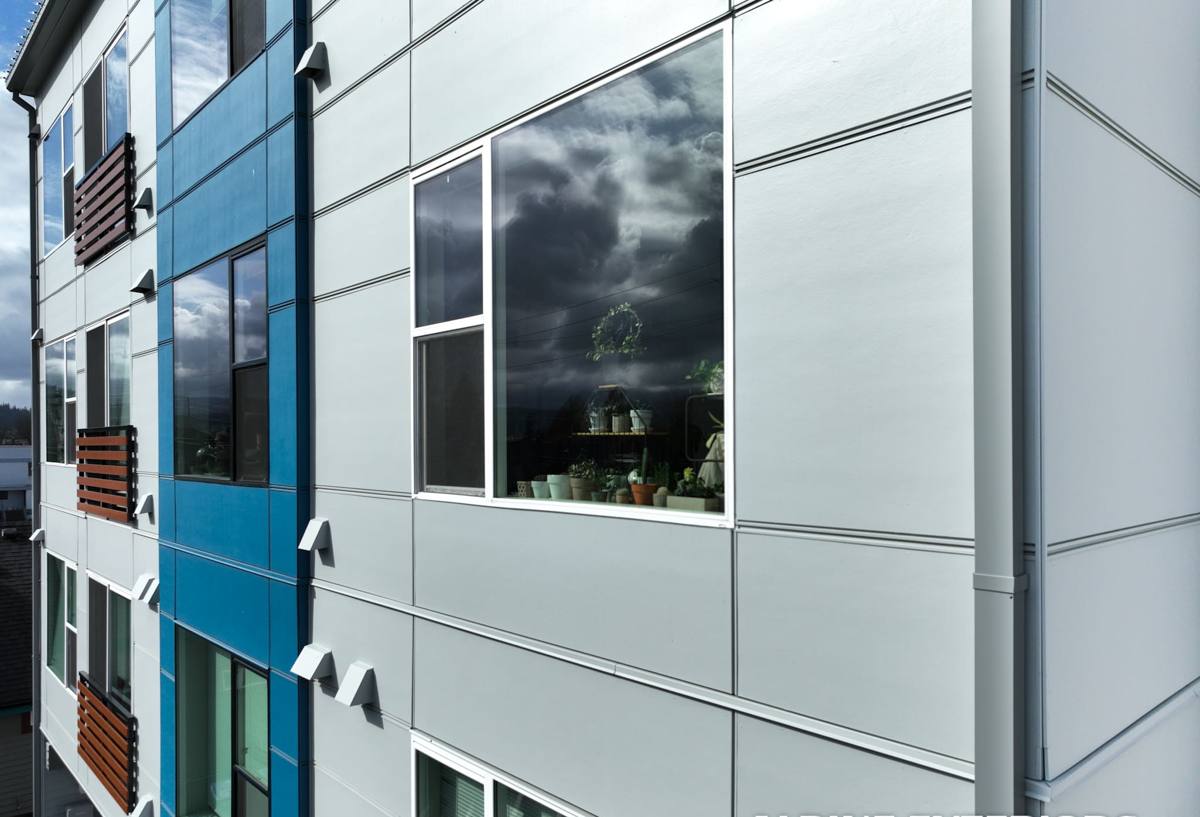
When people hear "new windows," they usually picture a crew popping old sashes out of existing frames and dropping new ones in. That's a replacement or insert job. New-construction windows are a different animal entirely — they have a nailing fin around the perimeter and get installed into a bare, unfinished rough opening before siding, stucco, or brick veneer goes on. You'll see this type of install on new homes being built in Oakstead, on room additions, on enclosed lanais being converted to conditioned space, and on full gut renovations where the exterior wall is opened back down to the studs.
The distinction matters because the entire water-management strategy is different. With a nail-fin window, the flashing has to integrate with the house wrap and the wall assembly in a specific order, before anything covers it up. Get that sequence wrong and you won't know it until years later, when water starts showing up somewhere it shouldn't. Get it right, and the window becomes part of a wall system that's actually built to shed water — not just a box stuck in a hole.
What Oakstead Homes Are Up Against
Oakstead sits inland in Land O'Lakes, Pasco County, but "inland" doesn't mean sheltered. Homes here still take a real beating from Florida's climate, and a new-construction window install has to be planned around it from the start.
Wind and Storm Pressure
Pasco County constructionis governed by Florida Building Code wind provisions, and every window installed here has to carry a product approval rating matched to the design pressure for that specific opening — size, location on the wall, and height above grade all factor in. During tropical systems, sustained and gust-driven pressure loads the frame and the anchoring, not just the glass. An under-rated window, or one installed with the wrong fastener spacing, is a weak point in the whole envelope.
UV and Heat
Central Florida sun is intense and constant, nearly year-round. Frames and seals take a steady dose of UV and heat-cycle expansion/contraction. Cheaper vinyl compounds and low-grade sealants degrade faster under that load — you see it as chalking, warping, or seals that give up early.
Moisture and Wind-Driven Rain
Summer storms in this part of Pasco County often come in sideways, not straight down. Wind-driven rain gets pushed up and under trim and flashing that would be fine in a calmer climate. Land O'Lakes is far enough from the Gulf that we're not dealing with direct salt spray the way a barrier-island home would, but on sea-breeze days there's still salt-laden air moving in off Tampa Bay, and it settles on frames, hardware, and screens over time. None of that is dramatic on its own — it's the combination, day after day, that wears an improperly installed window down faster than it should.
What a Correct New-Construction Install Actually Involves
A window is only as good as the opening it sits in. Most of the work that determines whether an install lasts happens before the window is even set in place.
The Flashing Sequence That Actually Sheds Water
Water management in a nail-fin install works like shingles on a roof — everything above laps over everything below, so water is always directed outward and down, never trapped behind a layer.
- Sill pan flashing installed first, with end dams, so any water that gets past the window has somewhere to go besides the framing
- Side flashing lapped over the sill pan
- The window set into the opening, shimmed level and plumb, and fastened through the nailing fin per the manufacturer's schedule
- Head flashing installed last, lapped over the house wrap above the opening
- House wrap integrated at every layer so water is shed to the exterior, never channeled inward
- Interior air sealing with low-expansion foam or backer rod and sealant — not spray foam alone, which isn't a substitute for proper flashing
Fastening and Structural Attachment
The nailing fin has to be fastened at the spacing called out in the window's product approval — skipping fasteners to save time, or fastening only at the corners, undermines the pressure rating the window was tested for. This is also where the product approval label matters: every window installed under Florida Building Code should carry a visible approval number (NOA or Florida Product Approval) that ties it to a tested wind pressure and impact rating, and that number needs to match what the permit and the opening actually require.
Choosing the Right Window for Oakstead's Exposure
There's no single "best" window for every house — the right choice depends on wall orientation, budget, and whether you're pairing the window with shutters or going impact-rated glass. Here's how the main options stack up for a Pasco County new-construction opening.
| Option | Wind/Impact Performance | Maintenance | Typical Cost Factor |
|---|---|---|---|
| Vinyl frame, non-impact + shutters | Meets code with approved shutter system | Low — no painting, minor cleaning | Lower upfront, shutter labor/storage adds ongoing cost |
| Vinyl frame, impact-rated glass | Meets pressure and impact without added hardware | Low | Moderate to higher upfront, no shutter cost |
| Aluminum frame, impact-rated | Strong structural performance, common on larger openings | Low-moderate — check fastener/seal condition periodically | Moderate to higher |
| Aluminum frame, non-impact + shutters | Meets code with approved shutters | Low-moderate | Lower upfront, ongoing shutter labor |
Impact glass costs more at install but removes the burden of deploying shutters before every storm — for a lot of Oakstead homeowners, especially anyone who travels or isn't home to prep the house on short notice, that trade-off is worth it. We'll walk through the honest math for your specific openings rather than push one option across the board.
Our Process, From Estimate to Final Walkthrough
New-construction window work has to line up with a build or renovation schedule, so coordination matters as much as the install itself.
- Site visit and measure — we confirm rough opening sizes against the window schedule and verify wind pressure requirements for each opening's location on the wall
- Product selection — frame material, glass package, and impact vs. shutter approach, matched to budget and exposure
- Scheduling with the builder or GC — windows go in after the opening is framed and wrapped, before siding, stucco, or brick veneer closes it up
- Flashing and installation — sill pan, side flashing, window set and fastened, head flashing, interior seal
- Inspection — we make sure the install is ready for the county inspector before they're ever on site, so there are no surprises or callbacks
- Final walkthrough — we check operation, seals, and finish on every opening with you before calling the job done
Permitting in Pasco County
New-construction window installs in Land O'Lakes require a permit, and the inspector will be checking for the correct product approval number, correct fastening, and proper flashing integration — not just whether the window opens and closes. We pull permits, keep product approval documentation on hand for each opening, and schedule inspections as part of the job, not as an afterthought tacked on at the end.
Why Hire a Crew That Already Works Oakstead
Oakstead's homes share a lot of common ground — similar builders, similar opening sizes, similar wall assemblies from the neighborhood's construction era. A crew that's already worked in the area isn't guessing at what's behind the wrap or what the HOA expects for exterior appearance; they've seen the pattern before and know where the actual risk points are on this kind of build.
Before you hire anyone for a new-construction window job, it's worth checking a few things:
- Are they pulling a permit and scheduling inspections, or asking you to skip that step?
- Can they show you the product approval number for the specific windows they're proposing, matched to your wind pressure requirement?
- Do they describe a specific flashing sequence, or just say "we'll seal it up good"?
- Are they familiar with Pasco County inspection expectations, or is this their first job in the area?
- Is the fastening schedule and shim/level process something they can explain, not just gloss over?
A contractor who can answer those plainly, without hedging, is generally one who's done the work correctly enough times to know exactly what matters.
Living With New-Construction Windows Long-Term
Once the windows are in and the wall is closed up, maintenance is straightforward: keep weep holes and tracks clear of debris, rinse frames and hardware periodically to clear off dust and salt-laden residue, and check exterior sealant joints every year or two, since sealant is the one component that ages faster than the window itself. None of this is heavy upkeep — it's the same kind of seasonal check most Florida homeowners already do around their exterior.
If you're building, adding on, or opening up a wall in Oakstead and need windows done right the first time, we're happy to walk the site, look at your openings, and put together a straightforward, no-pressure estimate. There's a form below to get that started.