 Land O'Lakes Siding
 What Angus Valley Homes Are Up Against
Angus Valley sits inland from Tampa Bay, but distance from the coast doesn't mean distance from the coast's weather. Pasco County still gets the same wind-driven rain during summer storms, the same relentless UV load nearly year-round, and on breezy days, the same salt-tinged air moving in off the Gulf that coastal Florida neighborhoods deal with. Add hurricane-force wind gusts during the active season, and exterior siding in this part of Land O'Lakes is doing real work every single day, not just during a named storm.
Siding here has to hold a paint or color finish under constant sun without chalking or fading, shed wind-driven rain at horizontal angles without letting moisture behind the panel, resist the swelling and softening that comes from Florida's humidity, and stay fastened tight through wind events that push and pull on every seam and corner. Products that aren't built specifically for this kind of exposure tend to show it early — fading, cupping, soft spots, or nail pops within a handful of years rather than decades.
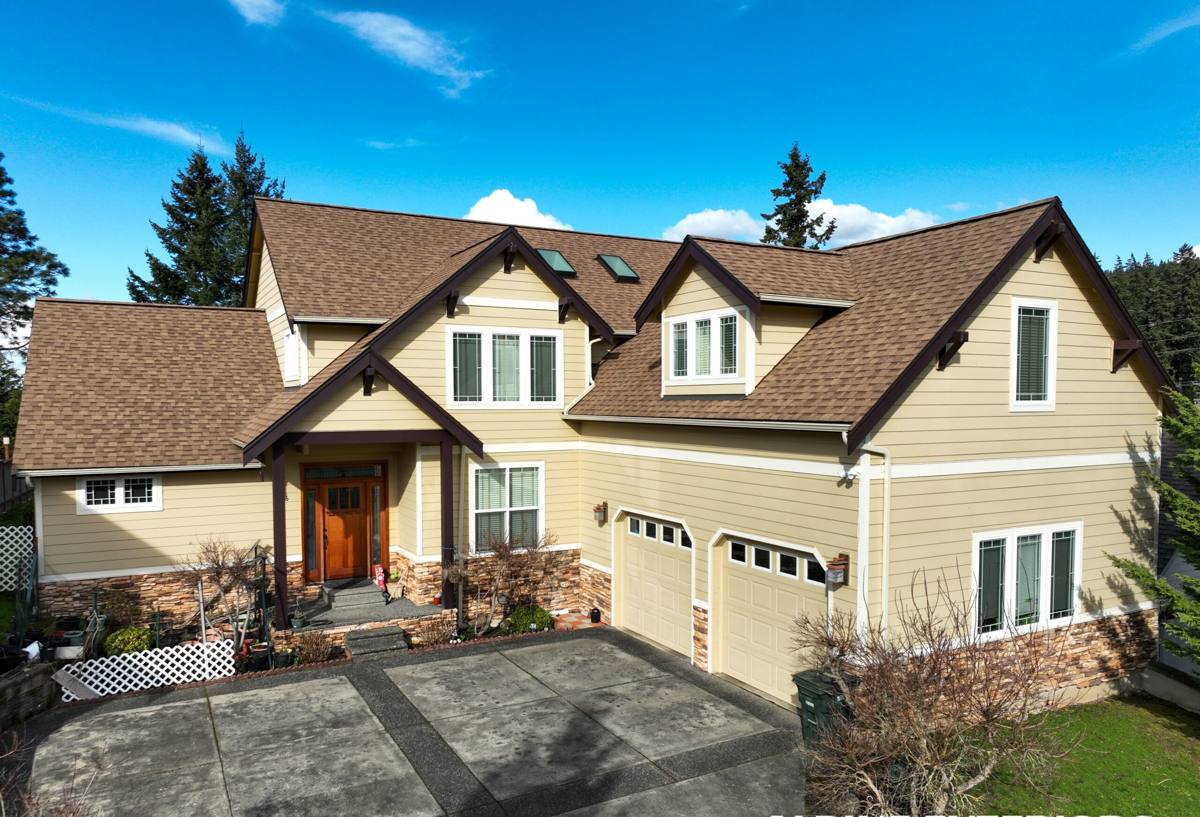
Why We Install Only James Hardie Fiber Cement
We made a deliberate decision to install James Hardie fiber cement siding exclusively, and nothing else — not vinyl, not LP SmartSide, not Cemplank or Allura, not primed wood. That's not a marketing angle; it's a standard we hold because of what we've seen hold up in Florida conditions and what doesn't.
A non-combustible core
James Hardie siding is fiber cement — sand, cement, and cellulose fiber — which means it doesn't burn, doesn't feed a fire, and won't soften or deform from radiant heat the way vinyl can. For a material that's going to sit on a home for decades in a hot climate, that's a meaningful difference in risk.
ColorPlus factory finish
Most Hardie siding we install carries the ColorPlus finish, a factory-applied, baked-on coating that's more UV- and fade-resistant than field-applied paint. Under Land O'Lakes sun, that finish is doing the heavy lifting that would otherwise fall on a paint job needing attention every few years.
HZ5 engineering for our climate zone
James Hardie engineers separate product formulations for different climate zones, and Pasco County falls into the HZ5 zone — the line built for high humidity, heavy rain, and the moisture cycling that's constant in this part of Florida. That's a different product than what gets installed in a dry inland climate, and it matters for how the material performs over the long run.
What a Correct Installation Actually Involves
Fiber cement siding is only as good as the installation behind it. James Hardie's own warranty terms are tied to installing to their published specifications, and skipping steps is the single biggest reason siding jobs fail early — not the material itself. A correct install on an Angus Valley home includes:
- A proper weather-resistive barrier installed correctly behind the siding, not reused from the old wall if it's compromised
- Correct fastener type, spacing, and penetration depth — under- or over-driven nails are a common source of early failure
- Proper clearances at the ground, roofline, and any decks or patios so water has somewhere to go instead of wicking into the board
- Correctly flashed and sealed windows, doors, and penetrations before a single piece of siding goes up
- Manufacturer-specified overlaps and gaps at joints and corners to allow for expansion without trapping moisture
- Field-cut edges sealed per Hardie's specification, since raw cut edges are more vulnerable to moisture intake
None of this is visible once the job is finished and looks good from the curb — which is exactly why it's worth asking a contractor how they handle each of these steps before they start.
Our Process, Start to Finish
- On-site assessment. We walk the exterior, check the current siding and substrate condition, and look at trouble spots — trim, window flashing, areas showing prior water intrusion.
- Written estimate. You get a clear scope of work and price before anything is scheduled, with the Hardie product line and color options laid out.
- Removal and substrate check. Old siding comes off and we inspect the sheathing underneath for rot or damage before covering it back up — this is the step that gets skipped when jobs go wrong.
- Weather barrier and flashing. We install or repair the moisture barrier and flash all openings before any Hardie board goes up.
- Installation to spec. Fastening, clearances, joints, and sealed edges are done to James Hardie's published requirements, not shortcuts.
- Final walkthrough. We go over the finished job with you and address anything before we consider it done.
James Hardie Compared to Other Siding Materials
| Factor | James Hardie Fiber Cement | Vinyl | LP SmartSide / Engineered Wood |
|---|---|---|---|
| Core material | Non-combustible cement, sand, cellulose | Combustible PVC plastic | Engineered wood, combustible |
| UV/fade resistance | Factory ColorPlus finish, built for long sun exposure | Prone to fading and chalking over time | Depends on field-applied or factory finish |
| Moisture behavior | Engineered for high-humidity zones (HZ5) | Doesn't absorb, but traps moisture behind panel if not vented | Wood fiber base is moisture-sensitive if seals fail |
| Wind performance | Rigid, holds fastening well under gusts | Can flex, crack, or blow off in high wind | Solid but installation-sensitive at seams |
| Long-term maintenance | Minimal; occasional inspection and caulk touch-up | Low, but limited repair options if damaged | Requires diligent sealing and paint upkeep |
None of these materials are inherently "bad" — vinyl and engineered wood both have legitimate uses. But for the wind, sun, and moisture load a home in Angus Valley carries year-round, we don't think they hold up as well over a 20-to-30-year horizon, which is why we standardized on Hardie.
Signs Your Siding Is Telling You Something
Fiber cement siding lasts a long time, but no siding lasts forever, and older or poorly installed siding in this climate tends to show warning signs before it fails outright:
- Visible cracking, warping, or bowing anywhere on the wall plane
- Soft spots when you press on the siding near the bottom edges or below windows
- Paint that's peeling, bubbling, or fading unevenly across the same wall
- Staining or discoloration that keeps returning after cleaning
- Nail heads popping through or visible fastener corrosion
- Gaps opening up at corners, trim, or joints that weren't there before
- A musty smell or soft drywall on an interior wall that backs up to exterior siding
Any one of these on its own might just need a repair. Several together, especially on a home that's been through multiple storm seasons without an inspection, usually means it's time to talk about replacement before a small problem becomes water damage behind the wall.
What Actually Drives the Cost of a Siding Project
| Cost Factor | Why It Matters |
|---|---|
| Home size and wall complexity | More square footage and more corners, gables, or dormers mean more material and labor |
| Substrate condition | Rotted sheathing found during removal adds repair work before new siding can go up |
| Hardie product line and finish | Plank profile, panel style, and ColorPlus color selection affect material pricing |
| Trim and accessory work | Fascia, soffit, and trim replacement alongside siding adds scope but improves the finished result |
| Access and site conditions | Two-story sections, tight lot lines, or landscaping obstacles affect labor time |
We don't quote broad ranges without seeing the house, because the substrate condition alone can swing a project significantly — but every estimate we give breaks these factors down so you know what you're paying for and why.
Caring for Hardie Siding After It's Installed
One of the practical advantages of fiber cement is how little it asks of you afterward. It doesn't need repainting on the schedule that wood or vinyl often does, and it doesn't warp or rot the way wood-based products can when Florida humidity gets into a seam. That said, a little attention goes a long way in this climate:
Rinse the exterior periodically to keep salt residue, pollen, and mildew from building up, especially after storm seasons that carry more airborne debris. Keep an eye on caulking at joints, trim, and penetrations, since caulk is the one component that wears out well before the siding does. And after any major wind event, a quick visual check for loose boards, popped fasteners, or damaged trim is worth the ten minutes — catching it early is a small fix, catching it late can mean water damage.
Why a Crew That Already Works in Angus Valley Matters
Siding installation isn't one-size-fits-all across Florida, let alone across the country. A crew that regularly works in Land O'Lakes and across Pasco County has already seen how homes in this specific area age under this specific combination of sun, humidity, and storm exposure. That translates into knowing which details to double-check on an older home's substrate, how to sequence a job around Florida's rainy-season weather windows, and what county permitting and inspection expectations look like for exterior work in this area.
It also means being reachable after the job is done. If a named storm rolls through and you want your siding checked, or a question comes up two years down the line, you're calling a crew that's still local and still doing this work in your neighborhood — not chasing down a company that moved on to the next region.
If your Angus Valley home's siding is showing its age, or you're planning ahead of the next storm season, we'll walk the exterior with you and give you a straightforward, no-pressure estimate for James Hardie fiber cement siding. Use the form below to get started.