 Land O'Lakes Siding
 Siding Repair Built for Dade City's Weather, Not a Generic Patch Job
Dade City sits in the northern part of Pasco County, far enough inland that it misses some of the coastal wear the Gulf-front communities deal with, but it still takes a beating every year from Florida's climate. Hurricane-force wind gusts push through during tropical systems, wind-driven rain finds every gap in a siding system, and the sun works on exterior walls twelve months a year, not just in summer. Add in the humidity that never really goes away, and you have conditions that punish siding that wasn't installed correctly or wasn't built for this climate to begin with.
A lot of siding repair work we get called out for in Dade City isn't really about the siding itself — it's about what happened behind it. Water got in somewhere, sat against wood sheathing or trim, and the siding is just where the damage finally became visible. That's why we treat every repair call as a chance to find out why the damage happened, not just patch what shows.
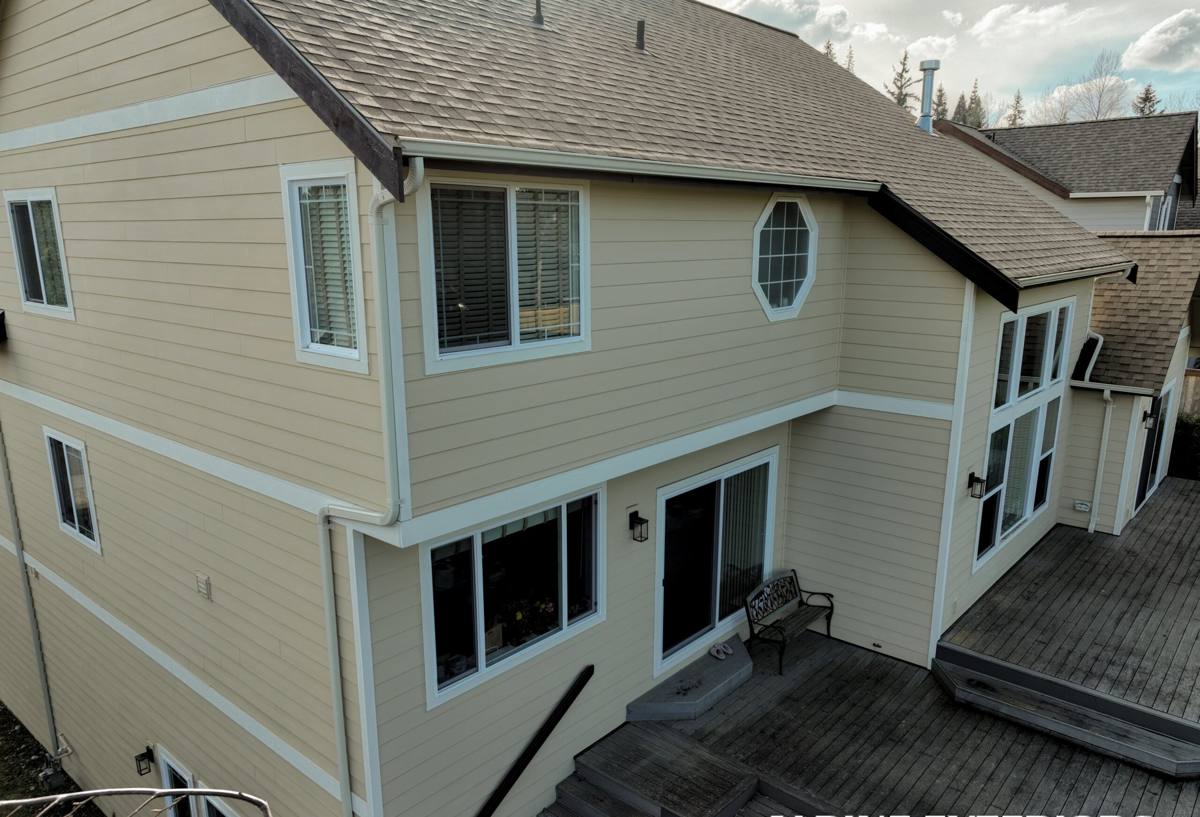
Signs a Dade City Home Needs Siding Repair
Some damage is obvious after a storm. Other damage builds slowly and gets noticed too late, once it's already reached the sheathing or framing. Homeowners in this area should watch for:
- Cracked, split, or missing siding panels, especially after high wind events
- Soft or spongy spots when you press on a wall near the bottom edge or around windows
- Visible warping, buckling, or panels that no longer sit flat against the wall
- Paint that's peeling, bubbling, or failing faster than it should
- Dark streaking, staining, or a musty smell near exterior walls, which often points to moisture behind the siding
- Gaps opening up at seams, corners, or where siding meets trim, windows, and doors
- Nail heads popping out or visible fastener corrosion
Any one of these on its own might be minor. Several showing up together, or damage concentrated on one side of the house, usually means there's a water intrusion or wind exposure issue worth investigating before it spreads.
Why Damage Shows Up Where It Does
Wind-driven rain during storms doesn't fall straight down — it gets pushed sideways and upward under eaves, around window trim, and into any seam that isn't sealed and flashed correctly. That's why repair needs often cluster on the side of a house that faces the prevailing storm direction, or around openings where the original installation cut corners on flashing.
What Actually Causes Siding Damage in This Climate
| Cause | How It Damages Siding | What It Leads To If Ignored |
|---|---|---|
| Hurricane and tropical storm winds | Cracks panels, tears loose fasteners, drives rain behind seams | Water intrusion, panel loss in the next storm |
| Year-round UV exposure | Breaks down paint film and, on lesser materials, the substrate itself | Fading, chalking, cracking, accelerated aging |
| Wind-driven rain | Forces moisture into seams, laps, and trim joints | Rot in sheathing, mold, soft spots |
| Humidity and heat cycling | Constant expansion and contraction stresses joints and caulk lines | Widening gaps, failed sealant, water paths |
| Poor original installation | Missing flashing, wrong fasteners, incorrect clearances | Chronic moisture problems regardless of siding material |
Most of these forces hit every home in the area to some degree, but the last one — installation quality — is the biggest factor in how much damage a given house actually sustains. A well-installed siding system sheds water and handles wind the way it's designed to. A poorly installed one fails at its weakest point, and that weak point is usually where a repair crew ends up working.
Repair or Replace? How We Actually Make That Call
Not every damaged section needs full replacement, and not every repair is worth doing instead of replacing a larger section. We look at a few honest factors before recommending either direction:
| Factor | Favors Repair | Favors Replacement |
|---|---|---|
| Extent of damage | Isolated to one or two panels/sections | Spread across a wall or multiple elevations |
| Underlying moisture | Sheathing and framing are dry and sound | Rot or water damage found behind the siding |
| Age and condition of remaining siding | Rest of the siding is sound and not near end of life | Existing siding is already failing elsewhere |
| Material match | Matching panels/profile are available | Discontinued product, no reasonable match |
| Root cause | One-time event (storm impact, accidental damage) | Ongoing installation or design flaw causing repeat failures |
We'll always tell you plainly which category your situation falls into. If a targeted repair will hold up, that's what we recommend — there's no reason to sell a homeowner a bigger job than they need. If the damage points to a systemic problem, we'll explain why and what the honest long-term fix looks like.
What a Correct Siding Repair Actually Involves
A repair that just covers the visible damage without addressing what caused it is a repair you'll be paying for again. Done right, a siding repair on a Dade City home includes:
Inspection Behind the Siding
Before anything gets patched, we check what's behind the damaged section — sheathing condition, house wrap or moisture barrier integrity, and whether water has traveled beyond the area you can see. Repairing over hidden rot just hides the problem for another season.
Correct Flashing and Water Management
Any repair around windows, doors, corners, or roof lines needs flashing detail that actually directs water outward, not just caulk smeared over a gap. Caulk is a maintenance item, not a substitute for flashing.
Matching Material and Fastening
Replacement sections need to match the existing siding's profile, reveal, and finish as closely as possible, and be fastened per the manufacturer's specifications — proper nail type, spacing, and clearance from the ground and rooflines. Under-fastened or over-driven nails are a common cause of repeat failures we find on older installs.
Proper Clearances and Sealing
Siding needs the right gap where it meets trim, roofing, and grade so water has somewhere to go. Sealing every joint solid actually traps moisture in some cases — the goal is controlled drainage, not zero gaps.
Our Process for a Dade City Siding Repair Call
- On-site assessment. We look at the damage, check behind it where needed, and identify the cause, not just the symptom.
- Honest repair-vs-replace recommendation. You get a clear explanation of what's actually needed and why, in plain terms.
- Written scope and estimate. No pressure, no vague line items — you know what work is being done before we start.
- Repair work. Matching materials, correct flashing and fastening, and attention to the details that determine whether the repair lasts.
- Final walkthrough. We confirm the repair is solid and answer any questions about maintenance going forward.
Why James Hardie Matters When Repair Turns Into Replacement
We install James Hardie fiber cement siding exclusively, and it's relevant here even on repair calls. When a section of siding is damaged beyond a clean repair, or a homeowner decides it's time to address a whole elevation rather than keep patching, the material choice matters for how the next repair conversation goes — or doesn't.
James Hardie's HZ5 product line is engineered for climates like ours — hot, humid, and prone to wind-driven rain — and it's non-combustible, holds paint and factory ColorPlus finishes far longer under constant UV than untreated wood-based products, and doesn't swell or rot the way wood-based sidings can when moisture gets past a seam. That doesn't mean Hardie siding is immune to storm damage or installation error; it still needs correct flashing, fastening, and clearances like any siding system. But it holds up to the underlying causes of most of the repair calls we see — sun, moisture, and heat cycling — better than the wood-based or vinyl alternatives, which is a large part of why we stopped installing anything else.
If your current siding is a material we don't install, we'll still give you an honest assessment and repair it correctly using compatible methods and materials. We just won't sell you a new problem in the process, and we'll tell you plainly if what you have is nearing the point where repair stops making sense.
Why It Matters That We Already Work in Dade City
Siding repair is very site-specific. What causes chronic damage on a home exposed to open fields and unbroken wind is different from what causes it on a shaded, tree-lined lot. A crew that already works this area has seen how local exposure, storm patterns, and older installation practices around here tend to play out, which means less guesswork diagnosing your specific situation and a faster, more accurate scope from the first visit.
It also means we're not disappearing after the invoice. If a repair needs a warranty follow-up or the same storm that damaged your siding also affected other homes on your street, we're a local call, not a company that has to be tracked down from out of the area.
Get a Straight Answer on Your Siding
If your Dade City home has storm damage, soft spots, or siding that's just not holding up the way it should, we'll come take a look and give you a clear, honest recommendation — repair or replace, no upselling either direction. Reach out for a free, no-pressure estimate using the form below.