 Land O'Lakes Siding
 Metal Roofing in Concord Station: What Pasco County Weather Actually Does to a Roof
Concord Station sits inland from the Gulf, but that doesn't spare it from what coastal weather sends this way. Hurricane-force wind gusts push through Pasco County most storm seasons, the sun beats down on rooftops nearly year-round at an intensity that breaks down roofing materials faster than most homeowners expect, and wind-driven rain finds its way into any gap that isn't properly flashed. Even miles from the water, humid, salt-tinged air moving off the Gulf works on exposed fasteners and metal edges over time. None of this is unique to Concord Station, but it's the baseline every roof in this neighborhood has to survive, year after year, and it's why the details of a metal roofing job matter more here than in a milder climate.
A metal roof that's installed correctly for this environment can outlast two or three shingle roofs. One that's installed with shortcuts — wrong fastener spacing, missed flashing details, the wrong panel for the pitch — will show problems within a few years, usually right where wind and rain concentrate: valleys, eaves, and penetrations.
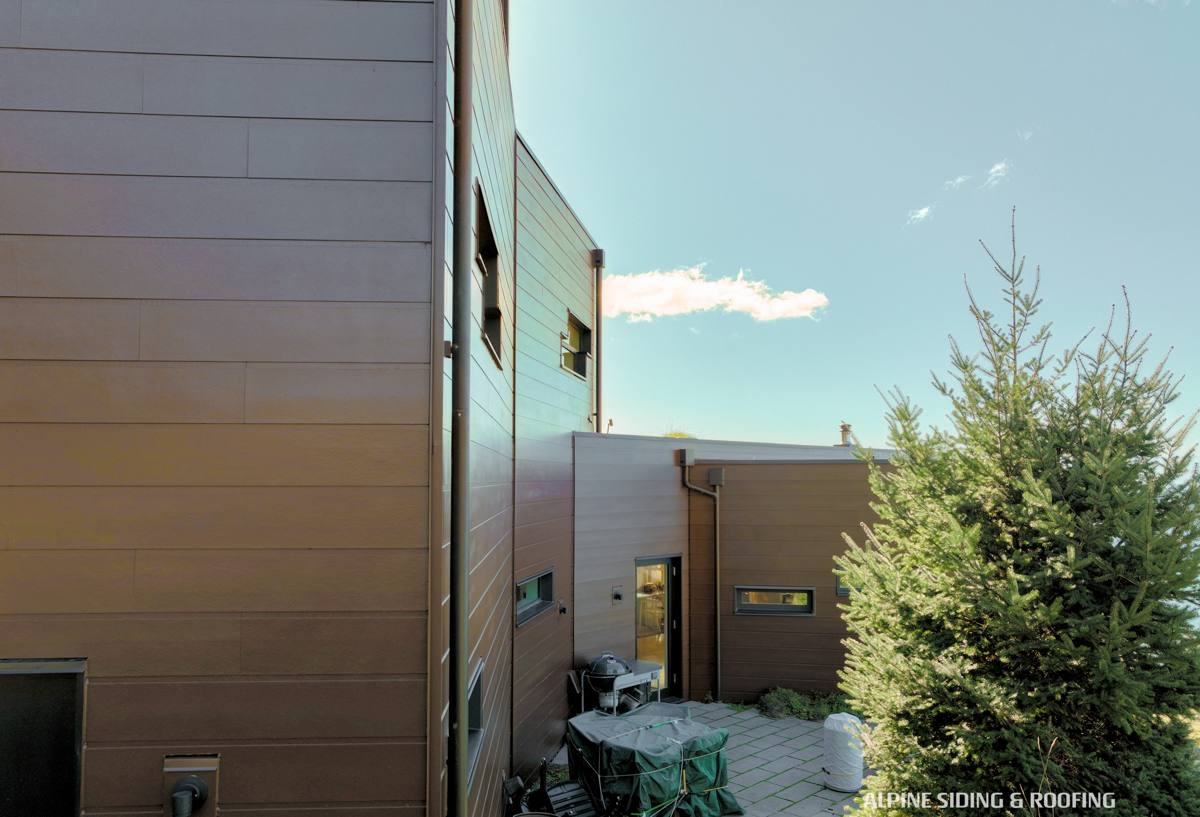
Why Metal Roofing Fits Concord Station Homes
Roof Age and Construction Era
Concord Station is a newer-build planned community, and most of its homes went up with standard asphalt shingle roofs original to construction. Shingle roofs in this climate typically run 15-25 years before they need full replacement, depending on ventilation, installation quality, and sun exposure. A lot of homes in the neighborhood are now reaching that point, which puts homeowners at a natural decision moment: replace with shingles again, or switch to a system built to go the distance. Metal is the option most homeowners consider when they want to stop having this conversation every couple of decades.
Roof Pitch and Style
Like most production-built Florida subdivisions from this era, homes in Concord Station tend toward low-to-medium pitch hip roofs. That profile works well with standing seam metal, which sheds water efficiently even at lower slopes and doesn't rely on shingle-style overlap to stay watertight. It also reads clean on the traditional and Mediterranean-influenced elevations common in the neighborhood, without looking out of place against the surrounding homes.
What a Correct Metal Roofing Installation Involves
Deck Inspection and Prep
Metal goes over a deck that has to be sound — soft or delaminated sheathing gets replaced before anything else happens, not covered up. This step gets skipped more often than homeowners realize, because it slows the job down. It shouldn't be skipped.
Underlayment
Florida roofs need a high-temperature-rated, self-adhering underlayment. Standard felt breaks down under the heat that builds up beneath dark metal panels in full sun; a proper synthetic or peel-and-stick underlayment is built to handle it and gives you a real secondary water barrier if a panel is ever compromised.
Fastening and Panel Clips
Standing seam systems use concealed clips that let the panel expand and contract with temperature swings without stressing the fasteners — this matters in a climate with wide daily temperature shifts on the roof surface. Exposed-fastener panels rely on screws driven directly through the panel, which need correct spacing and torque to hold under wind load and to seal properly over the life of the roof.
Flashing and Penetrations
Valleys, wall-to-roof transitions, and every pipe or vent penetration are where wind-driven rain gets in. These details take more time and more skill than the flat field of the roof, and they're exactly where a rushed installation shows up as a leak two or three years later.
Ventilation
Proper ridge and soffit ventilation keeps heat and moisture from building up in the attic, which protects the deck from the underside and helps the whole system perform the way it's designed to.
Choosing a Panel System: Standing Seam vs. Exposed Fastener
Both systems can perform well in Pasco County's climate, but they carry different trade-offs in cost, maintenance, and longevity. Here's how they compare for a typical Concord Station home:
| Factor | Standing Seam | Exposed Fastener |
|---|---|---|
| Fastener exposure | Concealed under the seam | Visible, driven through the panel face |
| Maintenance | Minimal — no fastener seals to monitor | Fastener washers should be checked periodically as they age |
| Upfront cost | Higher | Lower |
| Typical service life | Longer, with fewer failure points | Solid, but fastener seals are the first thing to wear |
| Best fit | Primary residence roofs, low-to-medium pitch | Outbuildings, lanais, budget-conscious projects |
For a primary home in Concord Station, most homeowners lean toward standing seam because it removes the long-term maintenance item of exposed fasteners entirely. Exposed-fastener panels are a reasonable, lower-cost choice for detached structures or covered patios where the stakes of a small leak are lower.
Engineering for Wind, Rain, and Salt: Building In the Margin
Wind Uplift Resistance
Wind doesn't push down on a roof — it lifts. Panel and clip spacing, especially at the perimeter and corners of the roof where uplift forces concentrate, has to match the wind rating required for your specific address and the current Florida Building Code cycle. This isn't a place to guess; it's calculated and permitted.
Wind-Driven Rain
Rain that's being pushed sideways by wind doesn't behave like rain falling straight down. It gets forced up under panel laps and around fasteners that would otherwise stay dry. Correct lap dimensions, sealant at the right joints, and properly integrated drip edge and gutters are what keep that rain on the outside of the house.
Salt Air and UV
Even well inland, humid air carrying salt from the Gulf accelerates corrosion on unprotected metal and fasteners. A quality finish — a baked-on paint system rated for Florida sun and coastal-adjacent humidity — protects both the panel color and the metal underneath from breaking down early. Cutting corners on finish quality is one of the more common ways a metal roof underperforms its expected lifespan in this region.
Our Concord Station Process, Start to Finish
- On-site assessment of your current roof, deck condition, and pitch — no pressure, no upsell.
- A written proposal with the panel system, materials, and a clear price, not a vague range.
- Permitting through Pasco County before any work begins.
- Tear-off, deck repair as needed, underlayment, and panel installation.
- Flashing, penetrations, and ridge work finished last, checked in detail.
- Final walkthrough and cleanup of the property, including magnetic sweep for stray fasteners.
Permits, Codes, and HOA Considerations in Concord Station
Metal roof replacement requires a permit through Pasco County, and the wind-uplift rating your roof needs to meet depends on your specific address and the current code cycle — we confirm the exact requirement during the permitting process rather than assume it. Concord Station, like many planned communities, may also have an HOA architectural review process for exterior changes, including roof material and color. It's worth checking your HOA's guidelines before you're set on a specific panel color, since some communities have preferences or approval steps for anything visible from the street. We're glad to work from whatever documentation your HOA requires.
Maintenance: What Owning a Metal Roof Actually Looks Like
Metal roofing is genuinely low-maintenance compared to shingles, but "low-maintenance" isn't "no-maintenance." A short annual check catches small issues before they become expensive ones:
- Clear debris from valleys and around any roof penetrations after storms.
- Check gutters and downspouts are draining freely, especially before hurricane season.
- Look for any panel fasteners with washers that appear cracked or worn (exposed-fastener systems).
- Watch for any color fading or chalking that's uneven across the roof, which can signal a finish issue.
- Confirm attic ventilation isn't blocked by insulation or debris.
- Have a professional inspect flashing at valleys and walls every few years, not just after a bad storm.
None of this requires a specialist visit every year — most of it is a homeowner walking the property with a checklist. When something does need attention, catching it early is the difference between a small repair and a bigger one.
Why a Crew That Already Works Concord Station Matters
A roofing crew that's worked in Concord Station before already knows the roof pitches and construction details common to the neighborhood, has a working relationship with Pasco County's permitting office, and understands what the local HOA process typically looks like. That familiarity translates into fewer surprises during your project — not because your roof is unusual, but because we're not learning the neighborhood on your dime. It also means a crew that's easy to reach if a question comes up after the job is done, rather than one that drove in from out of the area for a single project.
If you're weighing a metal roof for your Concord Station home, we're happy to take a look and give you a straightforward assessment — no pressure, no inflated scare tactics about your current roof. Fill out the form below for a free estimate, and we'll walk the property with you and answer whatever questions you have.